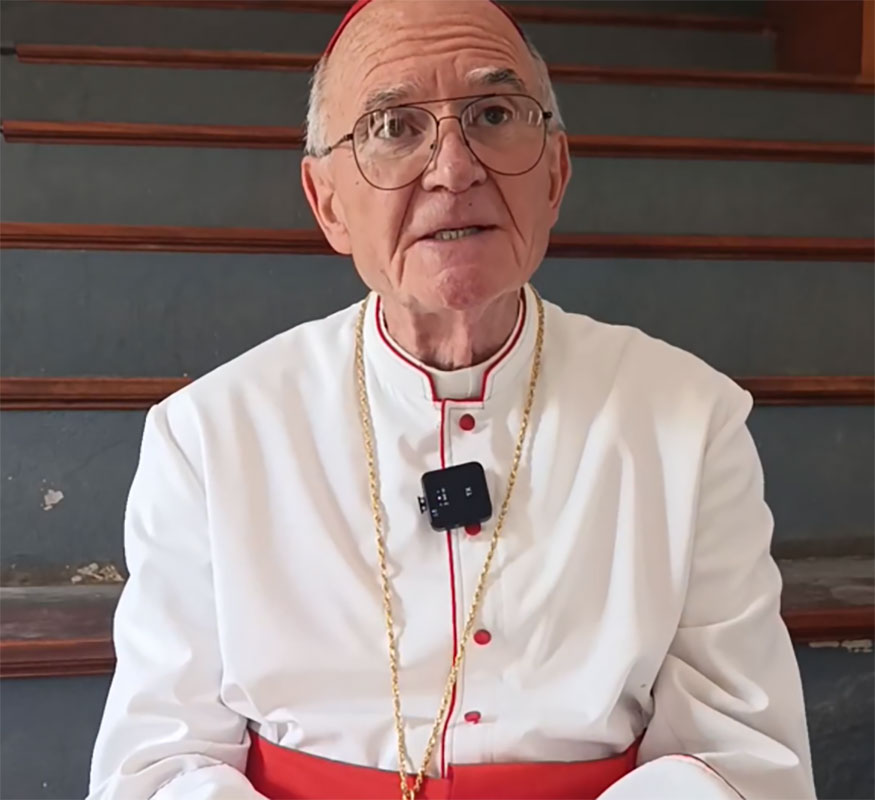

Reflecting on the 10th anniversary of Amoris Laetitia, Cardinal Stephen Brislin calls for stronger support for young marriages, greater care for mental health and a Church that accompanies families through their struggles.
Marriage is often celebrated as the beginning of a beautiful journey. There is the wedding day, the promises exchanged, the excitement of starting a life together and the hopes of building a family. But what happens when the celebrations are over, financial pressures begin to mount, differences become more apparent and the realities of raising children take their toll? Cardinal Stephen Brislin, the archbishop of Johannesburg and president of the Southern African Catholic Bishops’ Conference, says that these are precisely the questions the Church must confront if it is to support families meaningfully.
Reflecting on his participation in the Vatican’s gathering marking the 10th anniversary of Pope Francis’ apostolic exhortation Amoris Laetitia (The Joy of Love), Cardinal Brislin believes the Church must move beyond preparing couples for their wedding day and develop lasting structures to accompany them throughout their married lives. “The fact of the matter is that the occasion that was proposed was the 10th anniversary of the publication of the Amoris Laetitia, but the real reason for having the meeting is simply the importance of marriage and family,” he says, adding, “Marriage is the basic cell of society, and it is the basic cell of the Church as well.”
Held at the Vatican from 7 to 14 October 2026 under the theme Ten Years After Amoris Laetitia: Proclaiming the Gospel with Families Today, the gathering brought together presidents of episcopal conferences, heads of Eastern Catholic Churches, married couples and lay experts to reflect on the Church’s pastoral response to the changing realities of family life. For Cardinal Brislin, the significance of the encounter extended far beyond commemorating a document. It was an opportunity to listen, learn and consider how the Church can better accompany families through their joys, disappointments and uncertainties.

A family is more than a private institution
Published by Pope Francis on 19 March 2016, Amoris Laetitia drew on the discussions of the 2014 and 2015 Synods of Bishops on the family. It explored the beauty of love within marriage while acknowledging the complicated circumstances families experience in the modern world. A decade later, Pope Leo XIV convened the meeting to encourage a process of mutual listening and discernment about how the Church could proclaim the Gospel to families in the circumstances they face today. In his opening address on 7 October, the Pope highlighted the impact of economic insecurity, migration, violence and loneliness on family life, challenging Church leaders to listen more attentively to families and learn from their experiences. Cardinal Brislin in an interview on Saturday, 17 October 2026, says the family’s importance lies not only in its role in society but also in its responsibility within the Church. “The family is meant to be the domestic church, and it’s also meant to be a place of education for children, educating them most particularly how to be human, if you like, and how to function well as human beings.”
This understanding has important implications for Catholic communities across Southern Africa, where families often carry significant responsibilities in raising children, passing on the faith and caring for elderly relatives, sometimes while navigating unemployment, financial hardship and difficult social circumstances. The cardinal’s reflections invite the Church to recognise that supporting families is not an isolated pastoral activity, but central to its mission. He recalls the experience of sharing insights with participants from different parts of the world, discovering that while cultures and circumstances differ, many families encounter remarkably similar challenges.
“It was an incredible experience of sharing what is happening from around the world, and recognising first and foremost the beauty of marriage,” he says. He was encouraged to hear accounts of marriages contributing positively to the Church and society, alongside honest discussions about the difficulties couples face. Participants were organised into small groups, allowing them to develop relationships and exchange experiences in a more personal setting. Cardinal Brislin’s group consisted of 11 people, who remained together throughout the gathering. He said the bonds formed were meaningful enough that, when the participants returned to their respective countries, they established a WhatsApp group to remain in contact.
Supporting couples after the wedding day
One of Cardinal Brislin’s strongest reflections concerns what happens after marriage preparation ends. While many parishes offer programmes to prepare couples for the sacrament, he believes the Church needs to give greater attention to the years immediately following the wedding. “I think one of the things that was recognised by everybody is that while the Church does have marriage preparation courses, that is really a preparation almost for the wedding, if you like, and very little support is given to young couples after they’ve got married.” The early years of marriage can be particularly demanding. Couples who enter marriage with romantic expectations begin to discover one another’s weaknesses, habits and differences. Responsibilities increase, finances must be managed, and decisions about children, careers and extended families can introduce new tensions.
As Cardinal Brislin observes, it is often when the honeymoon period ends that couples begin to encounter the challenges requiring patience, understanding and renewed commitment. The answer, he suggests, is not simply to improve marriage preparation but to establish support structures for newly married couples and offer ongoing formation throughout married life. For Catholic parishes in Southern Africa, this could mean developing marriage support groups, mentoring relationships between experienced and newly married couples, accessible counselling referrals and regular opportunities for couples to reflect on their relationship and faith.
It would also mean creating environments where couples can speak honestly about their struggles without fearing judgement. Such initiatives are especially important when financial pressures, unemployment, migration for work and family responsibilities place additional strain on relationships.
Families are called to be missionary
Cardinal Brislin said that supporting families is not only about helping couples remain together. It is also about recognising the contribution that healthy, faith-filled families can make to the wider community. Drawing on Pope Francis’ warning against becoming self-referential, he says a family’s mission extends beyond its own household. “Marriage is not simply a self-referential, if you like to use that word that Pope Francis used. A family is not just meant for itself, it is meant to be missionary, and it’s part of the whole missionary calling of the Church to evangelise.”
He explained that married couples evangelise first through the love they share with one another, but their witness should also extend into their communities. This is a particularly meaningful message for Southern African Catholic communities, where the faith is often sustained through family prayer, parish participation, acts of service and the passing on of Christian values between generations. Families can become places where children learn compassion, forgiveness, respect and responsibility. They can also be sources of practical support for neighbours, vulnerable people and those experiencing isolation.
There is no such thing as the perfect family
Perhaps one of Cardinal Brislin’s most compassionate messages is his insistence that families should not measure themselves against an ideal of perfection. “There is no such thing as the perfect family. Every family has its difficulties, every family has its crises, every family has its tears and its joys,” he says. Single parents, families experiencing separation, couples facing prolonged difficulties and households dealing with grief may feel that they have failed to live up to an ideal. Cardinal Brislin encourages people to resist that sense of inadequacy and remain committed to fulfilling their responsibilities in the circumstances they find themselves in. “As I said, there is no perfect family, but if you’re a single mom or a single dad bringing up your children, if you’re in a difficult family situation, try to keep the family together, try to fulfil the mission of the Church in the circumstances that you find yourselves.”
His message is not that difficult situations should be ignored or that people must remain in unsafe relationships. Rather, it is an invitation to recognise the dignity and potential of families in their actual circumstances, while seeking the help they need. This approach resonates with the pastoral vision of Amoris Laetitia, which calls the Church to approach people with mercy, sensitivity and a willingness to accompany them as they discern their way forward.
Mental health is a family and Church concern
As October marks Mental Health Month, the cardinal also highlights mental health as an issue that deserves greater attention within family life. “I think mental health is a very, very important issue, and very often people are suffering from mental health issues, even if they do not fully realise it,” he says. Mental health challenges can affect relationships, parenting, communication and the ability to cope with everyday responsibilities. Yet people may hesitate to seek assistance because of stigma, fear or the belief that their struggles should be resolved privately. Cardinal Brislin emphasises the importance of extended family networks, which can offer practical assistance, emotional support and a sense of belonging during difficult periods. “The Church is meant to be a support to families, and by the Church I don’t just mean the priest, or the deacon, or the sister. It is about the community giving to support each other.” He encourages people to seek professional assistance where necessary, stressing that there should be no stigma attached to approaching a mental health practitioner.
Pope Leo’s illness brought another dimension to the gathering
The meeting also unfolded against a deeply personal backdrop. Pope Leo XIV participated in the gathering’s Monday morning session on 12 October, but underwent surgery on 13 October and was unable to attend its conclusion in person. The Vatican subsequently confirmed that the Pope had undergone surgery to remove the lower lobe of his right lung following a diagnosis of lung adenocarcinoma. He was discharged from Rome’s Gemelli Hospital on 17 October, with his recovery progressing well, according to reports. In his message, Cardinal Brislin expressed gratitude for the pope’s leadership and offered prayers for his recovery.
“To the Holy Father, I would say that we are truly, truly grateful to you, Holy Father, for the leadership that you have given already in your papacy,” he says. “You have inspired billions of people. You have sought peace and challenged nations to build peace. You have spoken about justice.”
His words reflect an appreciation of a pontiff whose concern for peace and justice forms part of the wider mission of the Church, including its commitment to families facing insecurity and suffering. The gathering concluded on 14 October with the presentation of a synthesis of the discussions and the reading of a message from Pope Leo. Rather than attending in person, the Pope thanked participants for their prayers, shared experiences and attentive listening. He encouraged them to bring the fruits of the gathering back to their episcopal conferences and dioceses, and expressed his hope that families would remain active participants in the life and mission of their local Churches.
A message of hope for Southern Africa
As the conversation returns to the realities of family life at home, Cardinal Brislin says that families are not expected to carry their burdens alone. Marriage preparation remains important, but it must be accompanied by continued support. Families need communities where they can speak openly, receive guidance and find help before difficulties become overwhelming. Above all, ten years after the publication of Amoris Laettia, the Church is invited to recognise that family ministry is not the responsibility of clergy alone. It requires the participation of the entire community.

- Cardinal Brislin: The Church must walk with families beyond the wedding day - October 19, 2026
- JHB leadership conference calls Catholics to shared responsibility for Church’s mission - October 19, 2026
- Justice & Peace call for responsible mining, youth empowerment and accountable leadership - October 16, 2026