South Africa’s political parties must put aside their rivalries and personal demands to negotiate coalition governments in the interests of voters, the Catholic Parliamentary Liaison Office (CPLO) has urged.
In a commentary titled “Seeking Political Maturity”, issued on November 10, CPLO programme manager Mike Pothier argues that while South African voters are showing increasing political maturity, politicians have yet to demonstrate the same willingness to compromise.
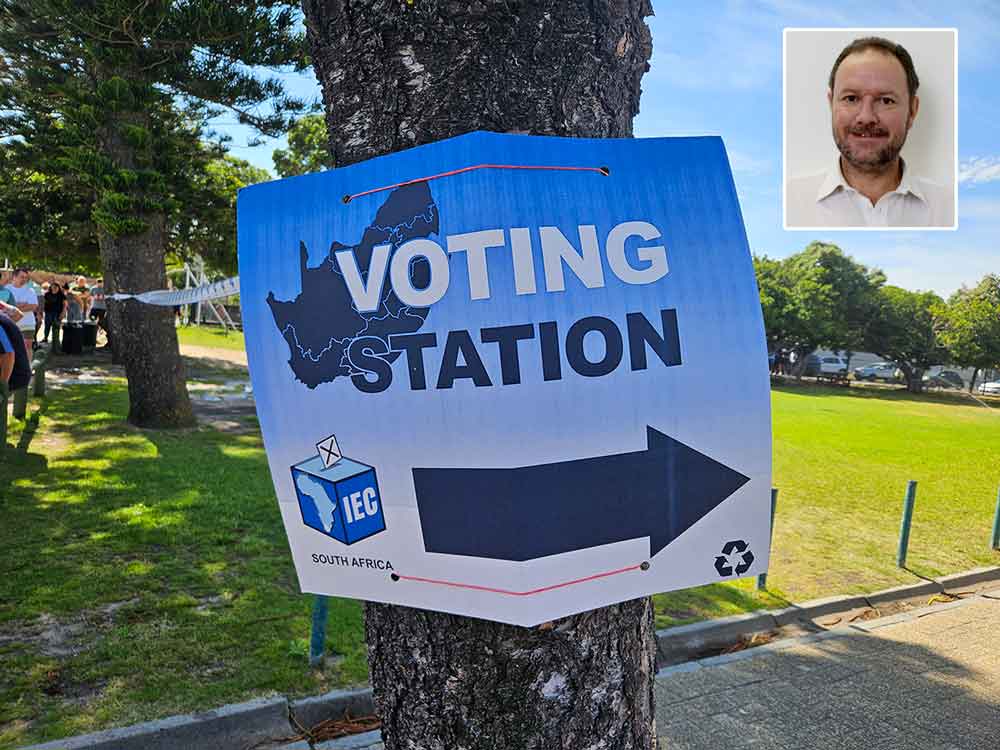
The appeal follows the November 4 municipal elections, which saw the African National Congress (ANC) suffer another substantial electoral setback, while the Democratic Alliance (DA) strengthened its position and the MK Party emerged as the country’s third-largest party in its first local government elections.
According to the final results announced by the Independent Electoral Commission (IEC) on November 8, the ANC received 30,76% of the national vote, securing 3,246 council seats. The DA came second with 24,64% and 1,695 seats, followed by the MK Party with 9,76% and 785 seats. The Economic Freedom Fighters (EFF) received 6,22% and 588 seats, while ActionSA secured 5,67% and 313 seats. Other parties and independent candidates collectively received 22,97%.

Voter turnout was 52%, up from 45,9% in the 2021 municipal elections. However, no party secured an outright majority in 127 of the country’s 213 municipalities, making coalition-building necessary in those councils.
Pothier notes that the ANC’s declining electoral support has been described by commentators, including the party’s own chairperson, Gwede Mantashe, as evidence of a “maturing democracy”.
“The ‘liberation dividend’ is wearing off and people are gradually – in some places, quickly – casting aside their old loyalties,” Pothier writes.
In larger cities and regional centres, voters are increasingly making “hard-headed assessments” of which parties are most likely to serve their interests. “Actual track records are beginning to count for more than mere promises or appeals to former achievements,” he observes.
But Pothier questions whether politicians are showing similar maturity as they face the task of negotiating governing agreements in seven metropolitan municipalities and more than 100 other local councils.
Since local government is primarily concerned with practical matters such as sanitation, clean water, roads and reliable electricity, rather than major ideological or national policy differences, he argues that reaching agreements should not be so difficult.
“They should be looking for the most effective means of honouring the wishes of the voters,” Pothier writes.
Pothier points to Gauteng as an opportunity for constructive cooperation. The DA, ANC and ActionSA together secured just under 75% of the vote across the province’s three metropolitan municipalities. He suggests that the parties could each take the mayoralty of one metro and distribute mayoral committee positions proportionately, demonstrating a willingness to compromise in the interests of residents.
Instead, he observes, initial political statements have largely focused on exclusions, demands and conditions, including refusal to enter coalitions unless particular leaders are removed or certain parties are kept out.
The deadline for reaching coalition agreements is November 22. Pothier warns that negotiations will already be challenging within such a limited period, even with goodwill.
“When the starting point is one of implacability and exclusion, it renders the process far more difficult, and calls into question the maturity of those on whom its successful conclusion depends,” he concludes.

- CPLO calls for political maturity in coalition talks - November 10, 2026
- African Church must face issues of polygamy - November 10, 2026
- Archbishop Sipuka Marks 40 Years of Neocatechumenal Way in Cape Town - November 10, 2026