St Cecilia
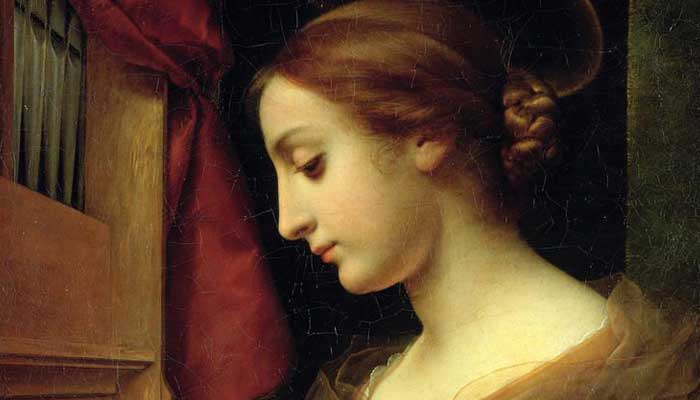
Born into a wealthy patrician family in Rome around 200 AD, Cecilia dedicated her virginity to Christ despite being married off to a pagan nobleman named Valerian. On her wedding day, while instruments played around her, she sang in her heart to God. She convinced Valerian to respect her vow, leading him and his brother Tiburtius to convert and receive baptism. Both brothers were later executed for defying Roman authorities by burying martyred Christians.
Following her husband’s death, the young widow gave away her wealth to the poor and transformed her home into a place of worship. Around 230 AD, during the reign of Emperor Alexander Severus, Cecilia was arrested and sentenced to die by suffocation in her home’s overheated baths. After surviving unharmed, an executioner struck her neck three times without successfully severing her head. Gravely wounded, she lived for three days, encouraging local Christians before succumbing to her injuries.
In 1599, during excavations at her basilica in Rome’s Trastevere district, her body was found incorrupt in the exact pose depicted by sculptor Stefano Maderno’s famous statue.
Though historical records from the period are sparse, her enduring legacy as a courageous virgin martyr remains central to Catholic tradition. Derived from the account of her praying amidst her wedding music, Cecilia became firmly established by the Middle Ages as the patron saint of sacred music, inspiring famous compositions by Handel, Purcell, and Britten. Honoured in the Roman Canon of the Mass, Saint Cecilia’s feast day is celebrated on November 22.