Each Part of the Mass is Important
The Catholic Mass is built around four foundational movements, each serving a profound spiritual purpose that invites active, personal investment rather than passive observation. These are the core parts of the Mass and why being deeply involved in them matters for your faith journey.
Why care and get involved? Mass doesn’t just happen to you; it requires intentional transition. Participating in the opening songs and prayers helps you shake off the noise of the outside world and reorient your focus. By actively participating in the Penitential Act, you honestly acknowledge your human imperfections, receive God’s mercy, and clear away spiritual distractions so you can enter the sacred mysteries with a pure and humble heart.
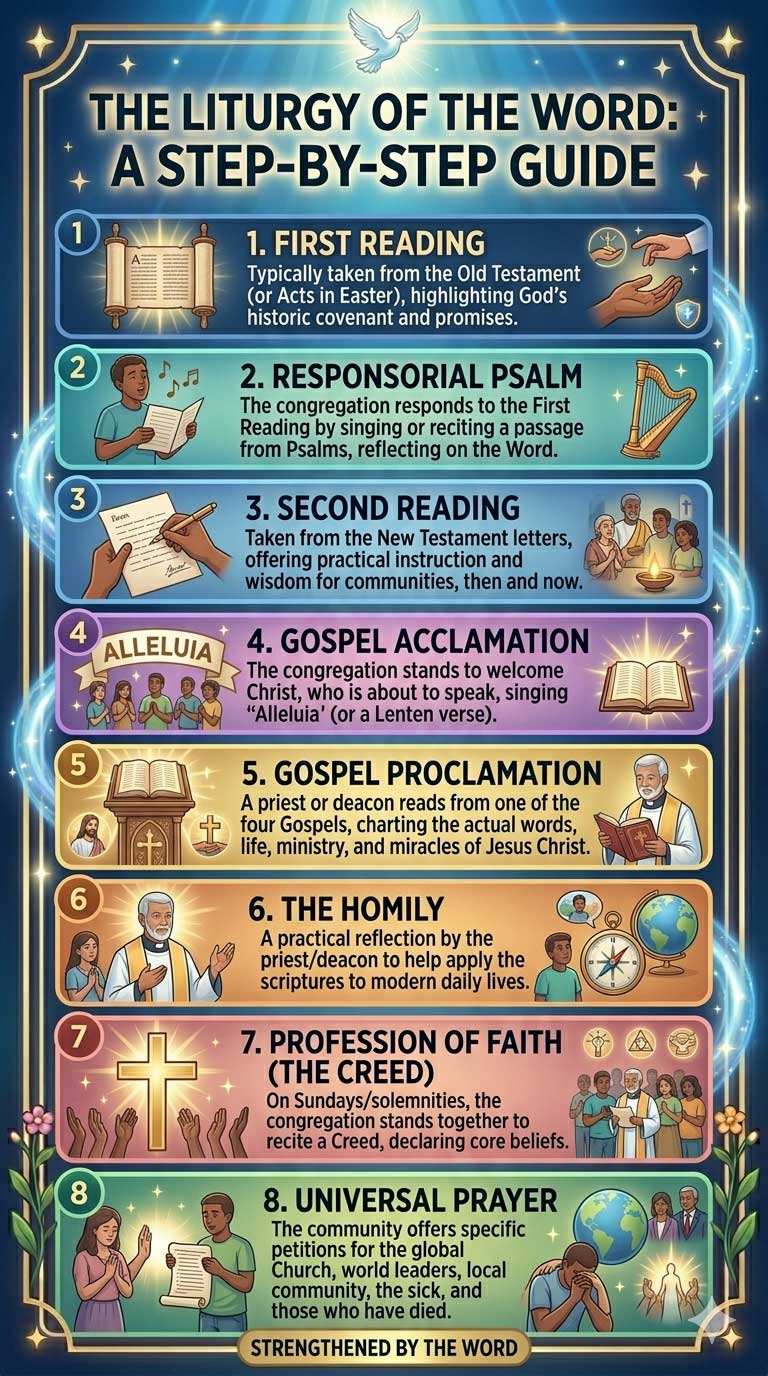
Why care and get involved? This part of the Mass provides the essential roadmap for daily Christian living. Engaging deeply with the readings — actively listening, responding to the Psalm, and reflecting on the homily — is how your mind is formed by scripture. It challenges your modern perspectives, offers profound spiritual wisdom, and equips you with the truth needed to make moral, life-giving decisions in your day-to-day life.
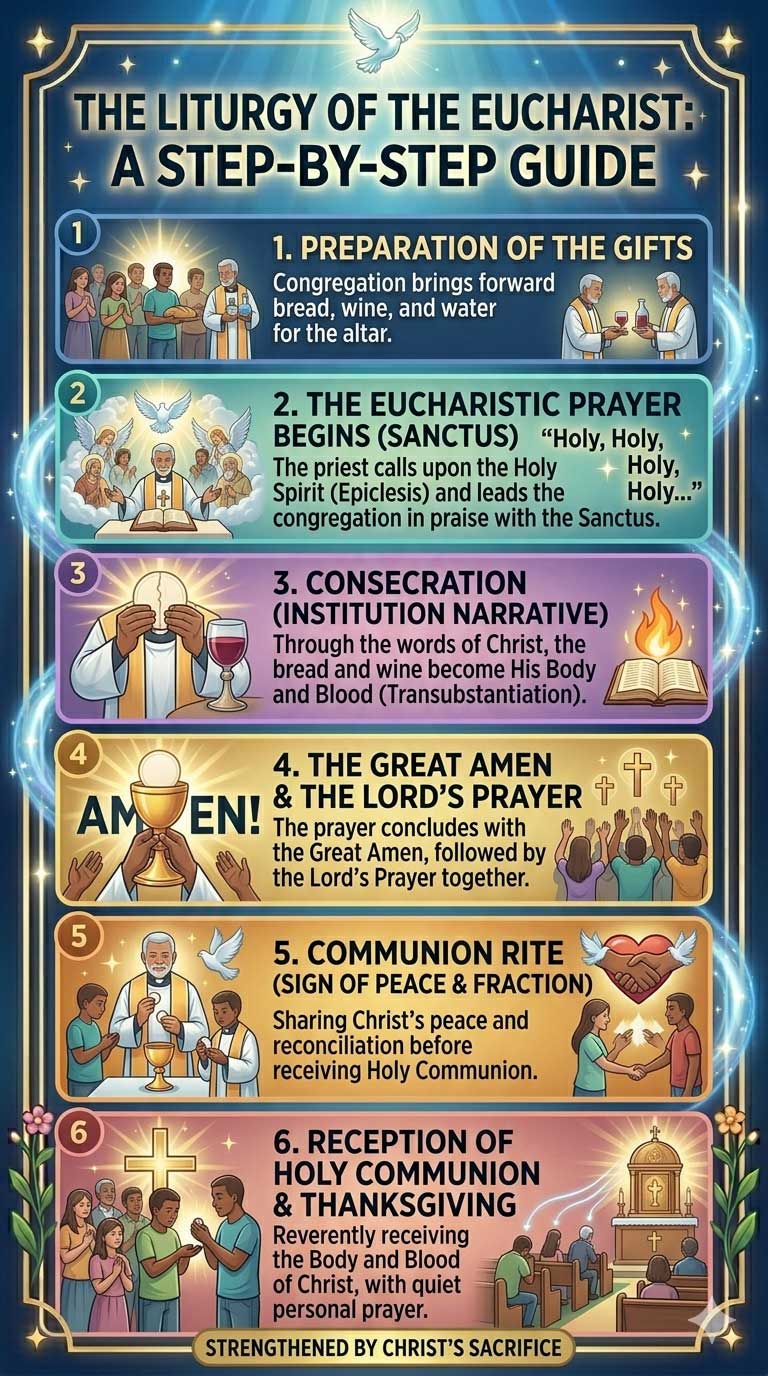
Why care and get involved? This is the ultimate moment of intimate, spiritual nourishment. When you bring your inner intentions to the altar during the offertory, you are symbolically placing your own weekly struggles, joys, and sacrifices alongside the bread and wine to be transformed by God. Receiving Holy Communion is not just a ritual; it is a profound, life-altering encounter that binds your daily life directly to Christ and unites you intimately with the global Church community.
Why care and get involved? The Mass does not truly end when the liturgy finishes; it changes venue. Getting involved in the Concluding Rites means accepting a supernatural “boost” of grace and a direct commission. When you receive the blessing and hear the words to “go in peace,” you are being sent out as a living tabernacle to bring Christ’s love, justice, and mercy into your home, workplace, and local community.
Quick Guide
Quick Guide