St Francis of Assisi: The ‘superstar saint’ who sought poverty
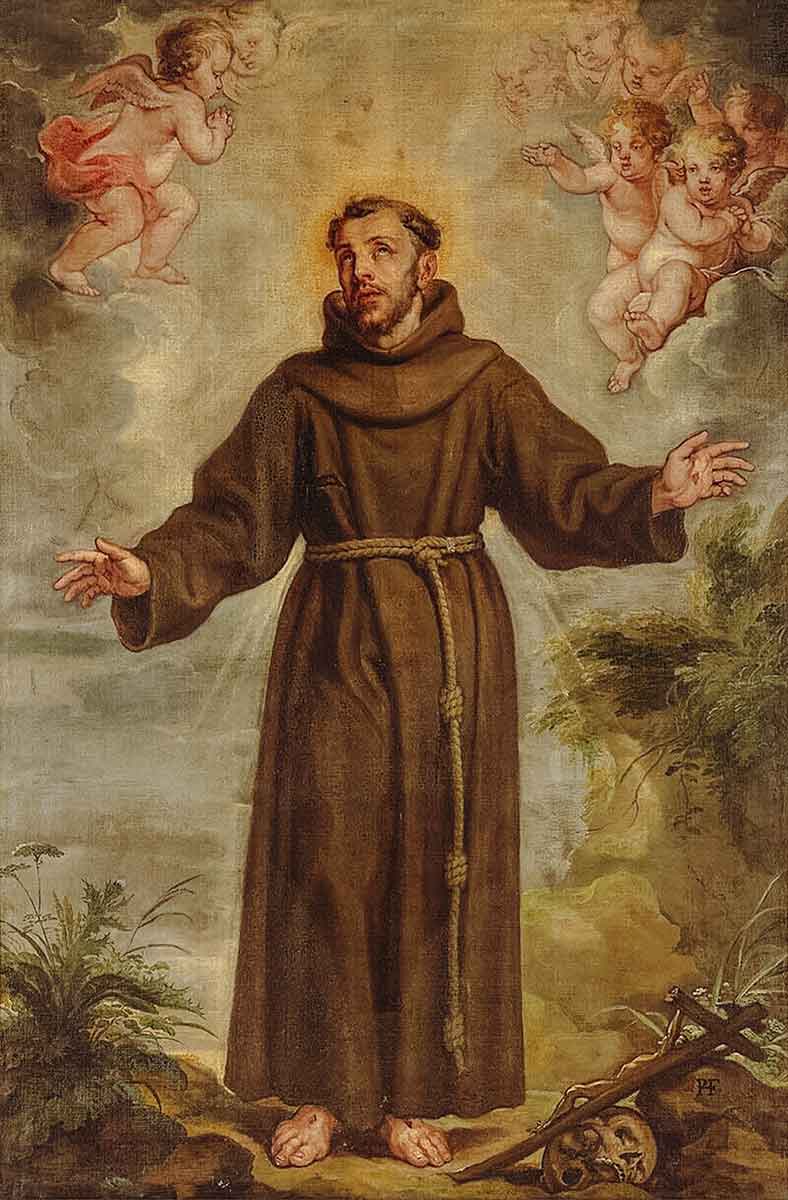
As a youngster he lived the high life, but now he is known as the ‘beggar saint’. This is the life of the much-loved St Francis of Assisi
St Francis at a Glance
Name at birth: Giovanni di Pietro di Bernardone
Born: 1181 or 1182 in Assisi, Duchy of Spoleto, Italy
Died: October 3, 1226, in Assisi, Umbria, Papal States
Canonised: 1228
Feast: October 4
Patronages: Animals, ecology, merchants, stowaways, Italy

He may well be the most popular of all saints in history, other than the Blessed Virgin. St Francis of Assisi certainly was an innovator and a revolutionary reformer. When he heard the call to “repair my church”, he didn’t realise that this was not an assignment for a renovation job but a command to change a scandal-ridden institution.
St Francis of Assisi was born in 1182 in Italy’s region of Umbria, one of several children born to the wealthy silk merchant Pietro di Bernardone and his wife Pica, who hailed from France. Born while Pietro was away on business, Pica had her son baptised by the name Giovanni (Italian for John). On his return, Pietro, who loved everything about France, decided to call the infant Francesco, meaning “Frenchman”.
Francis grew up in luxury, and placed pleasure music and sports especially, above academic pursuit. Although Francis lived the high life, he always gave to the poor: on at least one occasion all he had on him after concluding a business deal on his father’s behalf.
Around 1202, he joined a military campaign against the city of Perugia. Francis was captured and spent a year in captivity as a hostage for ransom. While ill, he started to evaluate his life. Still, on his return to Assisi he resumed his carefree lifestyle. In 1205, Francis set off for another military expedition, but on his way he had a vision that told him to turn around and go home. He did so, and his life was to take a new direction.
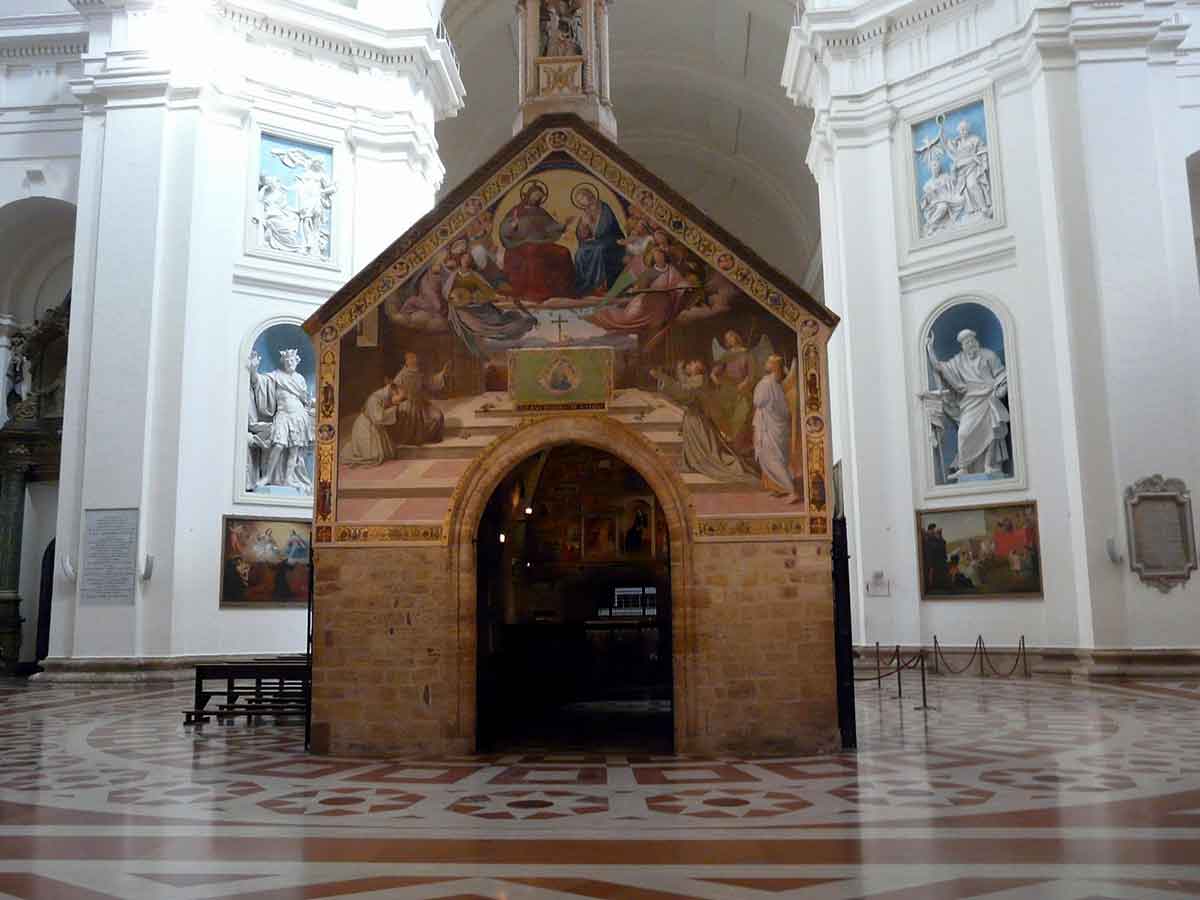
The Porziuncola inside the basilica of St Mary of the Angels in Assisi. Photo: Günther Simmermacher
Life-changing vision
One day Francis had a vision that changed his life. Praying in the run-down chapel of San Damiano, just outside Assisi, he heard from a crucifix the voice of Christ: “Francis, Francis, go and repair my church which, as you can see, is falling into ruins.” Francis understood this to mean the church in which he was praying, so he sold some of his father’s stock and offered the proceeds to the church’s priest, who refused to accept illicitly-raised money.
Pietro was understandably livid about the embezzlement, beating Francis and having him locked up. In a civil trial before the local consuls and bishop, he demanded that Francis relinquish his inheritance. The son went further: he renounced his father and patrimony, and stripped himself naked; the bishop covered him with his own cloak.
Francis now was a beggar, living a life of penitence, caring for lepers, and collecting materials to restore the church of San Damiano and other derelict chapels, including the Porziuncola, a little chapel dedicated of St Mary of the Angels in the fields below Assisi. This would became his favourite spot.
Although neither qualified nor authorised to do so, Francis preached to people. Soon he started to gather followers. Among them would be a young noblewoman, Chiara Offreduccio, whom we now know as St Clare of Assisi.
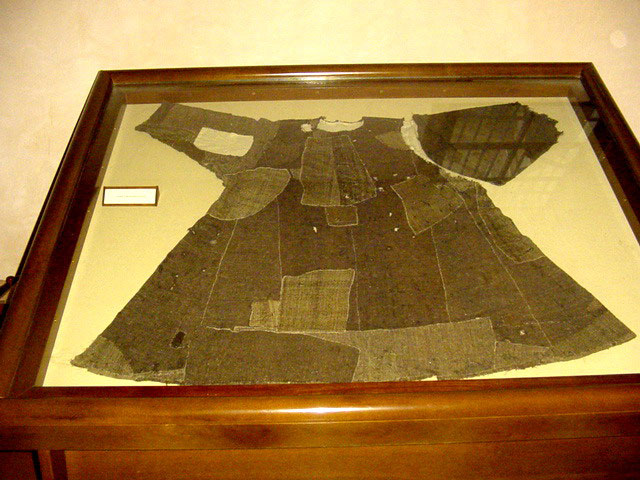
A patched-up robe of St Francis. Photo: Günther Simmermacher
In 1209 Francis wrote a simple Rule for his followers, and then went with 11 friars (Brothers) to Rome to obtain permission from Pope Innocent III to found a new religious order. In Rome, Francis had some support but also faced resistance. The matter was settled when the pope had a dream of Francis carrying the basilica of St John Lateran, the papal cathedral. the pope had the group tonsured — a sign of acceptance — and told them to apply for recognition when their numbers increased. They did, and on April 16, 1210, Pope Innocent authorised the Order of Friars Minor, based at the Porziuncola, which the Benedictines had transferred to Francis.
Two years later, Clare founded a religious order for women, the Second Franciscan Order, known as the Poor Clares. Later a Third Order of Franciscans was founded for lay people. In the meantime, the order grew rapidly, and received wide support from rich donors and the people.
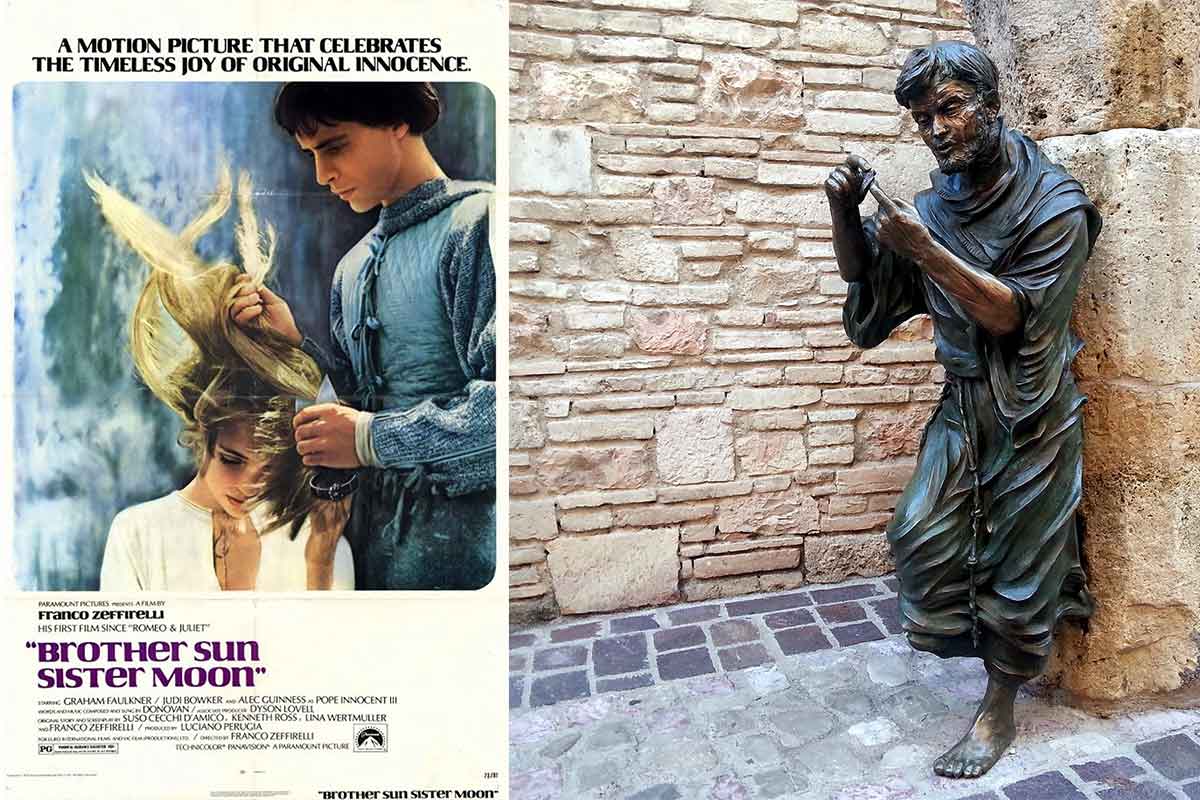
Poster for Brother Sun, Sister Moon, the 1972 Franco Zeffirelli film on St Francis. Francis and the bird sculpture. Photo: Günther Simmermacher
Meeting the sultan
In 1217, Franciscan friars founded the order’s first house in Jerusalem. It isn’t known whether Francis ever got to visit them when he was in the Holy Land in 1219. On that same trip, during a ceasefire in the war between the Crusaders and Muslims, Francis tried to mediate a peace agreement with the Sultan al-Kamil of Egypt, at his camp in Damietta. The sultan received Francis graciously and Francis was even allowed to address the Muslims. The meeting was noteworthy but did not end the war. However, it fostered goodwill for the Franciscans, who a century later would be given custodianship of holy Christian sites in the Holy Land, which they still hold today.
By now, the order had grown internationally at an unprecedented rate. In 1220 Francis resigned as minister-general of the order, and concentrated on writing a new Rule for the order, in a cave at Fonte Colombo.
At the Franciscan monastery at Greccio, near Fonte Colombo in Italy’s Lazio region, Francis initiated an annual tradition which we still love today: the Nativity Scene. His first staging, at Christmas 1223, used live animals and a real baby.
Francis was concerned about the ecology long before care for God’s creation was seen as important. In the “Canticle of the Sun” he gives God thanks for Brother Sun, Sister Moon, Brother Wind, Water, Fire, and Earth, all of which he sees as rendering praise to God. Almost 800 years later, Pope Francis — who named himself after the saint of Assisi — dedicated his landmark encyclical on the environment, Laudato Si’, to St Francis.
St Francis is the patron saint of animals, owing to stories in which he negotiated a truce with a wolf in Gubbio and silenced noisy birds at the hermitage of Carceri, near Assisi.
Francis died at the age of 44 on October 3, 1226, at the Porziuncola in Assisi (the spot of his death is preserved in today’s basilica of St Mary of the Angels). He was canonised only two years later, in 1228, by Pope Gregory IX, who as Cardinal Ugolino di Conti was Francis’ friend and protector. His tomb is in the Assisi basilica which was built shortly after his death and was consecrated in 1253.
St Francis’ feast day is October 4.
Published in the October 2022 issue of The Southern Cross magazine

- Shrines around the World: Our Lady of Beauraing - March 21, 2026
- St Patrick: From Slave to Apostle - March 17, 2026
- New Cape Town Archbishop Calls For Unity and Prophetic Courage - March 14, 2026