
Are there really Married Catholic Priests?
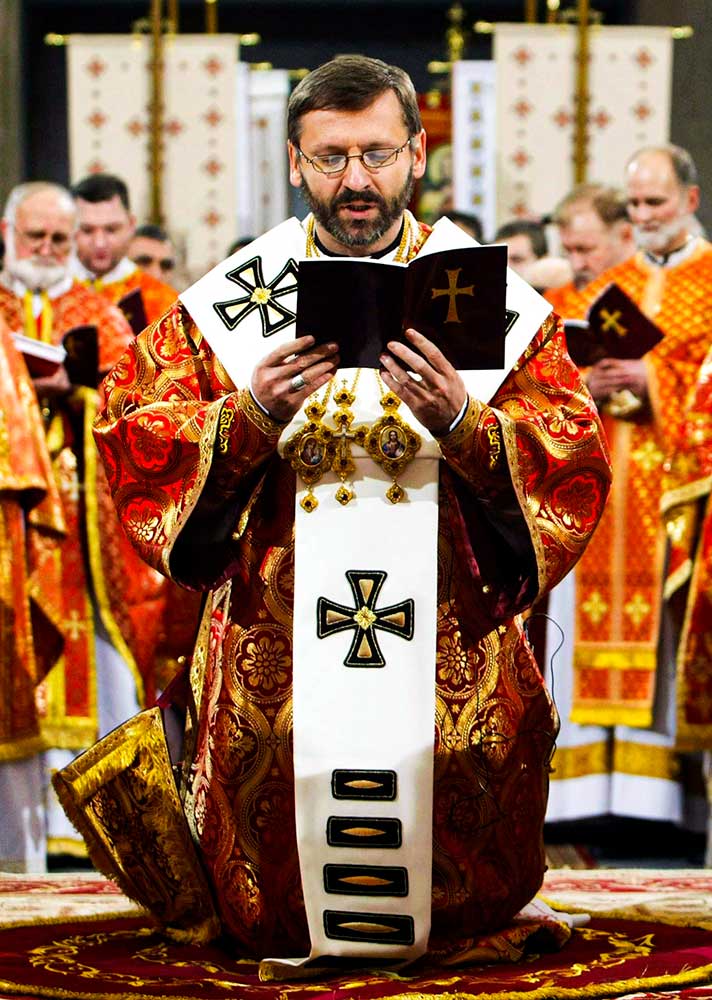
(CNS photo/Konstantin Chernichkin, Reuters)
Question: According to our parish priest, “some priests in the Catholic Church can get married, it depends which rite of the Catholic Church they belong to”. I have never heard of this. Could you elaborate?
Answer: Your priest is correct. As you know, there are several rites within the Church, of which the Latin (or Roman) rite is the most common one. But there are other rites that have their origins in the ancient Christian traditions of the Eastern churches. They are in communion with the pope and acknowledge the authority of the universal Catholic Church.
However, most Eastern Christian communities have preserved their unique liturgical, theological, and spiritual traditions. They retain their distinct liturgical practices, and often have their own hierarchy and canon law, while still remaining in full communion with Rome.

These rites include Maronite, Melkite, Chaldean, Greek, Armenian, Coptic, Ukrainian, Ruthenian, Russian, Syro-Malabar, and so on.
Some of these rites’ traditions and practices are older than those in the Latin rite. For example, the discipline of obligatory celibacy for priests was universally formalised for the Latin rite only in the 11th century.
Several Eastern Catholic rites allow for married priests. However, not all Eastern rites do. For example, the Syro-Malabar Catholic Church in India, which follows the East Syriac liturgical tradition, requires its priests to be celibate and unmarried.
But even those rites that allow married priests have certain requirements and limitations. Prospective priests must be already married before they seek ordination and receive special permission from the local bishop. Once ordained, they may not marry. And married priests are precluded from becoming bishops.
Even in the Latin rite there are some married priests. These are married clergy who were previously ordained in another Christian tradition and subsequently converted to Catholicism. This practice is known as the “pastoral provision” or “ordinariate”, and allows for the ordination as Catholic priests of married former Protestant ministers, particularly Anglicans who have become Catholic.
Asked and answered in the October 2023 issue of The Southern Cross magazine

- The Angelus Prayer - March 25, 2026
- Palm Sunday Prayer - March 24, 2026
- Pope: We Cannot Remain Silent - March 24, 2026



