Why do some Christians have services on Saturday, others on Sunday?
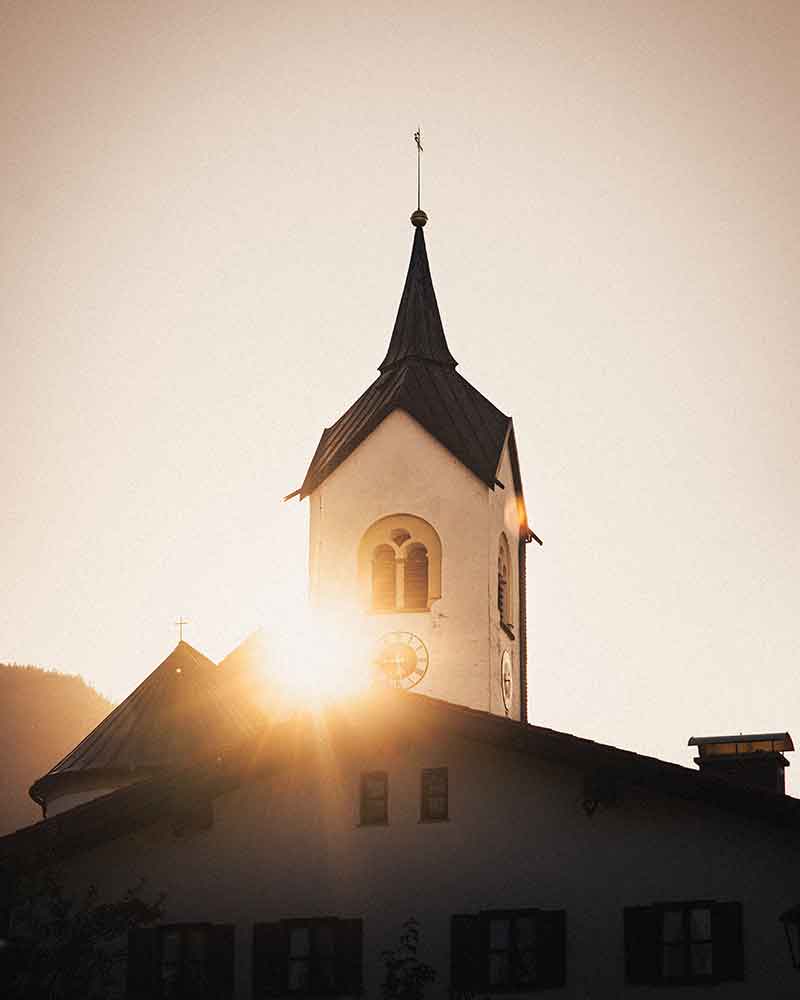
Florian Weichert/Unsplash
Question: Why do we go to church on Sundays and some other churches go to church on Saturday?
Answer: As you know, Catholics go to Mass on Sunday because the Church holds that Sunday is the Lord’s Day, commemorating the day that Jesus rose from the dead. Sunday is therefore the most important day of the week for Catholics, and attending Mass on this day is an obligation in Catholic worship and practice.
Other Christian denominations, such as Seventh-Day Adventists and some Protestant or Sabbatarian groups, observe the Sabbath on Saturday because they believe that the Sabbath is the day on which God rested after creating the world. In line with Judaism, they interpret this as a commandment to keep the seventh day of the week holy, and therefore observe it as a day of rest and worship.

The shift from Saturday to Sunday as the primary day of worship in Christianity is believed to have occurred in the early Church, as Christianity became more distinct from Judaism. Some early Christian communities continued to observe the Sabbath on Saturday while others began to celebrate the resurrection of Christ on Sunday. Over time, Sunday became the established day of worship for most Christians.
Of course, some Catholics go to Mass on Saturdays. Since 1958, the faithful may fulfil their Sunday Mass obligation by attending Mass on Saturday evening, and since the Second Vatican Council most parishes have been offering that option. The order of the Mass and readings are identical to those in the Sunday Mass, because it is the Sunday Mass. This returned an early tradition to the Church which had been abandoned only in the Middle Ages.
Beginning of a new day
But how is it possible to have Sunday Mass on a Saturday? Until about 400 years ago, the day ended not at midnight but at sunset. This was also the liturgical norm for most of the Church’s history, in keeping with Jewish practice (in Judaism, the Sabbath begins after sunset on Friday and ends with the sunset on Saturday). The new day started immediately after sunset, so Sunday began immediately after the sun had set on Saturday. Thus, a Mass after Saturday’s sunset was the first Mass of Sunday.
By that token, the Saturday evening Mass should really be celebrated after the fall of darkness, but for many reasons this is not always feasible. Pope Pius XII realised this when he made a change in canon law in 1958 to allow Catholics to fulfil their Mass obligation — Sunday Masses, holy days of obligation, and so on — by attending Mass “in the evening of the preceding day”. In his apostolic constitution “Christus Dominus”, he set the earliest hour for such a Mass at 16:00. Pope Paul VI formalised this rule in 1969.
(Günther Simmermacher)
Asked and answered in the September 2023 issue of The Southern Cross magazine

- The Angelus Prayer - March 25, 2026
- Palm Sunday Prayer - March 24, 2026
- Pope: We Cannot Remain Silent - March 24, 2026