A Tribute to Mme Lucy Mapaseka Letho: Faithful Witness and Quiet Questioner
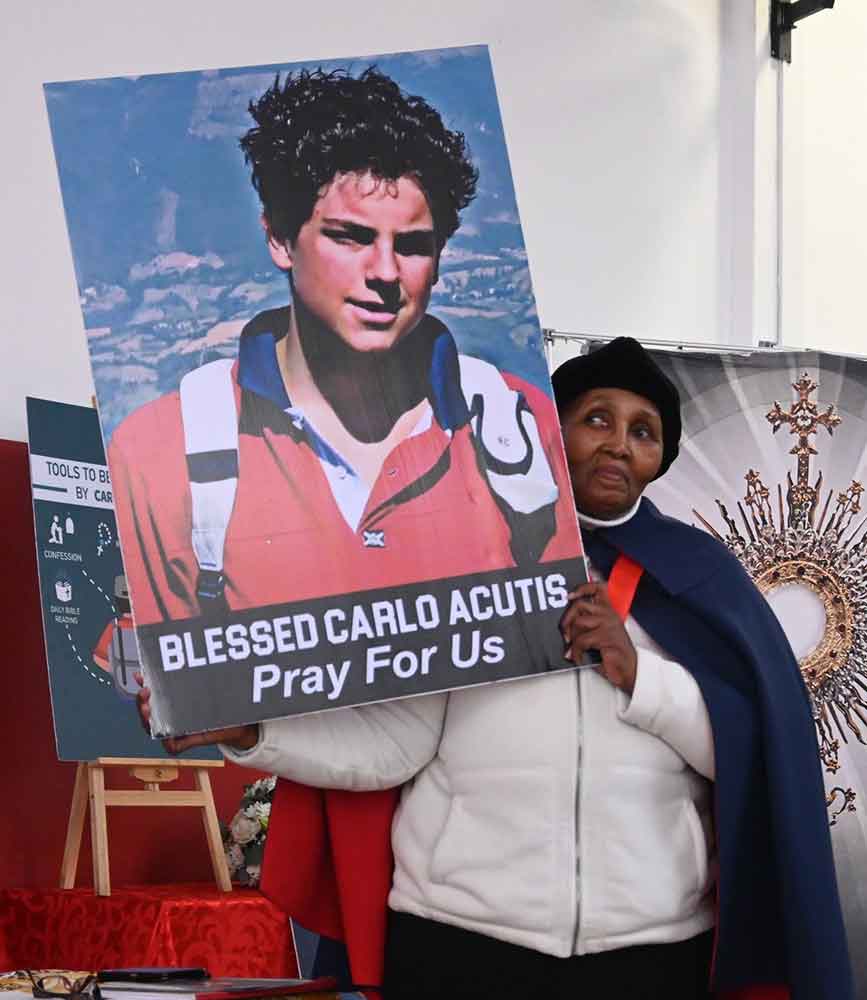
Mme Lucy Mapaseka Letho
Fr Mathibela Sebothoma reflected on the life of Lucy Mapaseka Lethoone who died a year ago at the Cathedral of the Sacred Heart in Pretoria, and is inspired by her reverence for Holy Mass and the Blessed Sacrament.
Mme Lucy Mapaseka Letho was a remarkable woman whose serene dedication and contemplative presence made a significant impression on all who encountered her at the Cathedral of the Sacred Heart. I had the honour of observing her unwavering faith, despite our limited conversations. Her attendance at weekday Mass was as reliable as the dawn; she never missed a service, her concentration unwavering, and her reverence for the Eucharist unmistakable. She navigated the sacred space with elegance, consistently genuflecting before receiving Holy Communion, exemplifying true devotion to Christ. Even in her later years, her respectful genuflection prompted some of us to reflect on how we honour the Lord ourselves, serving as a reminder of the profound respect and reverence that should accompany our worship. Mme Lucy was also present during the exposition and benediction of the Blessed Sacrament, fully immersed in prayer, her life a testament to her steadfast love for the Lord.
Beyond her daily attendance at Mass, Mme Lucy was profoundly committed to the Sacred Heart devotion on First Fridays and held the Holy Rosary dear as an integral part of her spiritual practice. These rituals were not simply habits for her; they were manifestations of her deep-rooted faith and love for God. Her commitment to these devotions conveyed a powerful message about her desire to grow closer to the Sacred Heart of Jesus and to seek Mary’s intercession in all aspects of life and faith. Although she spoke little, her prayers were abundant. Her tranquil exterior masked a passionate spirit that uplifted her family, friends, and Church community before God.

What stood out particularly was her dedication to the cause of sainthood for Blessed Carlo Acutis. Despite her advanced age, Mme Lucy maintained a profound conviction that young individuals like Carlo Acutis would play a crucial role in shaping the faith and future of the Church. What stood out remarkably was her dedication to the cause of sainthood for Blessed Carlo Acutis. Despite her age, Mme Lucy possessed a deep conviction that young individuals like Carlo Acutis would significantly influence the faith and future of the Church. She perceived Carlo as a role model for contemporary youth and believed that his example of holiness in a digital era would resonate with and inspire future generations. Her advocacy for his canonisation cause revealed her vision and hope for the younger generation to courageously embody their faith, just as Carlo did.
On 19 February 2018, she reached out to me on a public platform—Facebook—with a thoughtful inquiry that demonstrated her profound concern for the faith. She inquired: “This weekend, I learned that some songs we adapt from other churches contradict our faith, and we must be cautious about which songs from Protestants we incorporate into our church. Your insights would be appreciated.” Her question was sincere, her tone contemplative, and her concern deeply rooted in her comprehension of the Church. It presented an opportunity to explore the intricacies of liturgical music, a subject that has long been debated within our Church. I shared my perspectives on the issue, addressing the diversity and occasional contradictions in liturgical selections and the historical context behind them.
In her unique manner, Mme Lucy was engaging in theology without formal study—what we refer to as “theology from the ground,” a faith seeking understanding. Her question underscored a crucial insight: faith encompasses not only participation but also reflection and discernment. Her willingness to investigate complex issues of faith illustrated a profound desire to comprehend and live her beliefs more fully.
The Church has never enforced a singular hymn book, instead fostering diversity across cultures and communities. For instance, during my tenure in Milwaukee’s Archdiocese, each parish—whether predominantly Polish, German, or African American—maintained its distinct hymnbook. In our household, we frequently engage with Lifela tsa Bakriste and other hymns that are distinctive to South African traditions. These cultural manifestations embody our identity as a community and as believers. However, we must remain aware that certain songs, even those within Lifela tsa Bakriste, may not completely conform to the Catholic teachings as articulated by Vatican II. Individuals such as Fr. Dave Dargie dedicated themselves to the promotion and preservation of African traditional music within our liturgical practices, motivating composers and providing us with a South African representation in our worship.
Mme Lucy’s inquiry highlighted the core of what constitutes truly “Catholic” music: any melody that draws us nearer to God, that connects us with our families, and that fosters forgiveness, reconciliation, and spiritual development. Authentic Catholic music is not merely characterised by its place of origin but by its capacity to elevate our hearts and minds towards God. Mme Lucy’s inquisitiveness and willingness to delve into this subject rendered her a quietly impactful theologian in her own right.
Even after Mass or any service, Mme Lucy would gently acknowledge those around her and depart, steering clear of extended conversations that might undermine the sanctity of worship. It appeared to me that she aimed to evade discussions that could veer into negativity, opting instead to exit the church with the tranquillity she had just encountered.
Mme Lucy’s existence serves as a reminder of the strength of devotion that does not require proclamation. Her life was a melody, a gift to God, characterised by her presence and her steadfastness. Her dedication to the sacred, her insightful inquiries, and her sincere faith continue to motivate us. As we reflect on her, may we discover in her legacy a summons to remain rooted in our faith, quietly devoted yet courageous in our pursuit of understanding. In her unique manner, Mme Lucy embodied a theology that was vibrant and applicable, a faith that genuinely sought comprehension. Mme Lucy Mapaseka Letho, may you rest in the peace of the Lord whom you served with such dedication.
- A Tribute to Mme Lucy Mapaseka Letho: Faithful Witness and Quiet Questioner - November 14, 2025
- The Synodality of Religious Life In Africa - May 27, 2025
- Serving God and the Church Through Sickness - April 2, 2025