Making Synodality a Way of Life in Johannesburg Parishes
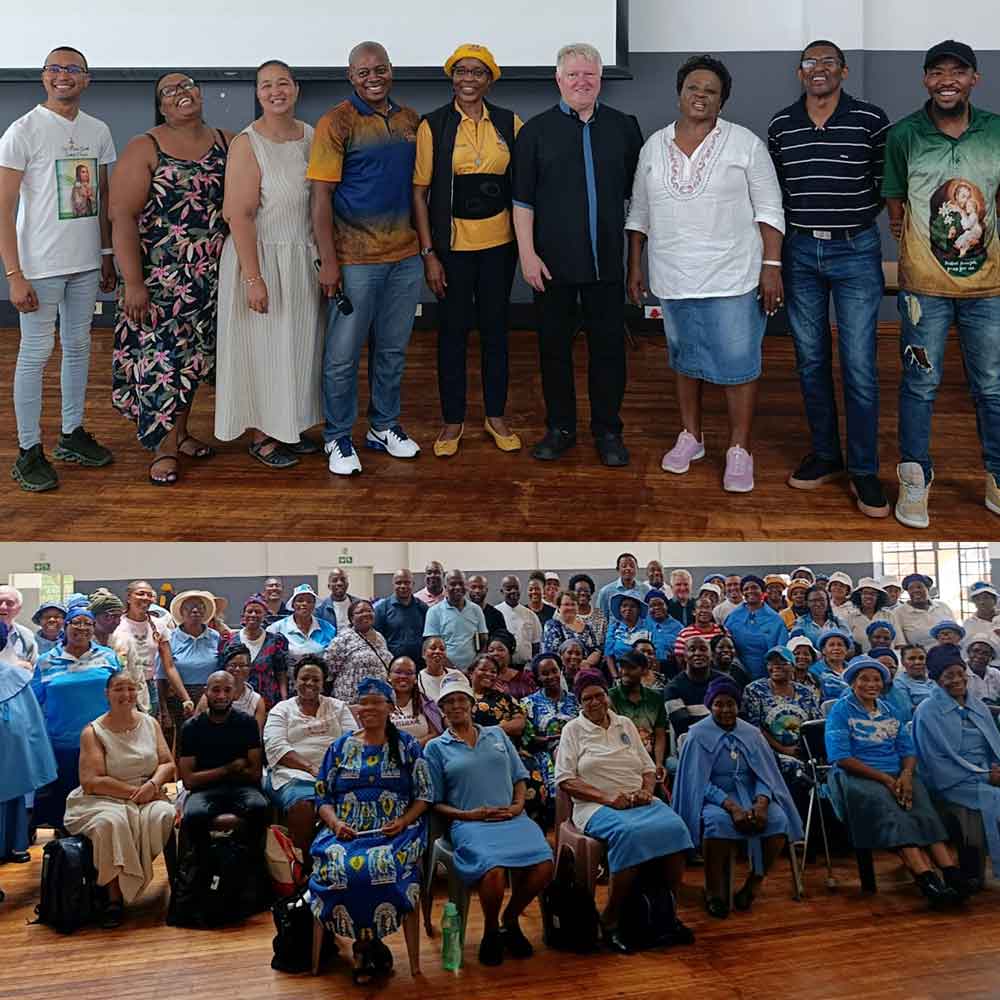
Archdiocese of Johannesburg synodality workshop
By Kati Dijane – Parish, deanery and sodality leaders from across the Archdiocese of Johannesburg gathered on Saturday, January 24, for a formation workshop focused on the implementation phase of the Synod on Synodality, with a particular emphasis on synodal spirituality as the foundation of a synodal Church.
The workshop was led by Fr Bruce Botha, chairperson of the Synod Committee and head of the Department of Evangelisation in the Archdiocese of Johannesburg. In his presentation, Fr Botha guided participants through the meaning, journey and future direction of synodality, reminding leaders that synodality is not a programme or event but a way of journeying together as the people of God.
Fr Botha explained that synodality calls the Church to listen deeply to one another in order to discern how the Holy Spirit is speaking to the whole community. “Synodality reminds us that God’s will is not discerned in isolation,” he said, “but through attentive listening, dialogue and shared discernment within the gathered community.” In this sense, synodality reflects the Church’s call to communion, participation and mission.

Explaining Synodality
Offering a more technical understanding, Fr Botha described synodality as a participatory style of being Church, involving bishops, clergy and laity walking together, listening to one another and sharing responsibility for decision-making and spiritual renewal. He noted that the word “synod” comes from the Greek syn (together) and hodos (journey), capturing the essence of the Church’s call to walk together in faith.
Reflecting on the journey so far, Fr Botha traced the synodal process from its global launch in October 2021. This included widespread consultation at parish, diocesan and episcopal conference levels, followed by continental discussions across seven regions of the world. These consultations informed the Instrumentum laboris, which guided the Synod sessions held in Rome in October 2023 and October 2024. The Church has now entered the implementation phase of the Synod on Synodality, which will run from 2025 to 2028.
Turning to the journey ahead, Fr Botha stressed that synodality should be understood as an ongoing process rather than a destination. As part of this local implementation, the Archdiocese of Johannesburg has been mandated to review how it has lived out the resolutions of the 2019 Archdiocesan Synod. This review, due by Monday, 23 February, aims to identify areas where progress has been made, as well as areas requiring renewed focus and commitment. According to Fr Botha, how the archdiocese responds to this review will reflect the value it places on a synodal way of being Church.
Central to the presentation was the theme of synodal spirituality, which Fr Botha described as the foundation of a synodal Church. He explained that synodal spirituality is a lived experience rooted in listening, dialogue and discernment. It is marked by humility, openness to learning and a willingness to hear voices that may often be overlooked, particularly those on the margins of society and the Church. Rather than being a fixed set of practices, synodal spirituality is a dynamic orientation towards communion, participation and mission, calling the Church to continual conversion and renewal.
Fr Botha highlighted five key elements of synodal spirituality: listening, dialogue, discernment, participation and communion. Listening, he said, requires attentiveness to God, Scripture, tradition and one another. Dialogue creates space for people to share their lived experiences and receive the experiences of others as a gift. Discernment involves recognising the movement of the Holy Spirit and deciding together on the way forward. Participation ensures that all members of the Church are actively involved, while communion reflects unity in diversity, where difference is seen as a strength rather than a threat.
Synodal Listening
Participants were also introduced to the practice of synodal listening, particularly through the methodology of listening circles. Fr Botha explained that this approach encourages listening not in order to respond, but in order to truly hear. In a listening circle, participants share without interruption, reflect in silence, respond thoughtfully, and then discern common themes and movements of the Holy Spirit. Further formation on synodal listening is scheduled for 18 April.
Another key focus of the workshop was the renewal of parishes in a synodal and missionary spirit. Fr Botha noted that if synodal spirituality is the foundation of a synodal Church, then parish renewal is its fruit. This area will be explored further during a formation session on 18 July.
The implementation phase will also involve parish-based synodal listening groups, structured around three broad themes: spirituality, governance and mission. Drawing on 11 focus areas outlined in the Synod implementation documents, parishes will reflect on topics such as lay leadership, women in ministry, participatory decision-making, transparency, accountability and the functioning of parish pastoral and finance councils.
To support this process, the Synodality Committee will provide parishes with resource packs and feedback tools, with parish submissions due by 24 August. The implementation phase will culminate in a closing event on 18 and 19 September, where each parish will be represented by its priest and key leadership structures. Cardinal Stephen Brislin, the Archbishop of Johannesburg, will deliver the opening address and preside at the closing Mass. Feedback from parishes will inform a final document with recommendations to be shared across the archdiocese.
Mr Teboho Mashoeng, chairperson of the Archdiocese of Johannesburg Pastoral Council and a member of the Synodality Committee, expressed his gratitude to the parish, deanery and sodality leaders who attended the workshop. He thanked them for their commitment to the synodal journey and encouraged them to share the information widely within their communities.
He emphasised that synodality requires collective ownership and active participation at every level of Church life. These synodal workshops aim to help our shepherd make wise decisions for the Church entrusted to him. The archdiocese also calls on priests, religious and laity alike to remain open to the promptings of the Holy Spirit while we continue this journey together.
The next workshop will take place on Saturday, 31 January 2026, at Christ the King Cathedral Big Hall, from 9am-1pm.

- Blessed Benedict Daswa Pilgrimage at Mother of Mercy Shrine - March 25, 2026
- Archbishop Sipuka Takes Possession of St Mary’s Cathedral - March 16, 2026
- Young designer from Ratanda wins Archdiocese of Johannesburg youth logo competition - March 10, 2026