
Shrines around the World: Black Madonna of Częstochowa
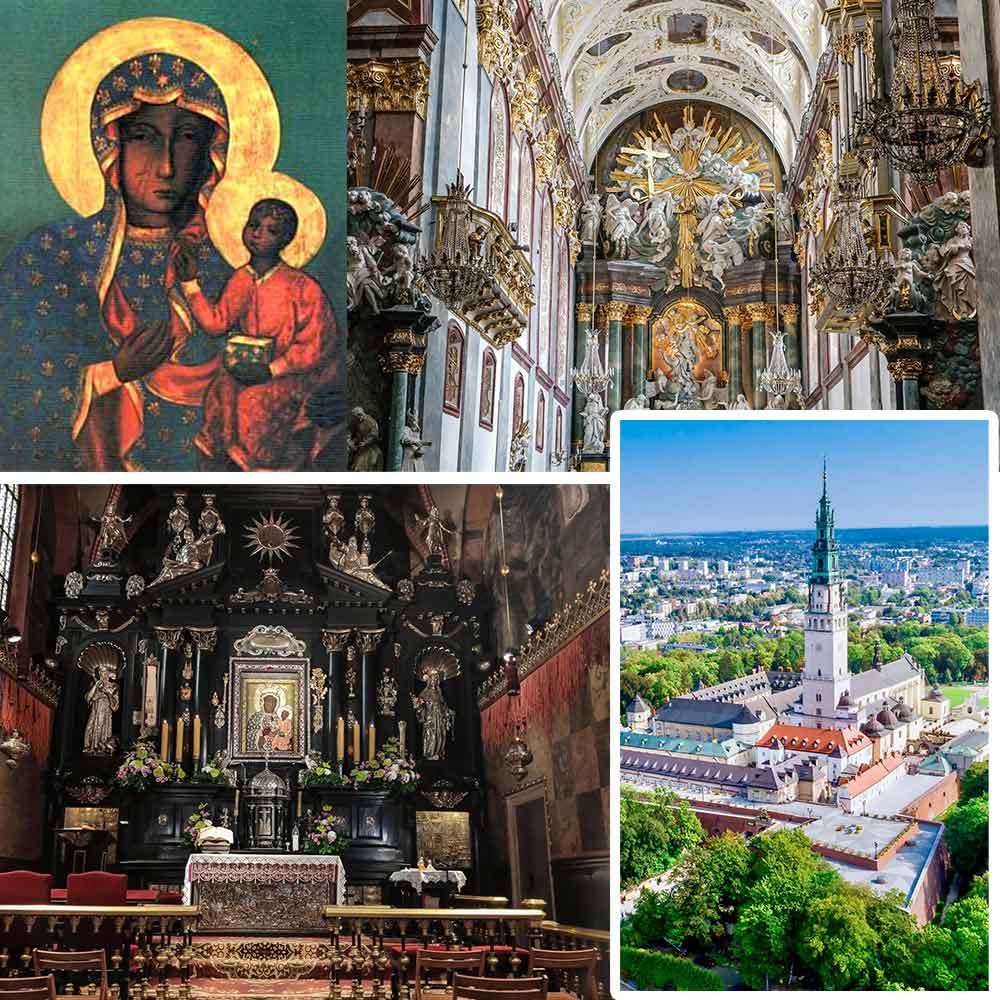
Jasna Gora monastery in Poland, home of the Black Madonna icon.
Where’s that: Częstochowa, southern Poland
Our Lady’s connection: Miraculous icon
The Black Madonna of Częstochowa is one of Poland’s most revered religious icons. Housed in the Jasna Góra monastery in Częstochowa, the miraculous image of the Virgin Mary is believed to have been painted by St Luke the Evangelist himself.

It is said that the icon was first brought from Jerusalem to Constantinople, and in the 14th century to Poland. In 1430, it suffered damage when Hussite raiders attacked the monastery. The deep scars on Mary’s face, left unrepaired, serve as a reminder of that attack.
For Poland, a Catholic nation, the Black Madonna is a great religious relic but also a symbol of national identity and resilience. During the Swedish invasion of 1655, the icon was credited with miraculously saving the Jasna Góra monastery from destruction, strengthening Polish faith. Pope St John Paul II, always deeply devoted to Mary, often emphasised the icon’s spiritual importance.
The title “Black Madonna” comes from its distinctive dark complexion. Over the centuries, exposure to candle soot and other elements caused the colours to darken, giving the image its unusual appearance.
The icon is housed in a chapel within the monastery church. Traditionally, pilgrims drop to their knees when they reach the front of the icon, and continue walking on their knees until they exit the shrine.
Jasna Góra was founded in 1382 by monks of the order of St Paul the First Hermit, who are also known as the Paulites. The order still lives at the monastery, and in the 1980s some of its monks came to serve in the diocese of Umzimkulu in KwaZulu-Natal. One of them was Fr Stanisław Dziuba, who is now the bishop of Umzimkulu.
Published in the August 2025 issue of The Southern Cross magazine

- Shrines around the World: Our Lady of Beauraing - March 21, 2026
- St Patrick: From Slave to Apostle - March 17, 2026
- New Cape Town Archbishop Calls For Unity and Prophetic Courage - March 14, 2026



