Why Law is a Vocation
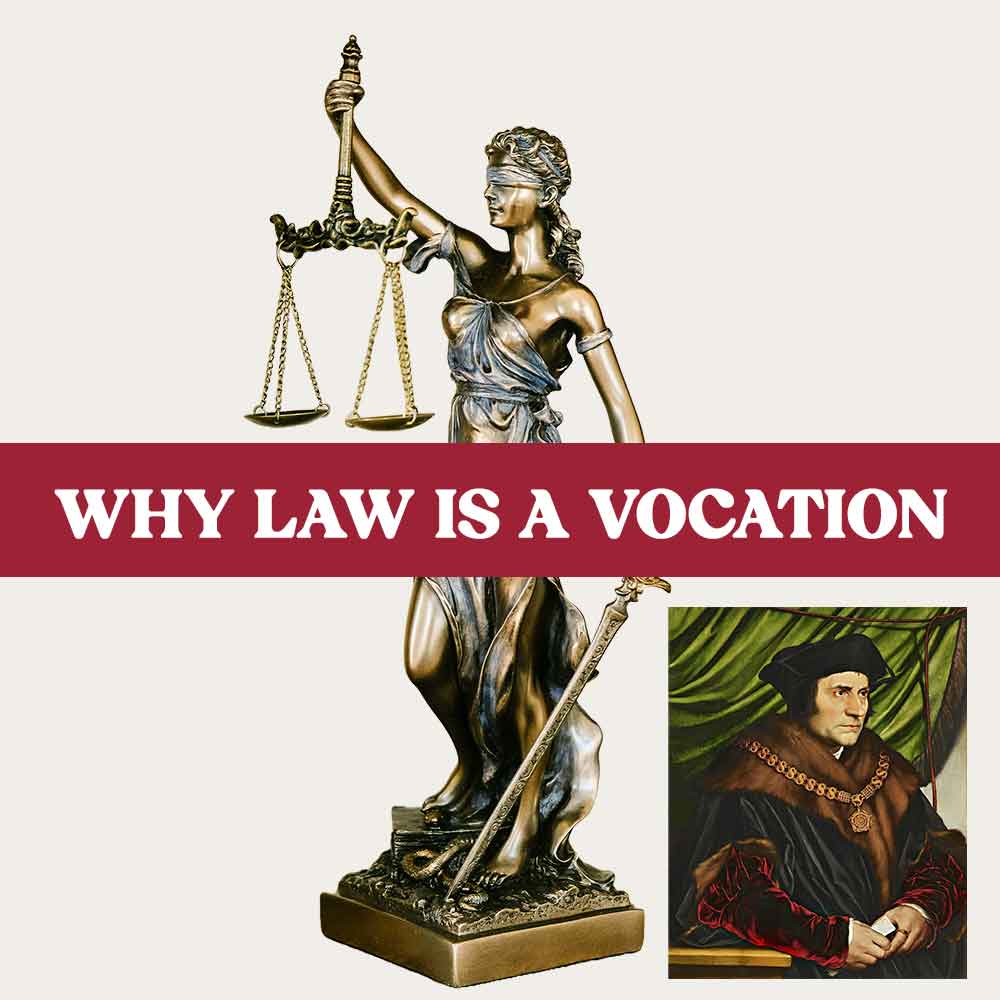
By Patrick L Kadima – What does justice mean when viewed through the eyes of faith? Law lecturer Patrick L Kadima reflects on courage, truth, ethics and defending the vulnerable in the legal system.
The Church celebrated the Jubilee of Justice on September 20 last year – we are called to reflect on the role of individuals practising in the broad legal field, and what justice from a faith-based perspective entails.
On October 23, 2014, Pope Francis told delegates of the International Association of Penal Law: “I assure you that I will continue to be close to you in your demanding work in serving man in the field of justice. There is no doubt that, for those among you who are called to live the Christian vocation of your baptism, this is a privileged and dynamic field of world evangelisation. For all, even those of you who are not Christian, there is a need in every case for the assistance of God, who is the source of all reason and justice.”

One of the most contentious debates confronting society today is whether there is an intersection between law and religion. Some may deny it, but there is clear evidence that law and religion do converge on several fronts.
The world we live in is full of inequalities. South Africa, for example, is regarded as one of the countries with the highest inequality rate. We have often seen attempts by individuals in positions of power to pass anti-poor laws — for example, those that affect the homeless or street traders.
Whether one practises law as a judge, attorney, advocate or academic, those in the legal profession are called to advocate for and defend the marginalised in our society — at all costs. Scripture calls us to protect and defend the most vulnerable in society. This is echoed in Proverbs, which instructs us to “speak up for those who cannot speak for themselves, for the rights of all who are destitute. Speak up and judge fairly; defend the rights of the poor and needy” (31:8–9).
Object of preferential love
Love for the poor and most vulnerable is deeply embedded in the Church’s teachings. The Catechism of the Catholic Church teaches that her love for the poor “is a part of her constant tradition. This love is inspired by the Gospel of the Beatitudes, of the poverty of Jesus, and of his concern for the poor” (2444).
It continues: “Those who are oppressed by poverty are the object of a preferential love on the part of the Church which, since her origin and in spite of the failings of many of her members, has not ceased to work for their relief, defence and liberation” (2448).
The Church’s teaching, inspired by scripture, is reflected in secular laws that seek to protect society’s most vulnerable. A notable example is the values and spirit of South Africa’s Constitution, which aims to uphold the rights of even the most marginalised.
Yet individuals who openly live out their Christian faith in the legal field are often labelled “controversial”. A 2019 study by Teresa Collett, professor of law at the University of St Thomas in St Paul, Minnesota, found that “Christian law professors felt less free to express their true beliefs at work than all others combined, with Catholic professors registering more discomfort than their Protestant colleagues” (“A Catholic Perspective on Law School Diversity Requirements”).
Walk the line
This is the case not only in the United States, but also in other countries, due to the increasing secularisation of the legal field. Nonetheless, there are examples of legal professionals who have integrated the Catholic faith into their work.
One such person is a retired judge of the Indian supreme court, Kurian Joseph, who was known for walking the line between Church and judiciary. He was at times criticised for his Church-aligned views on issues such as divorce and the death penalty. Joseph famously opposed a proposal by the court’s chief justice to hold a conference of judges on Good Friday — and ultimately the event was not held on that day. In a country where Christians are a small minority, this was no small matter.
Inspiration from a saint
We can draw similar inspiration from the life of St Thomas More, the patron saint of Catholic lawyers. Though he lived in a different era, his witness remains a rich source of guidance. Karl Manheim, a professor at Loyola Law School in Los Angeles, described More’s legal practice as follows:
“His law practice brought him into contact with all of London’s classes. His clients included not just wealthy merchants, but also the poor, thieves, and beggars. He thus spoke knowledgeably when he railed against English justice and economic inequality. He knew first-hand of men driven by unemployment into hunger, by hunger into crime, and by crime into the arms of the law.
“More protested against a society in which the rich seemed to grow richer and the poor sunk into greater poverty. This maldistribution of wealth and opportunity was to More…the cause of social strife. Society has not the right, More wrote, to allow youth to grow up in an environment of idleness and vice and then punish them by death for their crimes: I pray you, what other thing do you do than make thieves and then punish them? We should strive, as Catholic lawyers, to integrate our faith into our professional lives despite the challenges we may face.”
A thorough reading of St Thomas More’s life reveals a man guided by moral, ethical, and religious values — a model for legal professionals, especially those who practise the Catholic faith.
A force for peace
On January 1, 2015, Pope Francis, in his address on the World Day of Peace, noted the “need for just laws which are centred on the human person, uphold fundamental rights and restore those rights when they have been violated. Such laws should also provide for the rehabilitation of victims, ensure their personal safety, and include effective means of enforcement which leave no room for corruption or impunity.”
In a world torn by conflict and war, legal professionals must use the law as a force for peace and justice. We must also avoid bribes of any kind that could compromise our work.
One of St Thomas More’s lasting contributions was his advocacy for legal reform. He worked tirelessly to ensure that court decisions were impartial and not be swayed by social status. In our day-to-day legal work, we must likewise strive for impartiality — a cornerstone of any just and independent legal system.
As the late Pope Francis said in his address to members of the International Association of Penal Law, we all — whether or not we profess the Christian faith — have a duty as legal professionals to uphold justice, even in the most difficult circumstances.
Patrick L Kadima is a lecturer in law at Wits University in Johannesburg. He writes in his personal capacity.
Published in the September 2025 issue of The Southern Cross magazine

- Rachel’s Vineyard Healing Ministry - April 8, 2026
- Pope Leo: Christ is Risen! - April 7, 2026
- Easter Prayer - April 5, 2026