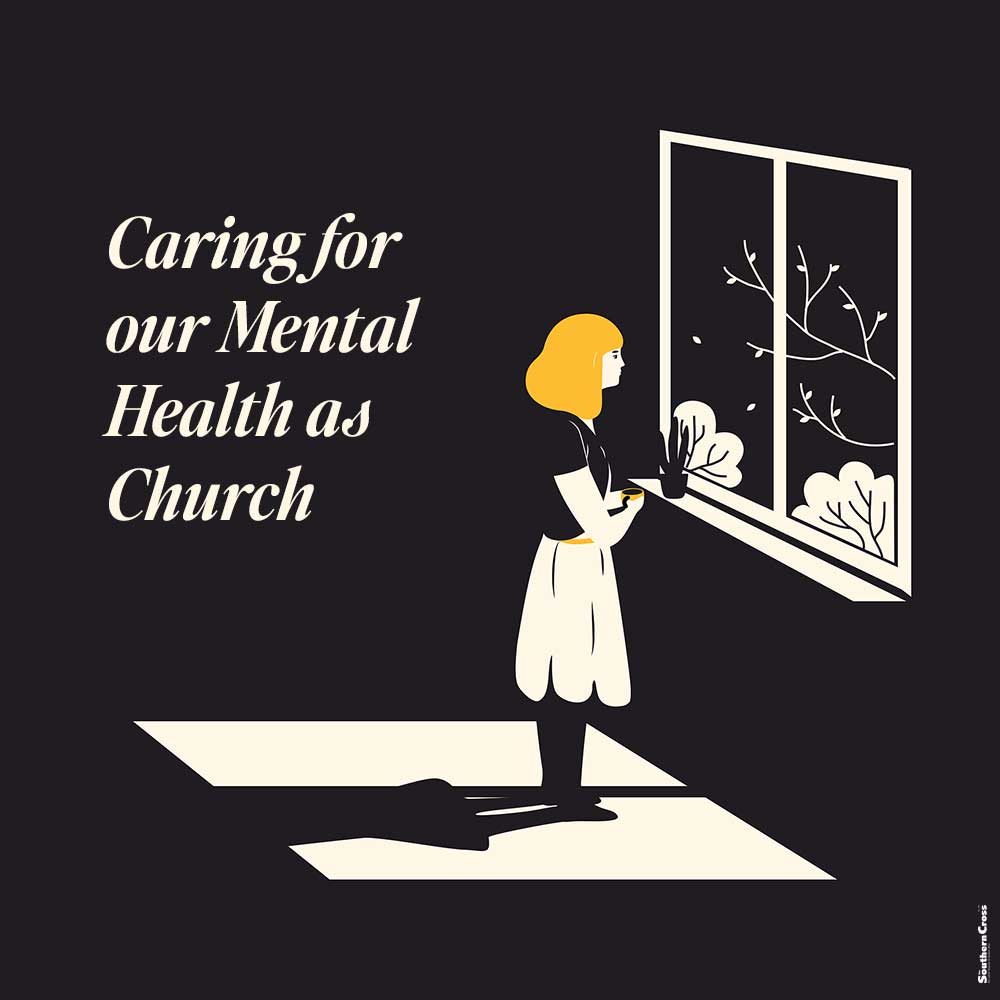
Caring for Our Mental Health as Church
Deacon Ed Shoener’s ministry is centred around serving those with mental health issues — and encouraging parishes to share in his apostolate, as he did on his recent visit to South Africa. Günther Simmermacher interviewed the deacon on his mission and the advice he can offer.
If mental health activist Deacon Ed Shoener has one big goal, it would be that parishes start a mental health ministry. Church communities, he urges, can lead the way in accepting and welcoming people with mental health and neurodivergency issues.
“Demonstrate by your attitudes and words that there is no shame in having a mental health diagnosis, nor that it is an impediment to holiness,” he told The Southern Cross in an interview. In that way, he added, “parishes can be lifelines”.

Shoener, a permanent deacon from the diocese of Scranton in the United States, is the president of the international Association of Catholic Mental Health Ministers (CMHM) and a founding member of the Catholic Institute for Mental Health Ministry at the University of San Diego in California. He is co-author of the book Responding to Suicide: A Pastoral Handbook for Catholic Leaders.
The CMHM (www.catholicmhm.org) has some 5500 members in more than 70 countries.
Shoener’s most recent visit to South Africa was in August, as part of a multi-country African visit that also took him to Botswana, Lesotho, Uganda, Ethiopia, Kenya and Rwanda. In each country, he met bishops, clergy, lay leaders and volunteers who are building ministries to walk alongside people living with mental illness.
“Church leaders in these countries have started mental health ministries and I participated in training and public awareness events to support their ministries.”
Rise of parish ministries
In Southern Africa the Church has started to develop its mental health ministry. Vibrant diocesan ministries now operate in Johannesburg, Pretoria, Bethlehem, Aliwal North, Gaborone, Klerksdorp and Witbank, with others are being developed elsewhere, with guidance from Dr Melese Shula, CMHM director for African Engagement.
These ministries offer pastoral accompaniment and community education, and aim to establish a visible, compassionate presence in parishes.
The growth here and in other African countries is encouraging, said Shoener, who visited the continent to strengthen ties and offer support.
“The Church here clearly understands that the mental health crisis is also a spiritual crisis,” he noted. “They want to offer spiritual support to people living with a mental illness so these people can live in holiness — and to encourage actions that prevent discrimination which would exclude people with mental illness from full participation in the life of the Church.”
In this, he said, we may take inspiration from Pope St John Paul II who said: “Christ took all human suffering on himself; even mental illness… whoever suffers from mental illness always bears God’s image and likeness in himself, as does every human being. In addition, he always has the inalienable right not only to be considered as an image of God and therefore as a person, but also to be treated as such.”
A highlight of the deacon’s latest Africa trip was preaching at the famous Regina Mundi church in Soweto — a parish with a long history of being a voice for the voiceless. His homily invited parishioners not just to be aware of mental health needs, but also to take concrete action to meet people with mental illness.
Shoener has a personal stake in the issue of mental health. In 2016, his daughter Katie died by suicide. He wrote a tender but also honest obituary for Katie. It went viral because it spoke to the lived experience of millions, communicating that mental illness is real, that it can devastate lives, and that people of faith have a moral duty to respond to it with sensitivity .
Fight the stigma
Stigma is a most stubborn obstacle. “We should never humiliate someone because they have a mental illness — just as we would not make fun of someone with cancer,” Shoener said.
That means rejecting harmful beliefs that present mental illness as a moral failing, a punishment, a curse, or witchcraft. “People who are mentally ill are not bewitched or suffering under some kind of curse,” he stressed.
For individuals, he suggests a starting point: “Improve your mental health literacy. Learn what mental illness is, and what it isn’t. Talk about it in compassionate, understanding ways.”
Stigmatisation can prevent those affected from opening up about their mental health issues, and to seek support and treatment. “We all need to take care of our mental health, just like we take care of our physical health. There’s no shame in seeing a mental health professional,” Shoener said.
What parishes can do
Across Africa, bishops and lay leaders are beginning to integrate mental health care into pastoral life. In Uganda, ministries are reaching into rural communities. In Kenya and Ethiopia, Catholic universities are developing training programmes. In Lesotho and Botswana, parishes are beginning to pilot parish-based support initiatives.
What unites them all is the conviction that mental illness is not just a medical or social issue, but also a pastoral one. The Catholic Church, with its parish structures, trusted presence, and theological grounding in the dignity of every human person, is well placed to respond.
Shoener dismissed the idea that a mental health ministry is only for large or wealthy parishes. “Any parish can do this,” he stressed. “You don’t have to be a mental health professional. You just have to be willing to learn, to listen, and to be there.”
That could be as basic as one person in a rural mission making the commitment to check in weekly with someone who is struggling. Or it could be a fully-fledged ministry in an urban parish with trained facilitators and regular programmes.
What matters most is the decision to act. “If the Church doesn’t step forward, people will suffer in silence. And that’s the opposite of what we are called to as disciples of Christ,” Shoener said.
The CMHM offers free online resources and courses to help parish leaders evaluate needs, identify resources, and launch mental health ministries (www.catholicmhm.org/start-a-parish-ministry).
A typical ministry might:
– Offer regular prayer and support groups for those living with mental illness and their loved ones.
– Host talks to improve understanding of depression, anxiety, bipolar disorder, post-traumatic stress disorder, and other conditions.
– Collaborate with local mental health professionals.
-Ensure parish life, from liturgies to social activities, is inclusive and welcoming.
See also our 2022 article “Mental health matters to us all”
The personal response
Solidarity with those facing mental health issues begins in the private sphere. Shoener knows that many families and friends struggle to find ways of helping someone with a mental illness. His advice: Treat it as you would any other illness that may not have a quick or complete cure. “Realise that a mental illness can be treated and managed. Do not ever shame them because of their mental illness. We can offer persistent and patient love and support them without the demand for a cure”
And, importantly: “Reassure them that we are glad that they are in our lives.” Of course, also encourage them to obtain professional help, if they haven’t already done so.
That’s not sentimentalism, but a question of survival. Many people with mental illness — especially those experiencing suicidal thoughts — feel like a burden. Knowing that they are wanted and valued can literally save lives.
If you or someone you know is struggling or having thoughts of suicide, help is available:
– South Africa Suicide Crisis Line: 0800 567 567
– SADAG Mental Health Helpline: 0800 21 22 23
Published in the October 2025 issue of The Southern Cross magazine

- Shrines around the World: Our Lady of Beauraing - March 21, 2026
- St Patrick: From Slave to Apostle - March 17, 2026
- New Cape Town Archbishop Calls For Unity and Prophetic Courage - March 14, 2026