
SACBC Youth Chaplains and Coordinators’ Conference Focuses on Accompaniment
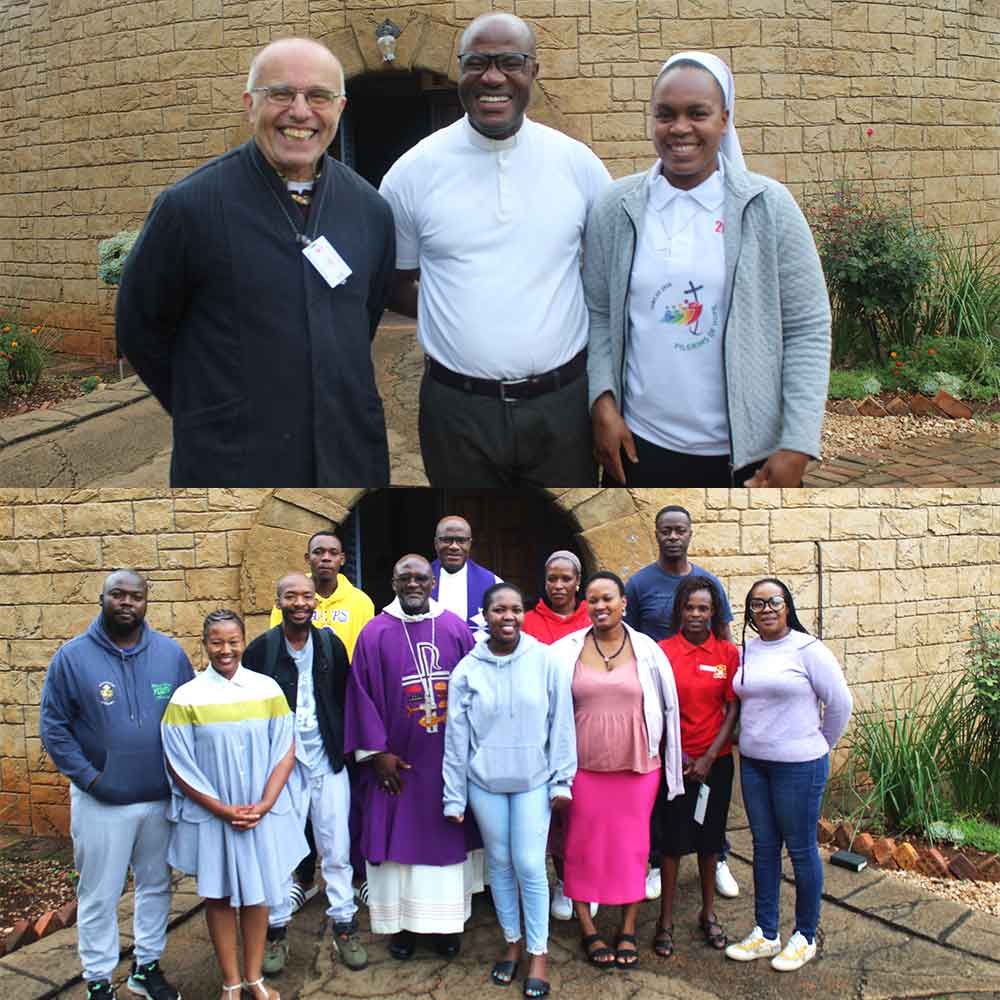
SACBC Youth Chaplains & Coordinators Conference
By Kati Dijane – The Southern African Catholic Bishops’ Conference youth chaplains and coordinators gathered for day two of their annual conference on February 24, marking the 11th year of the initiative since it began in 2015.
The four-day conference, which is underway at Lumko retreat centre in Benoni in the Archdiocese of Johannesburg, began on Monday and will conclude on Thursday with Mass.
The day began with Holy Mass presided over by the liaison bishop for youth, Bishop Siphiwo Paul Vanqa. Following breakfast, the first session of the day was led by Father Welcome Maluleka, the youth chaplain of the Diocese of Polokwane. His theme was “Accompanying Young People”.

Drawing deeply from Scripture and pastoral experience, Father Maluleka challenged chaplains and coordinators to reconsider how they walk with young people in their dioceses.
Walking the road to Emmaus
Father Maluleka reflected on the encounter between Jesus and the disciples on the road to Emmaus (Luke 24). The disciples, devastated and confused after Christ’s crucifixion, were walking away from Jerusalem. “They were shock absorbers to each other,” he said, noting how they processed their grief together.
Jesus, he reminded those present, was not headed to Emmaus — yet He chose to walk with them.
In this, Father Maluleka pointed to Jesus as an example of accompaniment. “We do not know where the young people are going,” he said. “We are not even sure where they come from. But it is better if we walk with them. We should not walk ahead of them.”
He emphasised that Jesus first listened before He taught. He allowed the disciples to speak about their fears, frustrations and shattered hopes. Only after listening did He begin to interpret the Scriptures for them.
“So we also ought to listen to the young ones,” Father Maluleka said. “To understand where they are starts with listening.”
He encouraged chaplains and coordinators to ask questions, not to interrogate, but to understand. Without understanding where young people are spiritually and emotionally, accompaniment risks becoming directionless.
From darkness to light
As the disciples approached Emmaus, Jesus acted as though He would continue further. The disciples urged Him to stay, for evening was falling.
Father Maluleka used this moment to reflect on the spiritual journeys of young people today. “Maybe they come from light and they are going towards darkness,” he said. “And it is hard to take them back to the light.”
He acknowledged the powerful influence of social media and digital culture, warning that if the Church does not accompany young people meaningfully, “the media will take care of them, and we will lose them.”
Yet he did not dismiss digital platforms outright. Instead, he likened media to a mall, a public space where people go for different reasons. “Why not go to media to teach?” he asked. “That is where the young people are.”
The key, he stressed, is presence and formation. Hearts burn for Christ not through superficial engagement but through ongoing formation, authentic teaching and genuine relationship, he said.
Where Is ‘Jerusalem’?
Father Maluleka posed a reflective question: “Where is Jerusalem in your diocese?”
Jerusalem, he explained, symbolises the place of encounter with Christ. For some dioceses, these might be parish gatherings; for others, youth conventions or small faith-sharing groups. Wherever young people grow in faith together, he said, is their Jerusalem.
The task of accompaniment is to help them recognise that Emmaus is not their final destination. They are called back to Jerusalem, back to community, back to encounter, back to Christ.
He reminded delegates that young people are not “the Church of tomorrow” but the Church of now, echoing the teaching of Pope Francis. If they are treated merely as problems to be solved or helpers who are called upon to pack chairs or clean up after events, they will not find meaning.
“Young people seek meaning and belonging,” he said. They must be entrusted with real responsibilities, invited into leadership structures such as parish pastoral councils, and formed as co-workers in mission, he advised.
Accompaniment is not control
Father Maluleka was clear about what accompaniment is not. It is not control, domination or judgement.
“Controlling the young ones does not mean you are accompanying them,” he warned. The Church, he said, must feel different from school or home. It must be a space where young people are understood, especially those who come from broken families or carry deep wounds.
He urged chaplains to listen with compassion and maturity. “When a young person comes to you, do not break that person even more,” he said. The Church must be experienced as a home, a place of safety and healing.
He cited Matthew 28:20, “I am with you always”, as the assurance young people need to hear and experience. Accompaniment, he said, means assuring the youth that Christ walks with them even in their pain.
Presence, patience and play
Accompaniment, he said, requires presence. He challenged chaplains to reflect honestly: “If you are not present in meetings, how are you going to be present to the young ones?”
Quoting 1 Peter 5:2, he reminded them: “Be shepherds of God’s flock.” Shepherding demands visibility, commitment and reliability, particularly at a time when trust between families and institutions can be fragile.
Patience was another key quality, he said. Many chaplains are older than the youth they accompany. “They cannot be 30,” he said of 16-year-olds. “Leave them to be 16. Let them act their age.”
Accompaniment may even mean playing with them, entering their world without compromising one’s identity. “You must smell like your sheep,” he added, echoing Pope Francis’ famous pastoral imagery.
Above all, he emphasised that accompaniment is a space to serve, not to shine. It is about Christ, not personal recognition.
A shared journey
Father Maluleka concluded by reminding chaplains and coordinators that accompaniment is mutual. “You cannot accompany yourself,” he said. It requires openness by inviting others into one’s space, stretching one’s talents and learning from one another.
Just as Jesus drew the disciples’ hearts to burn within them, chaplains are called to draw young people not to themselves but to Christ. Quoting Matthew 19:14, “Let the little children come to me”, he urged leaders to resist drawing attention to themselves.
The morning session concluded with chaplains and coordinators meeting in groups, and in a synodal way, discussing some of the challenges and hopes the youth in the bishops’ conference are facing and how they aim to accompany young people.

- Blessed Benedict Daswa Pilgrimage at Mother of Mercy Shrine - March 25, 2026
- Archbishop Sipuka Takes Possession of St Mary’s Cathedral - March 16, 2026
- Young designer from Ratanda wins Archdiocese of Johannesburg youth logo competition - March 10, 2026



