
Bishop Vanqa on Vocation, Formation and Hope for the Youth in SA
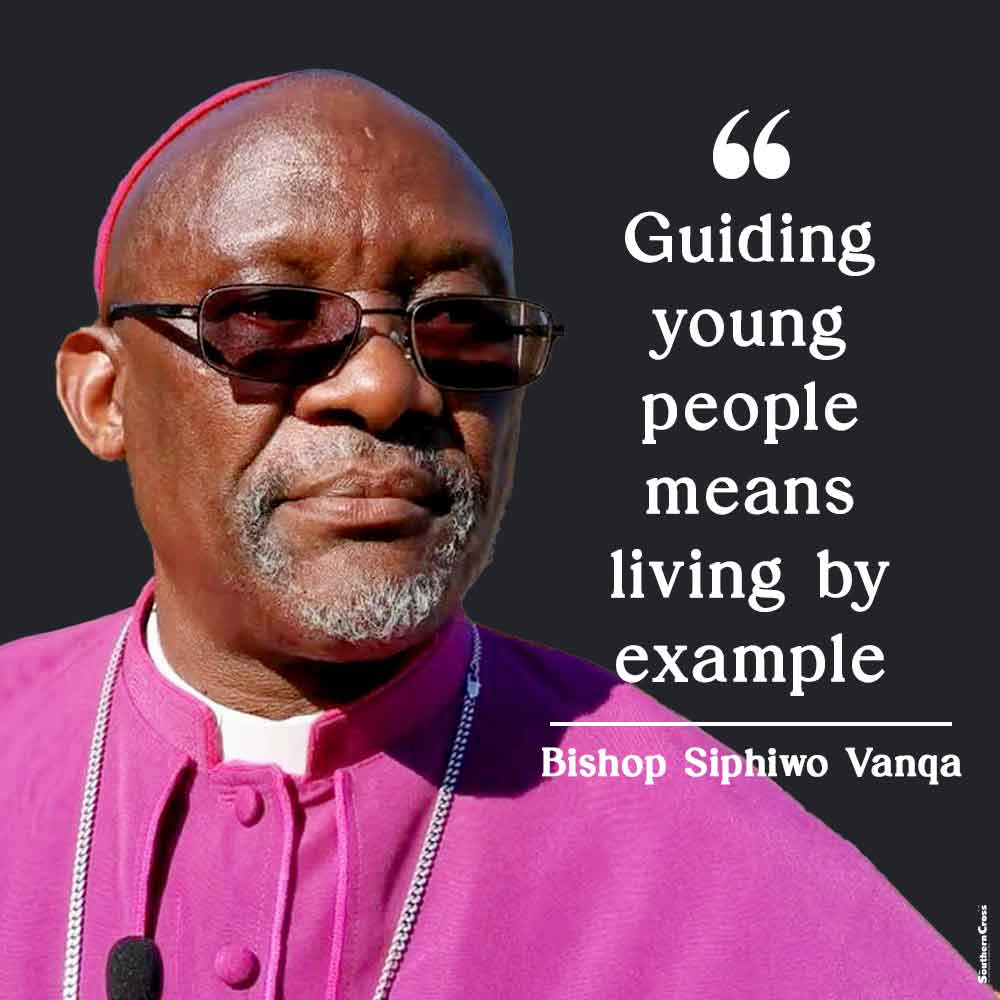
By Kati Dijane – The journey to the priesthood often begins quietly, in the family structure, the influence of the religious and the subtle call of God. For Bishop Siphiwo Devilliers Paul Vanqa SAC, liaison bishop for youth within the Southern African Catholic Bishops’ Conference (SACBC), that journey began in a deeply prayerful home and was nurtured through education, community and the example of dedicated priests.
Speaking during the Youth Chaplains and Coordinators’ Conference at the Lumko retreat centre in the Archdiocese of Johannesburg in February, Bishop Vanqa reflected on the experiences that shaped his vocation, the formation that prepared him for leadership and his enduring hope for the youth of Southern Africa.
The priesthood vocation
For Bishop Vanqa, the roots of his vocation can be traced back to his childhood, where faith and prayer were central to daily life. Growing up in a family where prayer was constant left a profound mark on him.

“My parents used to pray every evening and early in the morning,” he recalled. Prayer before meals, prayer before going to school, and the habit of gathering as a family meant God formed part of everyday life.
This spiritual foundation was reinforced by the environment in which he was educated. His early schooling exposed him to teachers and principals from different Christian traditions who instilled strong moral and spiritual values. That invitation planted the seed that would eventually grow into a lifelong commitment to God and the Church.
Joining the Pallottine mission
Bishop Vanqa eventually joined the Society of the Catholic Apostolate, commonly known as the Pallottines (SAC). His decision was influenced by the presence of Pallottine priests who served in his area and inspired many young men to consider religious life.
“I grew up in the milieu of the Pallottines,” he explained.
Once he joined the congregation, he gradually became more deeply connected to its mission and spirituality.
“I began to know them better. I began to like them. I began to like their mission very much,” he said.
Like many religious congregations, the Pallottines have a distinct identity and charism within the wider Church. During his formation, Bishop Vanqa studied alongside members of other religious communities such as the Dominicans, Franciscans and Oblates. Although each congregation has its own mission and spirituality, he emphasised that all share the same ultimate purpose: serving the Church and spreading the Gospel.
“We were taught about the whole Church, but we still knew our specific roles as congregations. We are all working for the Church,” he said.
Formation through mission and leadership
Following his ordination, Bishop Vanqa’s early priesthood was marked by missionary service. He spent several years working in parish missions, gaining invaluable pastoral experience. During this period, he worked closely with senior priests who helped shape his approach to ministry.
“One priest was very good in forming me, showing me what to do and how to follow the schedules,” he recalled.
Another priest introduced him to the administrative side of parish life, particularly financial management. From these experiences, he learned not only the spiritual responsibilities of priesthood but also the practical aspects of leading a parish community.
Later, he was sent for further studies to prepare him for the role of a formator, someone responsible for guiding seminarians and young religious in their formation. He explains about the role of formators: “When you are a formator, you become a student yourself,” he explained.
The responsibility of guiding young people means living by example.
“If you say people must wake up at five, you must be the first one to wake up. If people must be on time in the chapel, you must be the first one.”
This discipline and commitment became part of his character and continues to shape his ministry today.
“That timetable is in my body now,” he said.
An unexpected call to the episcopacy
In 2021, Bishop Vanqa was appointed bishop of Queenstown Diocese, a moment he describes as completely unexpected. At the time, he was working in his office when he received the call informing him of the appointment.
“I was the least one to think that it could be from us,” he said.
The diocese had been awaiting the appointment of a bishop, but he assumed the new bishop would come from outside the diocese. Instead, the responsibility was entrusted to him. Although the role of bishop brought new responsibilities and challenges, his experience as diocesan administrator had already given him insight into the demands of leadership. Reflecting on his ministry as bishop, he emphasised the importance of collaboration with priests and the wider Church community.
A bishop close to the youth
Beyond his diocesan responsibilities, Bishop Vanqa serves as the liaison bishop for youth within the Southern African Catholic Bishops’ Conference. In this role, he works closely with youth chaplains and coordinators to strengthen youth ministry across the region. He describes young people as vibrant and full of potential, but also facing significant challenges.
“Our youth have many challenges,” he explained.
Unemployment, poverty and social struggles weigh heavily on young people, particularly in rural areas. In provinces like the Eastern Cape, unemployment rates remain high, affecting many young people who are eager to build their futures.
“The youth in the villages are hard hit by unemployment and the struggles of our country,” he said.
Despite these challenges, Bishop Vanqa believes that young people must play an active role in the life of the Church.
“The youth must be part and parcel of the running of the Church,” he said.
He encourages parishes and dioceses to involve young people in leadership roles, including parish councils and financial committees.
“They are the leaders now and tomorrow,” he added.
A message of hope for a struggling generation
One of the most pressing questions raised during the youth conference that took place from 23 to 26 February 2026 at the Lumko retreat centre in Benoni was how to give hope to young people who face hardship and despair.
Bishop Vanqa emphasised that the first step is presence and listening.
“Anybody who is going through difficulties needs people around,” he said.
Young people need someone who will listen, someone who will accompany them, and someone who will walk with them through their struggles. Chaplains, coordinators and church leaders have an important role in creating spaces where young people can share their experiences openly. In some cases, professional support, such as counselling or therapy, may also be necessary.
But above all, Bishop Vanqa believes the Church must be a community where young people feel supported and valued.
“We can be there for one another,” he said.
Walking together
Bishop Vanqa shared a final message for young people: the Church cares deeply about them and believes in their future.
“The Church cares. Their priests care. Their parents care. Everybody cares,” he said.
He also emphasised that building a hopeful future cannot be the work of priests or chaplains alone. Young people themselves must take responsibility for supporting one another and contributing their gifts to the life of the Church. Drawing on the spirit of synodality, the Church’s call to walk together, he encouraged everyone to participate in building a community of faith and hope.




