Why does the Neocatechumenal Way have its own seminary?
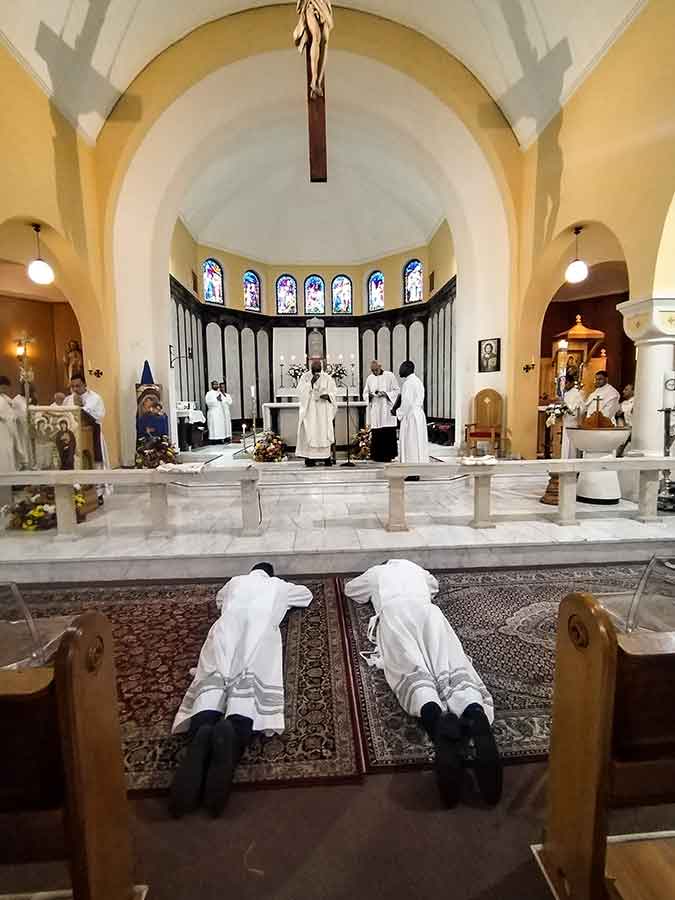
Paul Carlo Moore and James Anthony Rice are ordained to the transitory diaconate in Holy Redeemer church in Bergvliet, Cape Town, in May after having received their formation at the Neocatechumenal Way’s
Redemptoris Mater Seminary.
Question: The Neocatechumenal Way is neither a prelature nor an ordinariate, so how come they have their own seminaries? Are the priests that come from there considered normal diocesan priests?
Answer: The Neocatechumenal Way is a Catholic movement that was founded in Spain in the 1960s by Kiko Argüello and the late Carmen Hernández. It aims to provide a path for the Christian formation of individuals and communities. It is recognised by the Catholic Church and has been welcomed in a number of South African dioceses, including the archdioceses of Pretoria and Cape Town.
The movement’s primary goal is to provide a systematic catechesis that helps individuals deepen their faith and live it out in their daily lives. It stresses community life and support among its members. Participants often gather in small groups, known as “communities”, to share their experiences of faith, engage in prayer, support one another in their spiritual journeys, and have Eucharistic celebrations

Members of the Neocatechumenal Way are encouraged to remain active within their local parishes and dioceses. The movement seeks to integrate its members into the broader life of the Church, promoting collaboration with local clergy and participation in parish activities.
Like many movements in the Church, the Neocatechumenal Way has faced misunderstandings and some criticism. Some individuals may perceive its practices or community structure as unusual or overly insular.
As you note, it is not classified as a prelature or an ordinariate.
With permission of the respective local bishop and under his authority, the Neocatechumenal Way has set up its own seminaries to provide specific formation for priests who are to serve within the context of the movement. These seminaries, including that in Cape Town, focus on the spirituality and mission of the Neocatechumenal Way, preparing candidates to serve in various dioceses around the world.
These seminaries and the formation they provide are recognised and supported by the Church, which sees the Neocatechumenal Way as a means of fostering vocations and enriching the life of the Church.
Under the bishop’s authority
Priests who are ordained from the Neocatechumenal “Redemptoris Mater” seminaries are considered diocesan priests. Typically they are incardinated into the local diocese to which they are assigned after their ordination. So while they receive formation through the Neocatechumenal Way, they serve under the authority of the local bishop and are subject to the norms and regulations of the diocese in which they minister.
The Neocatechumenal Way emphasises the importance of integration into the local Church. The priests trained in these seminaries are expected to work collaboratively with the bishops and the local clergy, contributing to the pastoral life of the diocese.
Published in the October 2025 issue of The Southern Cross magazine

- Rachel’s Vineyard Healing Ministry - April 8, 2026
- Pope Leo: Christ is Risen! - April 7, 2026
- Easter Prayer - April 5, 2026