Statelessness and Undocumented Persons Workshop, Polokwane Diocese
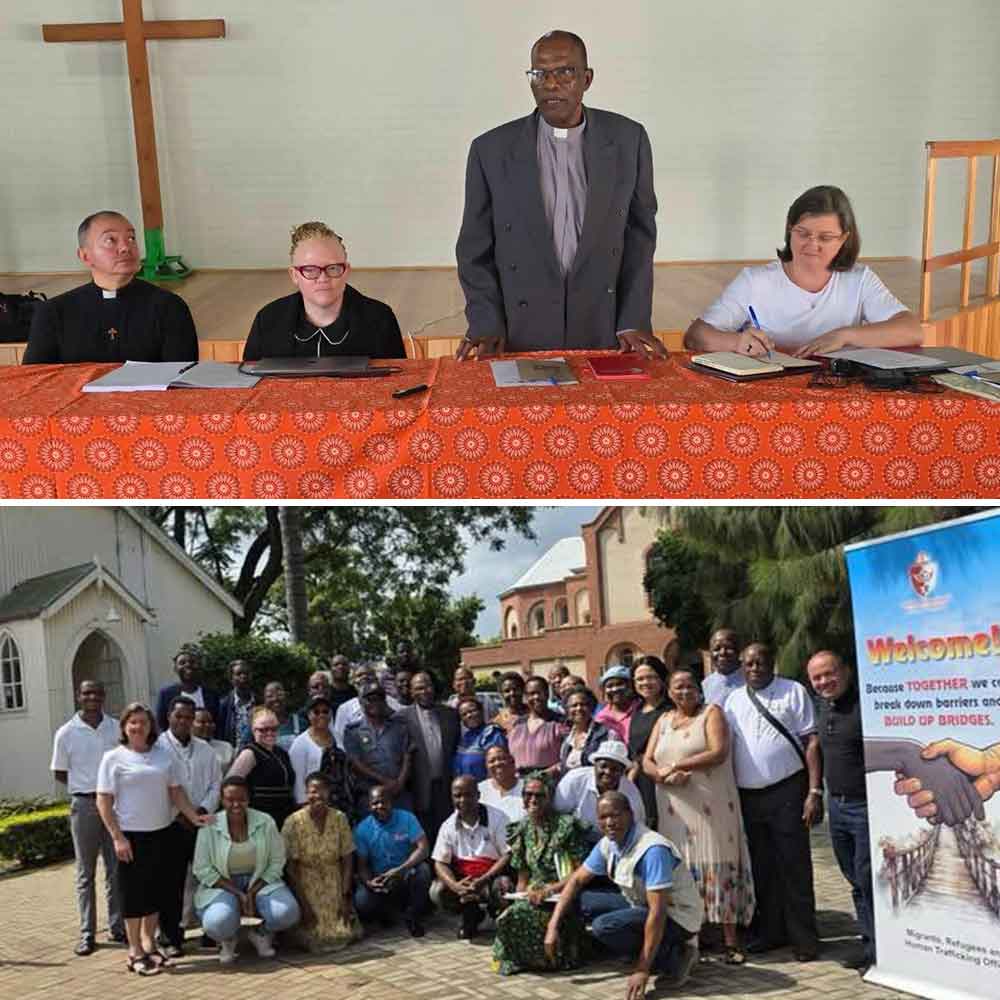
Human Trafficking awareness workshop in Polokwane Diocese
A delegation from the Southern African Catholic Bishops’ Conference (SACBC) visited the Diocese of Polokwane to conduct a Human Trafficking workshop focusing on Statelessness and undocumented people on Friday, March 27.
The workshop took place at St George’s Hall, Cathedral of the Sacred and was led by Sr Neide Lamperti MSCS, coordinator of the Migrants, Refugees and Human Trafficking Office, Fr. Luis Gabriel Martin CS, Charles Ephraim Luhanga and Ms Deborah Sebola from Lawyers for Human Rights. The team engaged with members of the Diocesan Pastoral Council, NGO’s, civil society partners and refugee representatives, strengthening collaboration in responding to migration and human trafficking in the Southern African region.
The day started with opening remarks by the shepherd of the diocese, Bishop Jeremiah Masela. During his address, Bishop Masela cited the late Pope Francis’s words on the significance of the Church of Christ in taking care of the basic needs of the people of God.

Sr Neide Lamperti made it clear in her opening remarks that migrants and refugees are not just statistics or problems; rather, they are people who have stories, dignity, hopes, and are living with us. Inspired by the teachings of Pope Francis, participants were reminded of the Church’s call to “welcome, protect, promote and integrate” migrants and refugees.
The workshop also included a presentation by lawyers for Human Rights representative Ms Deborah Sebola, who explained the right to identity and nationality, the legal framework protecting migrants, refugees, and asylum seekers in the country. Her presentation highlighted both the human rights protections available and the risks faced by mobile populations, undocumented migration, that is, labour exploitation, discrimination, trafficking, detention and limited access to services. She explained the current situation facing stateless undocumented persons in the region, as well as the challenges on the ground. Ms Sebola further reiterated that the most affected groups are children, youth, migrants and families of stateless and undocumented persons; therefore, it is vital for communities to offer assistance and integrate them.
Fr Luis Gabriel Martin CS gave a reflection on the Church’s mission in pastoral care for migrants and refugees during the workshop. He mentioned the biblical principles of welcoming the stranger and stressed that pastoral care should always focus on migrants and the homeless. He emphasised the church’s pastoral response to exclusion and the psychological impact of family and the community on foreigners. He reaffirmed the Church’s commitment to defending human dignity and restoring hope to those forced to leave their homes.
Charles Ephraim Luhanga led a significant portion of the discussion about how to stop human trafficking. He talked about the various forms of exploitation that affect vulnerable people, the difference between human trafficking and migrant smuggling, and how trafficking networks work. It was stressed to the participants that they should be aware of the warning signs of human trafficking in order to boost efforts to prevent it, particularly among churches and communities. The discussion also highlighted the importance of collaboration between civil society, faith-based networks, and public institutions in protecting victims and preventing this crime.
This workshop, held in the Catholic Diocese of Polokwane, was a significant step toward enhancing collaboration between Church institutions, local communities, and civil society. The SACBC, through formation, dialogue, and pastoral outreach, creates networks that help to protect migrants, refugees, and victims of human trafficking while cultivating regional communities of solidarity, justice, peace and hope.
Bishop Masela expressed his gratitude for the close cooperation between the Church and the government in the fight against human trafficking in the region. He also welcomed the expanding involvement of Caritas, which supports global efforts to prevent human trafficking and protect victims, and urged continued coordination to fight the scourge.
- Statelessness and Undocumented Persons Workshop, Polokwane Diocese - April 8, 2026
- Fr Thomas Mapata-Ribimbi and Fr Moses Sithole ordained for Diocese of Polokwane - February 20, 2026
- Blessing and Dedication of Mater Dei Pastoral Centre New Chapel - January 29, 2026