ANOINTING
The Sacrament of the Anointing of the Sick, formerly referred to as Extreme Unction, is a sacrament of healing intended to bring spiritual strength, physical comfort, and peace to Catholics who are facing grave illness, advanced age, or upcoming major surgery.
Articles
Far from being a ritual reserved only for the final moments of life, it is meant to offer the healing presence of Christ at any point during a serious health struggle. When a priest administers the sacrament, whether in a hospital, a home, or during a church service, the ritual follows a specific, deeply comforting pastoral sequence:
1. The Liturgy of the Word and Penance
The priest begins by greeting the sick person and those gathered around them with a blessing. If the sick person is able and desires it, the priest can hear their private Confession first. If not, a brief, general penitential rite is prayed. The priest then reads a short passage from scripture to offer comfort and remind everyone of Christ’s healing ministry.
2. The Laying on of Hands
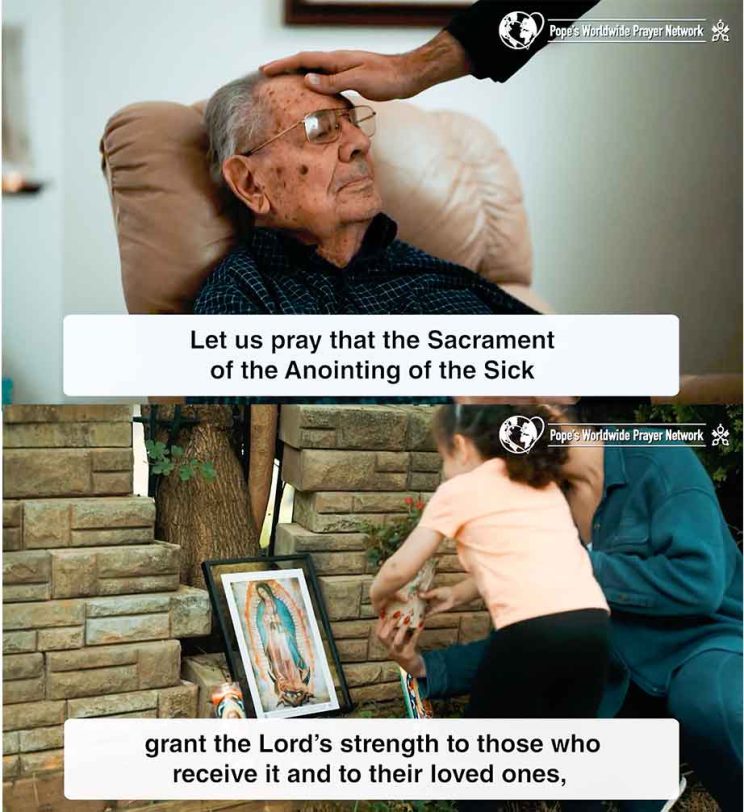
In complete silence, the priest lays his hands upon the head of the sick person. This ancient, powerful gesture mimics the healing actions of Jesus Himself. It signifies the invocation of the Holy Spirit, a blessing of protection, and the prayerful support of the entire Church community wrapped around the individual.
3. The Anointing with Holy Oil
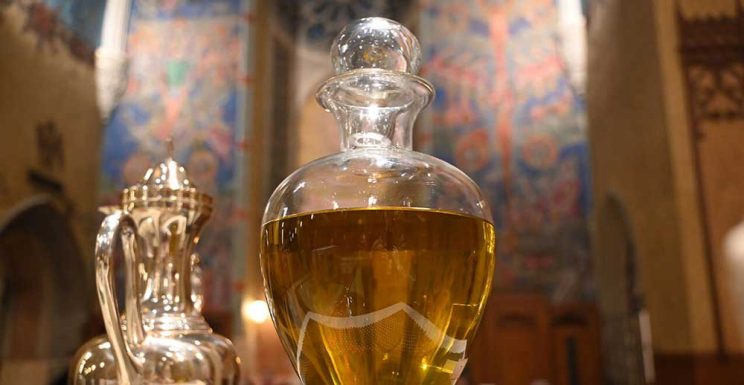
This is the core, essential part of the sacrament. The priest takes the Oil of the Sick (traditionally pure olive oil blessed by the bishop during Holy Week) and anoints the person, making the sign of the cross first on their forehead and then on the palms of their hands.
As he anoints the forehead, he prays aloud:
“Through this holy anointing may the Lord in his love and mercy help you with the grace of the Holy Spirit.”
As he anoints the hands, he continues:
“May the Lord who frees you from sin save you and raise you up.”
The person (and those gathered) responds, “Amen.”
4. Commendation and Viaticum (If Near Death)
The ritual concludes with the Lord’s Prayer and a final blessing for recovery, peace, and strength. If the sacrament is being given to someone who is actively dying, it is often accompanied by Viaticum (Holy Communion given to a dying person, literally translating to “food for the journey”).
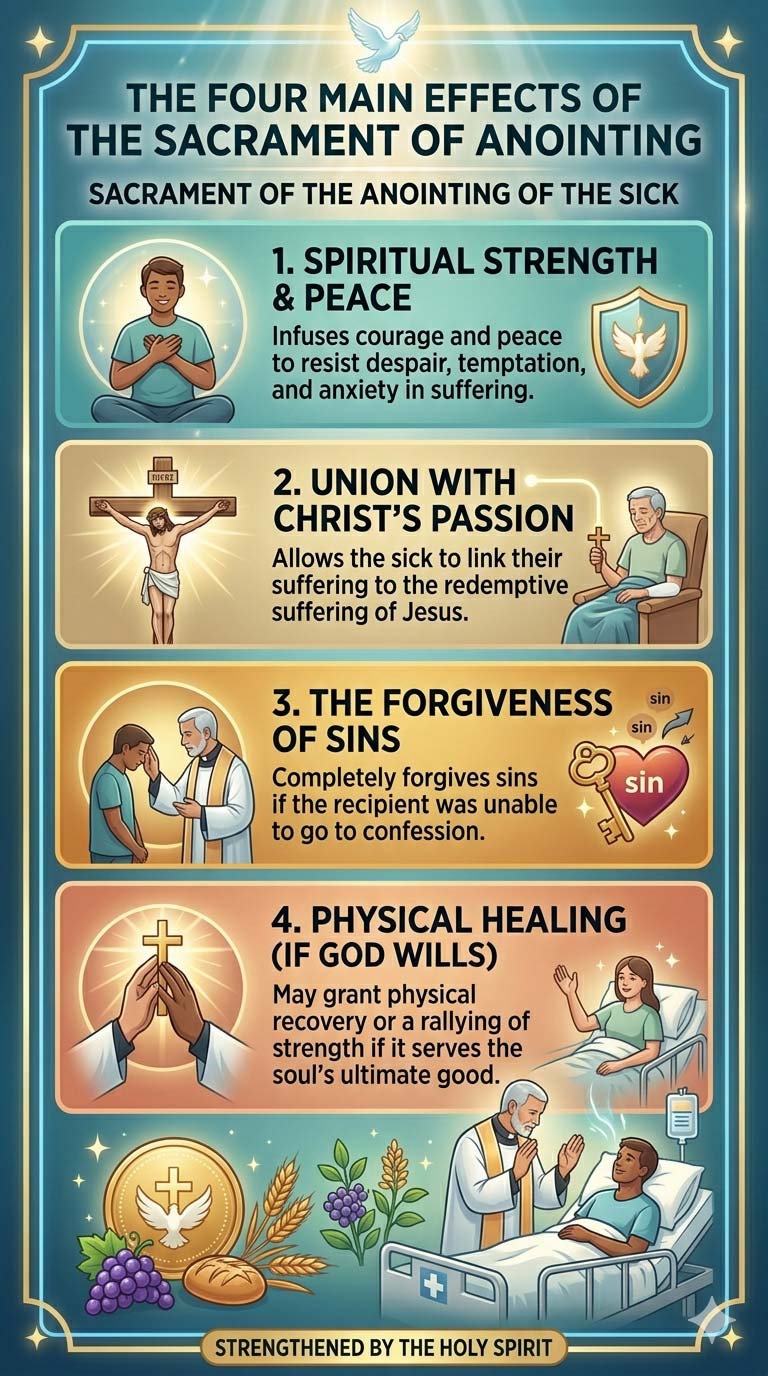
The Four Main Effects of the Sacrament
The Church teaches that the sacrament imparts specific spiritual graces to the recipient:
Physical Healing (If God Wills It): While the primary focus is spiritual restoration, the Church recognises that physical recovery or an unexpected rallying of strength often occurs if it serves the ultimate good of the person’s soul.
Spiritual Strength and Peace: It infuses the soul with the Holy Spirit’s gifts of courage and peace to fight off the temptation to despair or grow anxious in the face of suffering.
Union with Christ’s Passion: It allows the sick person to link their own physical suffering to the redemptive suffering of Jesus on the cross, giving their pain profound spiritual purpose.
The Forgiveness of Sins: If the person was unable to receive the Sacrament of Reconciliation (for instance, if they are unconscious or too weak to speak), this anointing completely forgives their sins.
More about Anointing