EUCHARIST
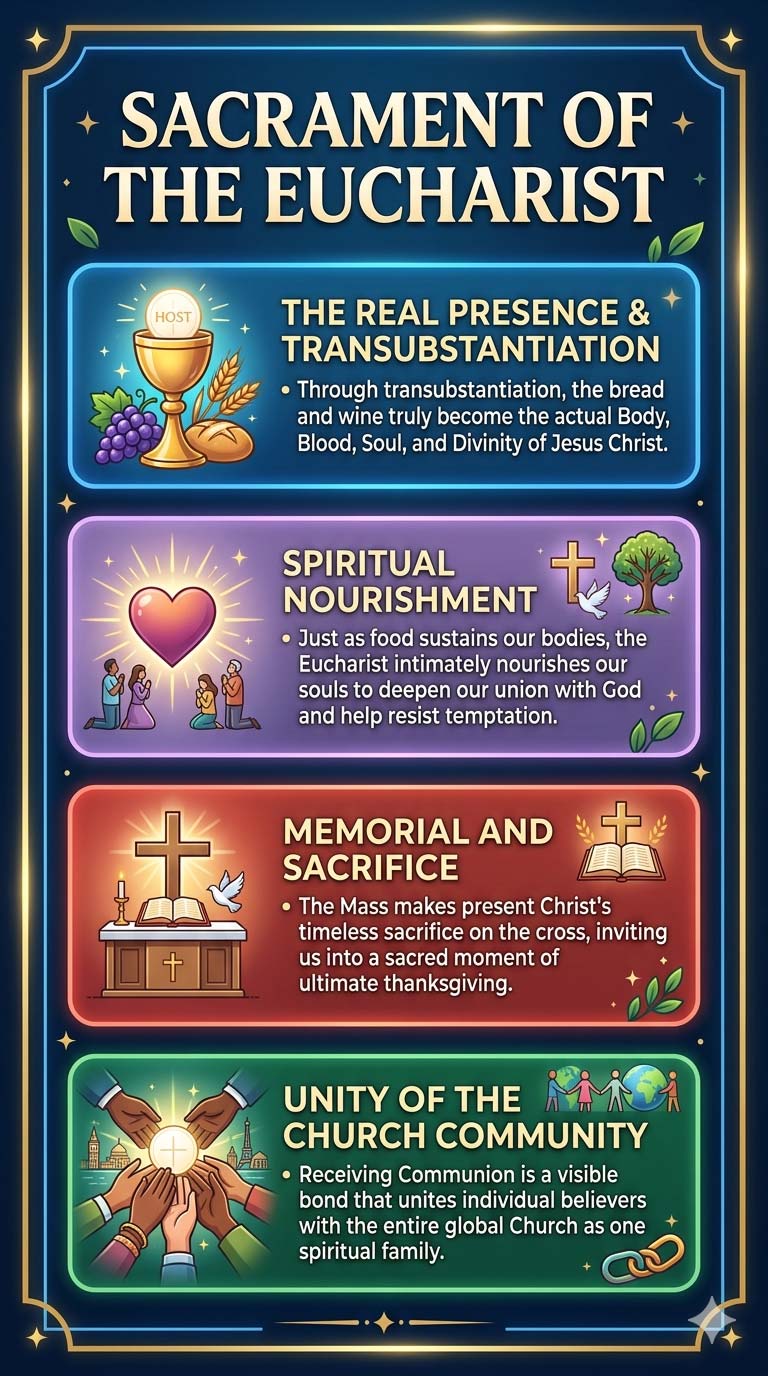
The Sacrament of the Eucharist, also referred to as Holy Communion or the Blessed Sacrament, holds a uniquely central place in Catholic theology. It is frequently described as the “source and summit of the Christian life” because it is not viewed as a mere symbol, but as the literal, physical, and spiritual presence of Jesus Christ.
Articles

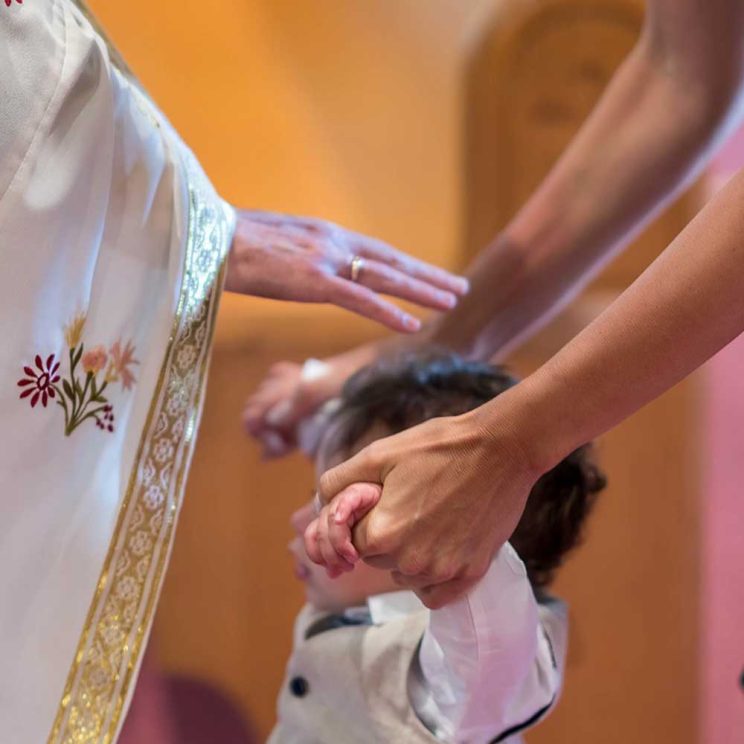
The Real Presence & Transubstantiation
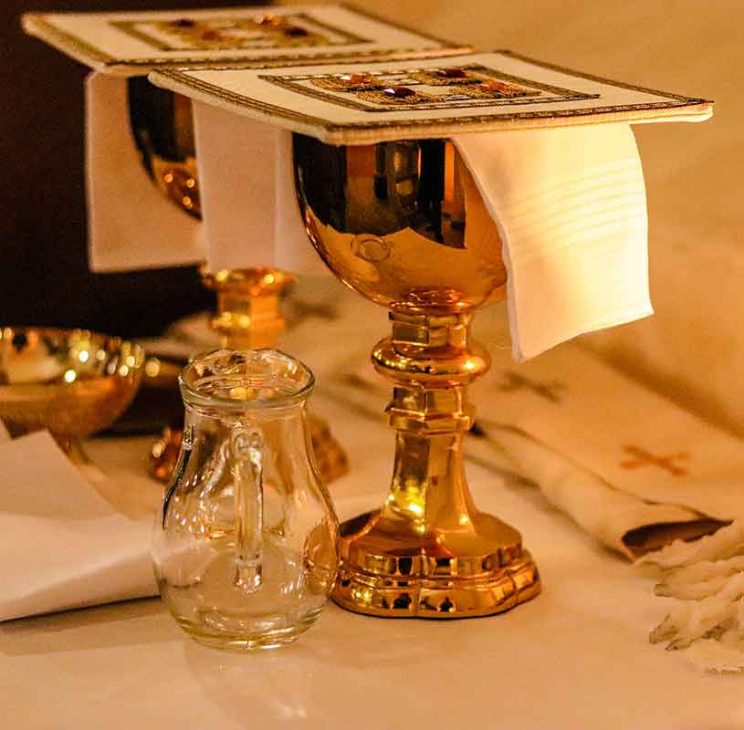
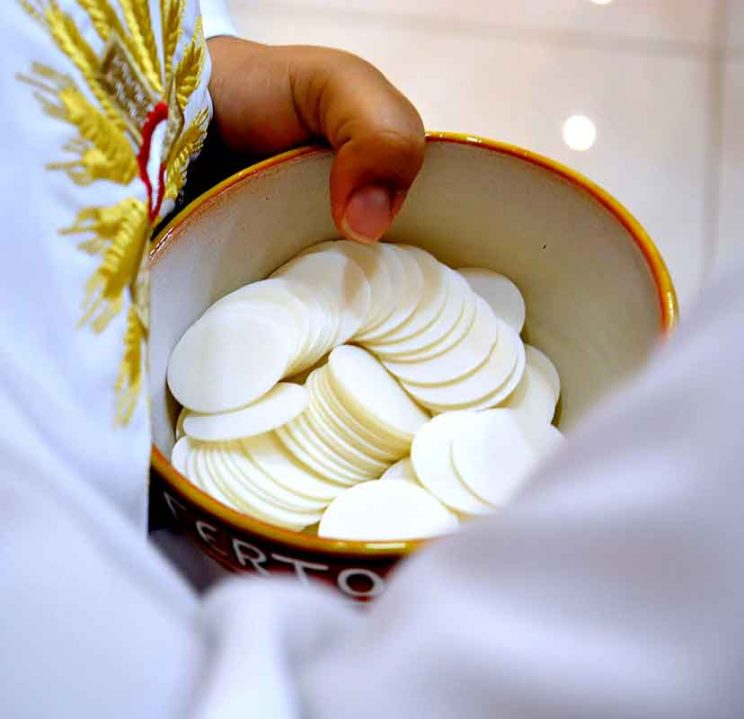
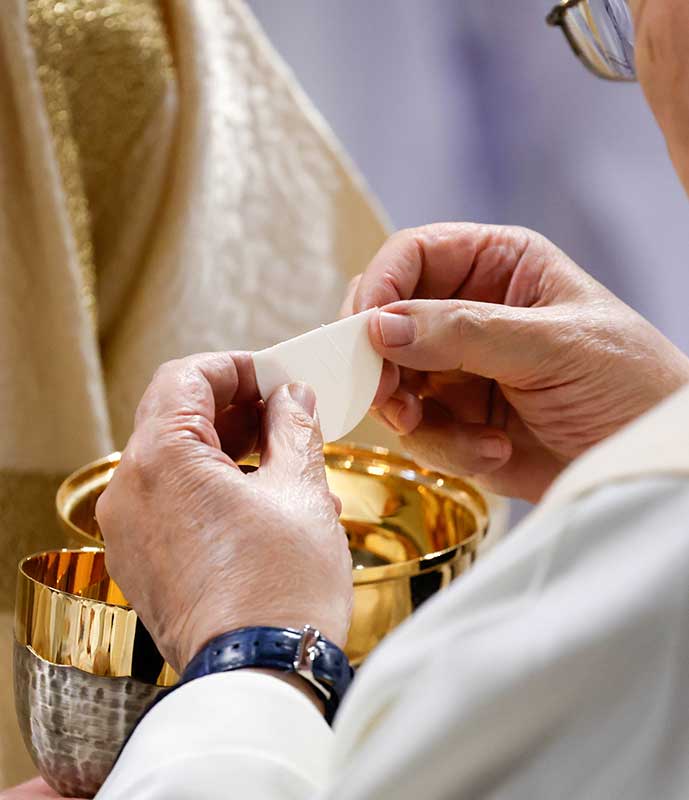
The core of Catholic belief regarding the Eucharist is the doctrine of the Real Presence. Catholics believe that during the celebration of the Mass, when the priest speaks the words of consecration over the bread and wine, a profound metaphysical change occurs.
This change is called transubstantiation. While the outward appearance, texture, and taste of the bread and wine remain exactly the same, their underlying reality (their substance) is completely transformed into the actual Body, Blood, Soul, and Divinity of Jesus Christ.
Spiritual Nourishment
Just as our physical bodies require food and water to survive, grow, and fight off illness, the Catholic Church teaches that our souls require supernatural nourishment. Receiving Holy Communion is an intimate, tangible encounter with God. It gives believers the spiritual strength needed to:
- Deepen their personal relationship and union with Jesus.
- Separate themselves from sin and resist future temptation.
- Find comfort, inner peace, and spiritual renewal.
Memorial and Sacrifice
The Eucharist is not a re-sacrificing of Jesus; rather, it is a “making present” of His one-time sacrifice on the cross. During the Last Supper, on the night before He died, Jesus broke bread with His apostles and said, “Do this in memory of me.”
Every time Mass is celebrated, the Church enters back into that timeless moment of the Last Supper and the mystery of Easter, offering thanks and praise to God for the gift of salvation. (In fact, the word Eucharist itself comes from the Greek word for “thanksgiving.”)
Unity of the Church Community
Receiving Communion is also a deeply communal act. When believers approach the altar to receive the Eucharist, it is a visible sign of their shared faith, beliefs, and values. It unites the individual not only to God, but also to the entire global community of the Church—binding everyone together as one spiritual body working to bring Christ’s love, charity, and peace into the wider world.
More about the Eucharist