CONFESSION
The Sacrament of Reconciliation, also known as Confession or the Sacrament of Penance, is a powerful encounter with divine mercy. It is a sacrament of healing through which a baptised Catholic confesses their sins to a priest, expresses true sorrow, and receives forgiveness and absolution from God.
Articles


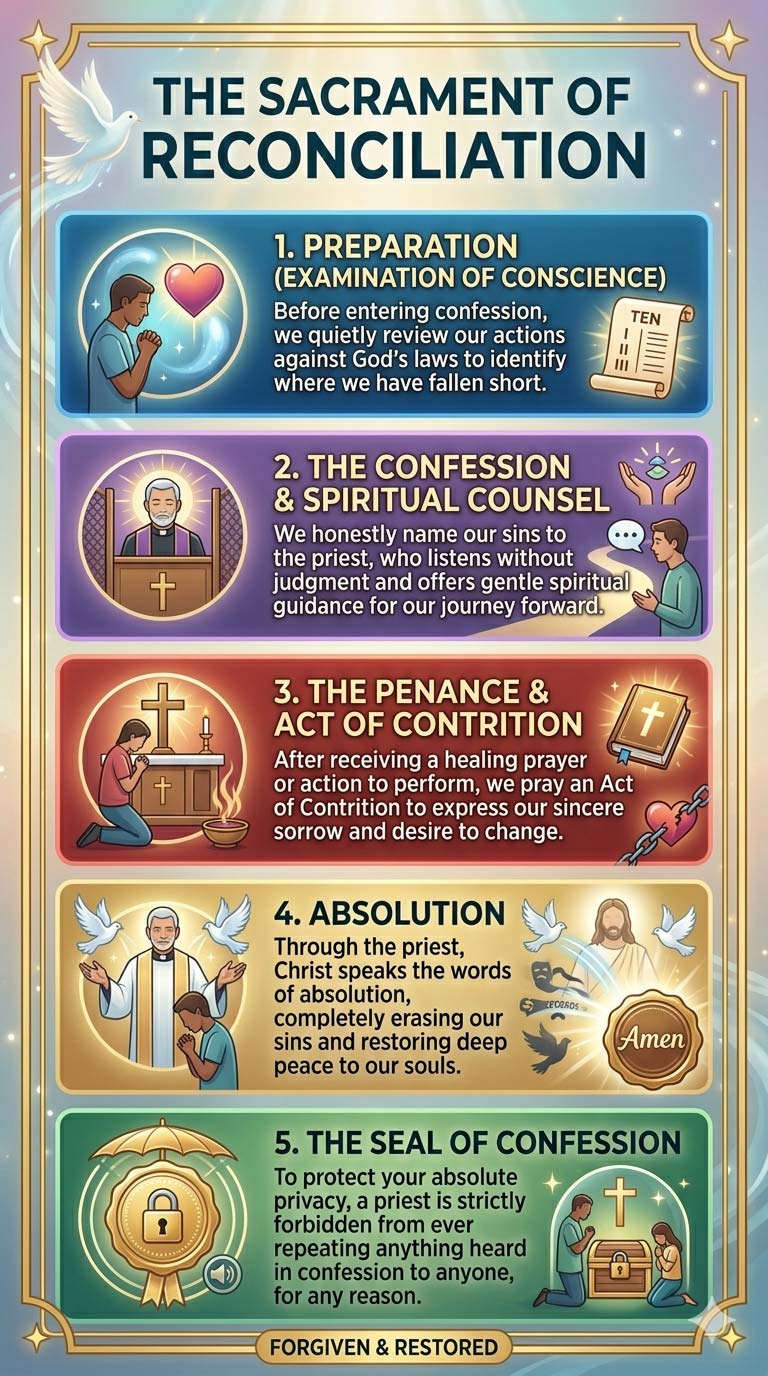
The underlying theology is beautiful: no matter how badly we break our relationship with God, his mercy is always ready to restore us completely. A standard Confession follows a precise, comforting structure broken down into four distinct phases:
Before entering the confessional, the penitent (the person confessing) spends time in quiet prayer reviewing their life since their last Confession. They use an “Examination of Conscience”—typically a guide based on the Ten Commandments or the Beatitudes—to identify where they have fallen short in their thoughts, words, actions, and omissions.
While wisdom helps us value divine things, understanding gives us a deeper insight into the core truths of faith. It allows us to grasp the meaning of scripture, the sacraments, and complex spiritual mysteries that the human intellect alone cannot fully comprehend. Understanding moves us past a superficial, “by the numbers” compliance with religion, transforming it into a vivid, lived reality. It acts like an internal light, helping us see the hidden hand of God in our lives and making the truths of our faith feel intensely personal, comforting, and clear.
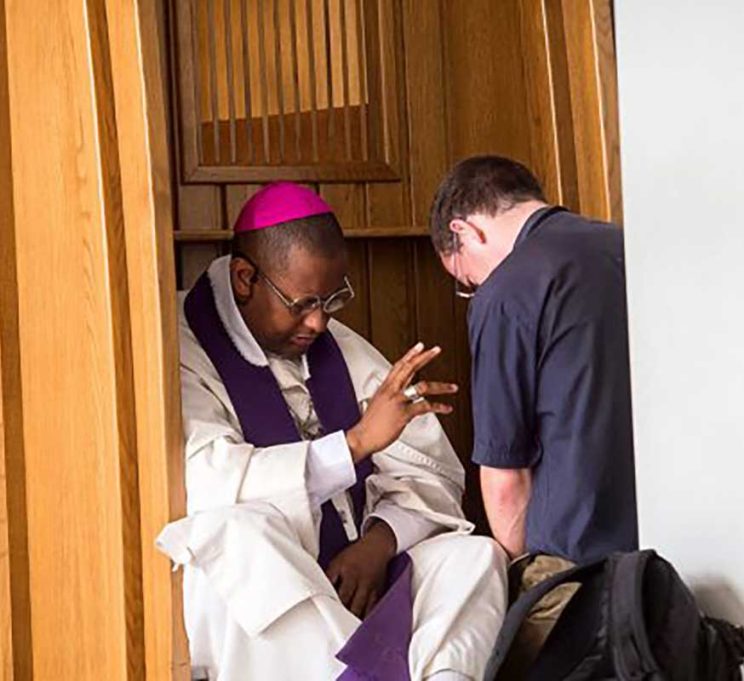
The penitent enters the confessional (choosing either to sit face-to-face with the priest or remain anonymous behind a screen) and begins with the traditional sign of the cross, saying: “Bless me, Father, for I have sinned. It has been [time period] since my last Confession.”
The Counsel: The priest listens without judgment. He may offer gentle spiritual advice, encouragement, and guidance on how to avoid these temptations in the future.
Speaking the Sins: The person states their sins clearly and honestly. For grave sins (mortal sins), they state the nature of the sin and, to the best of their memory, how
many times it occurred.
The priest then assigns a penance. This is a small, practical action or prayer (such as reciting the Our Father, reading a Scripture passage, or performing an act of charity) meant to help heal the spiritual damage caused by sin and jumpstart a better path forward.
The priest then asks the penitent to make an Act of Contrition, which is a formal prayer spoken aloud expressing genuine sorrow, a hatred for the sins committed, and a firm resolve to amend their life with the help of God’s grace.
This is the exact moment the sacrament achieves its spiritual purpose. The priest extends his hand over the penitent and speaks the words of Absolution, acting in the person of Christ (in persona Christi):
“…And by the ministry of the Church, may God grant you pardon and peace. And I absolve you from your sins, in the name of the Father, and of the Son, and of the Holy Spirit.”
When the priest says “I absolve you,” the sins are genuinely, completely erased from the soul by God’s power. The penitent answers “Amen,” and leaves the confessional completely unburdened and spiritually renewed.
The Seal of Confession
To ensure absolute freedom and trust, the Catholic Church enforces the Sacramental Seal of Confession. A priest is strictly forbidden under the gravest spiritual and canonical penalties (automatic excommunication) from ever revealing anything he hears during a Confession to anyone, at any time, for any reason whatsoever. What is said in Confession stays entirely between the penitent, the priest, and God.
More about Confession