CONFIRMATION
The Sacrament of Confirmation is the third sacrament of Christian initiation (following Baptism and the Eucharist) in the Catholic Church. It is often understood as a personal “Pentecost” for the individual. Confirmation deepens, seals, and solidifies that baptismal grace, equipping the believer with a special strength from the Holy Spirit to actively live out and defend their faith in the world.
Articles
Rite of Confirmation
Confirmation is typically administered by a Bishop (the ordinary minister of the sacrament) during a solemn Mass. The ritual moves through several specific, meaningful stages:
1. The Presentation of the Candidates and Renewal of Baptismal Promises
After the Gospel reading, the candidates are called forward, often accompanied by their Confirmation sponsors (practising Catholics chosen to guide them on their spiritual journey). Because Confirmation completes what began at Baptism, the candidates stand and publicly renew their baptismal promises, renouncing sin and professing their faith aloud before the entire community.
2. The Laying on of Hands
The Bishop stands facing the candidates and extends his hands over the entire group. This gesture dates back to the time of the Apostles and signifies the invoking of the Holy Spirit. The Bishop prays a powerful prayer, asking God to send down the Holy Spirit upon the candidates and specifically requesting the Seven Gifts of the Holy Spirit: Wisdom, Understanding, Counsel, Fortitude (Courage), Knowledge, Piety (Reverence), and Fear of the Lord (Wonder and Awe).
3. The Anointing with Sacred Chrism
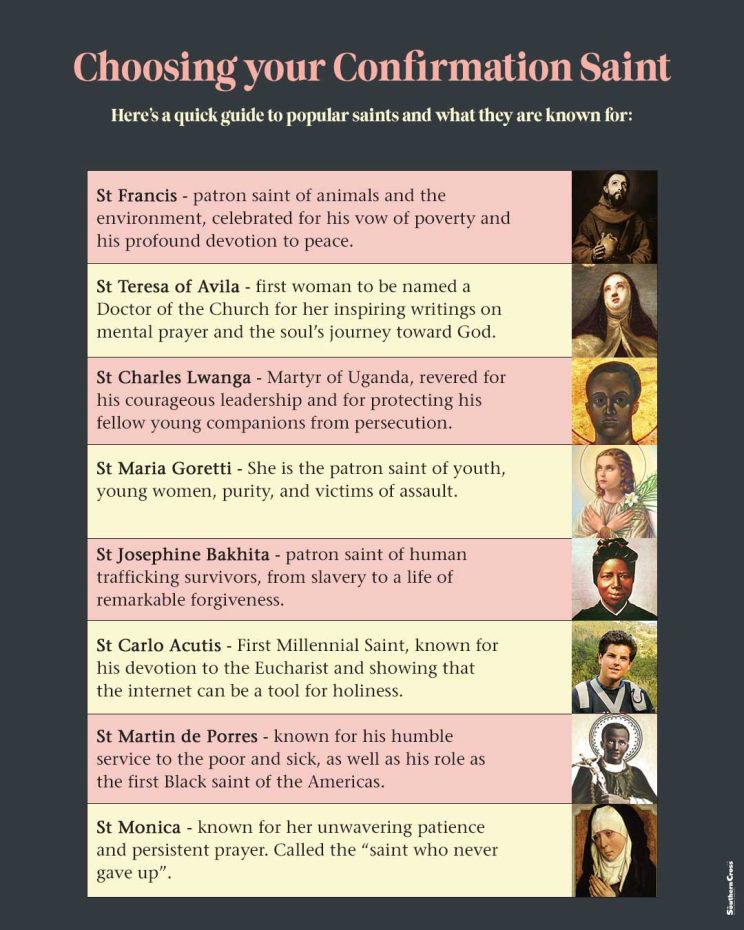
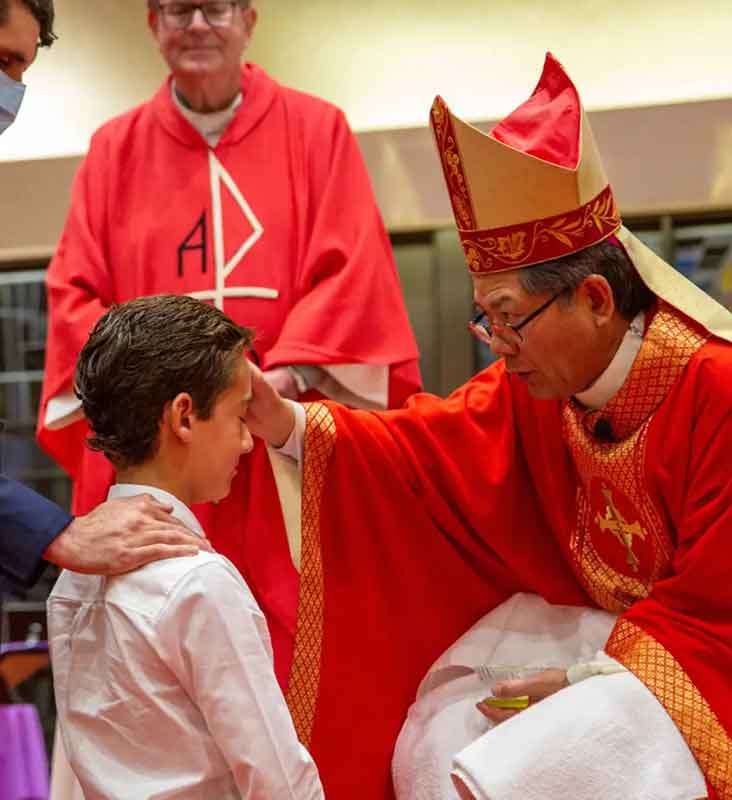
This is the central, essential moment of the sacrament. Candidates approach the Bishop one by one with their sponsor placing a hand on their shoulder. The sponsor states the candidate’s Confirmation name—typically the name of a saint the candidate has chosen as a spiritual role model.
The Bishop dips his right thumb into Sacred Chrism (a fragrant, blessed olive oil mixed with balsam) and traces the Sign of the Cross firmly onto the candidate’s forehead, saying the essential sacramental words:
“[Name], be sealed with the Gift of the Holy Spirit.”
The newly confirmed person responds, “Amen.”
4. The Sign of Peace
Immediately after the anointing, the Bishop says to the person, “Peace be with you.” The person responds, “And with your spirit.” This exchange symbolises the newly confirmed person’s full communion and alignment with the Bishop, the local diocese, and the universal Church.
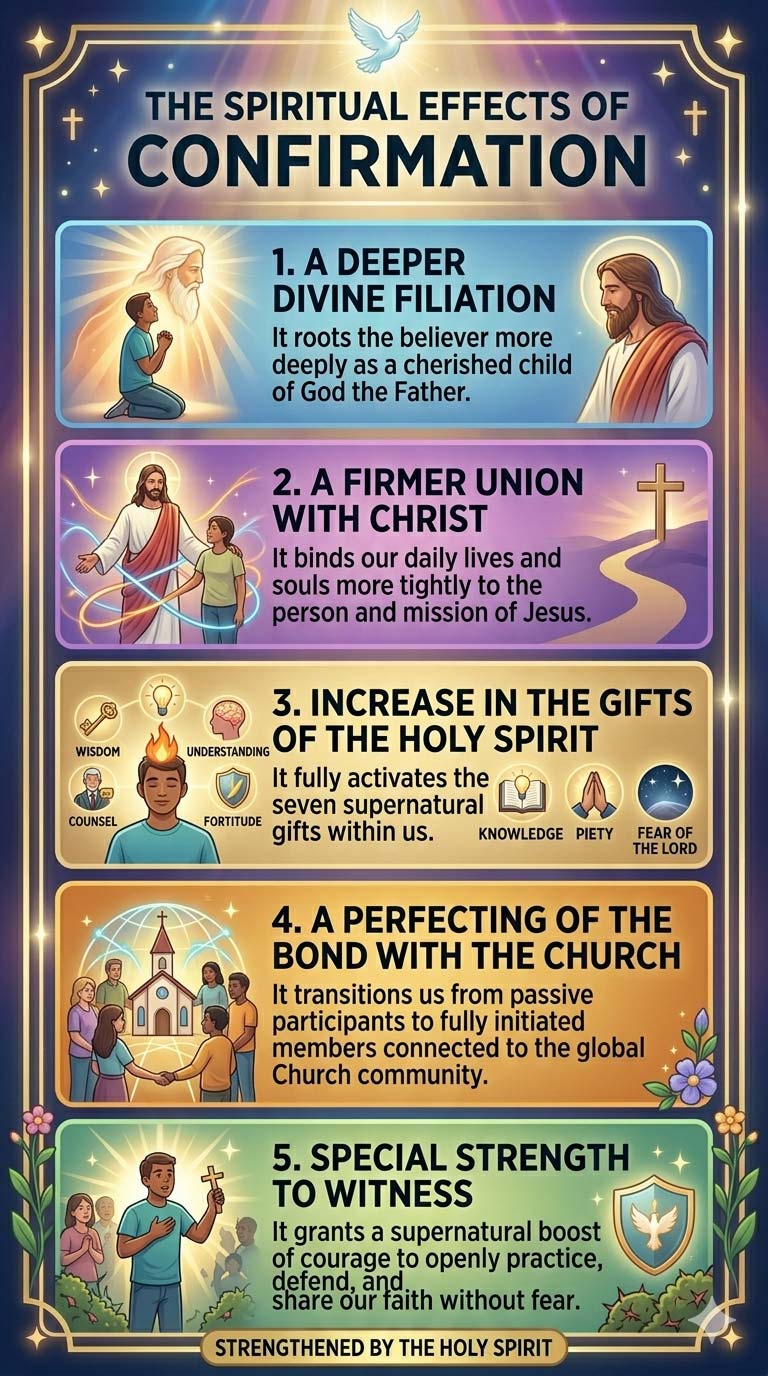
The Spiritual Effects of Confirmation
The theology of the Church teaches that Confirmation leaves an indelible spiritual mark (a permanent character) on the soul, meaning it can only be received once in a lifetime. Its primary spiritual effects include:
Special Strength to Witness: It gives the soul a supernatural “boost” of courage to speak openly about faith, defend the truth, and never be ashamed of the Cross.
A Deeper Divine Filiation: It roots the believer more deeply as a child of God.
A Firmer Union with Christ: It binds the individual more tightly to Jesus.
An Increase in the Gifts of the Holy Spirit: It unlocks and activates the seven supernatural gifts within the soul to help navigate life’s moral and spiritual challenges.
A Perfecting of the Bond with the Church: It connects the person completely to the Church’s global mission.
More about Confirmation