
Celebrate refugees for their courage
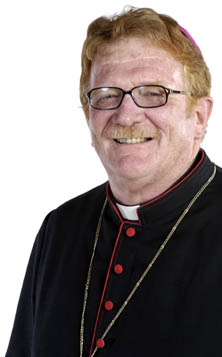
By Bishop Barry Wood OMI
The United Nations High Commissioner for Refugees currently estimates that there are over 20 million refugees and persons of concern around the globe, looking for many of the things we take for granted — hope, dignity and justice.
 We can celebrate the courage that refugees show as they embark on a future that is sometimes uncertain within an environment which is often very unfamiliar, and the courage they show in making their way through often treacherous surroundings.
We can celebrate the courage refugees demonstrate in rebuilding their lives in countries such as ours that value protection and freedom. We should all take a moment to reflect on the plight of refugees and on what we can do as a society to help in any way we can.
And we need to celebrate our own courage to do what’s right. We need to celebrate the courage it takes here in South Africa and elsewhere on our continent, to speak up and help in any way we can. We can especially celebrate the courage demonstrated by the Church as well as non-governmental organisations which do so much to help the uprooted around the world — often at great personal sacrifice.

Just over a year ago, South Africa witnessed the horrific outbreak of xenophobic violence which left many people dispossessed, homeless, harmed and even dead. As devastating as these events were, leaving a blight on the moral conscience of society, we also began to witness a reawakening of the call to neighbourliness. The faith community, represented by churches and temples, mosques and synagogues, realised that this was a moment of truth.
The reality is that everyone, without exception, is our neighbour. Our scriptures teach us that God values every person equally. Every one of us is like salt and light for the world. Each one of us has a calling to play a role in transforming society.
The experiences of many churches which played a role in responding to the plight of refugees last year, speak to the testimony that lives have been changed forever. Many of those who found homes in churches were able to themselves become light and salt within their new communities. This is one of the mysteries of our faith — that even in the depths of despair we find new life when we reach out to one another as neighbours.
With regard to the ongoing plight of refugees here in South Africa, we would do well to remember that the issue of immigration, refugee and migrant status is fundamentally not a national security issue; it is a human rights issue. Many countries, including our own, have succeeded in making this a national security or economic issue, and as a result, we have allowed the adoption of policies such as indiscriminate raids, detentions, the breakup of families, and a widespread campaign of fear to spread throughout immigrant communities.
To counter this, we must stop framing our message from a national security perspective, and instead, frame our message from the perspective of the suffering of immigrants and their families under the current broken system.
Indeed, to frame our message and necessary reforms from the viewpoint of immigrants is to better reflect the witness of Jesus, who is incarnate among the most vulnerable, and who has taught us that in welcoming the stranger, we welcome him.
Our calling, in its simplest form, is to defend immigrants and their families.
When the Church loses its prophetic calling, our mission becomes little more than societal maintenance by assimilating the vulnerable into their assigned place at the bottom of the social, economic, and political order, no matter how unjust that order may be. This is a skewed and unbiblical missiology.
Immigrants and refugees are not threats to our nation so that we should recoil in fear and ask for greater militarism on our borders. Immigrants and refugees are not mere objects of evangelistic crusades so that we can assimilate them into a culture and society in which they remain powerless and pressed down.
Immigrants and refugees are people who have families and whose stories are so rich with perseverance, passion and faith that we will receive God’s good news as we do the simple biblical work of welcoming them into our communities. Immigrants are real people with real needs.
This is what makes migration a human rights issue, and this is what must define our calling — and our message — as followers of the migrant Christ.
This is an edited version of an address to the Diakonia Centre in Durban on World Refugee Day, delivered on behalf of Bishop Wood, auxiliary in Durban, by Cardinal Wilfrid Napier.
- When was Jesus born? An investigation - December 13, 2022
- Bishop: Nigeria worse off now - June 22, 2022
- St Mary of the Angels Parish puts Laudato Si’ into Action - June 17, 2022



