
Understanding the media
THE CHURCH AND THE MEDIA, by Chris Chatteris. Cluster Publications, Pietermaritzburg. 2009. 111pp.
Reviewed by Günther Simmermacher
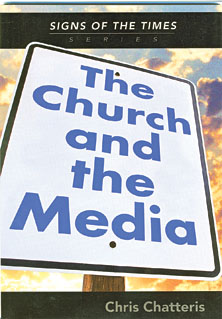 What do we understand by the term “media”? Most people probably would think primarily of newspapers, magazines, radio and television.
Of course, the concept of media — Social Communications, in Catholic parlance — is much broader than that. It also includes books, film, Internet and forms of communication such as advertising or music videos.
Indeed, St Paul’s letters and the gospels were a form of media, interconnected with other forms of communication. Take Paul’s epistles: the apostle wrote them for wider dissemination among those Christian communities he was addressing (using easily absorbed, vulgar Greek for that extra punch). But not all whom he was addressing could read, so Paul’s message was transmitted orally. In a sense, this chain of dissemination hinted at the emergence nearly two millennia later of newspapers and radio.

The nature and use of media — the forms of mass communication — are not well understood, certainly not in the Catholic Church, whose many insightful documents are not always heeded by those whose job it is to spread the Gospel (which by definition requires social communications).
Fr Chris Chatteris hopes to shine a light on the media in the latest of Cluster Publications’ “Signs of the Times” series of books (which previously investigated from a theological perspective the subjects of climate change and same-sex marriage).
In just 111 pages, the Jesuit writer covers almost all aspects of media, omitting a detailed discussion on the Internet because, as he suggests, that requires a volume of its own. He does not offer conclusions but hopes to animate further reflection and, hopefully, discussion in the Catholic Church (and other mainstream denominations).
Chatteris argues that the most potent form of media today may be advertising, a form that “no longer seeks to just inform and persuade, but to mould mentality and even morality”. They flatter us — think of petro-chemical companies congratulating us for using their supposedly “greener” products — and, of course, they manipulate us. “Advertisers are artistic social scientist who certainly do their homework” in reflecting and directing the aspirations of their target market.
Advertising, Chatteris suggests, should not be dismissed as a banal distraction, but should be studied and understood. Likewise, the effects of the celebrity culture and soap operas require wider analysis.
Chatteris is concerned about sex and violence in the media, particularly on TV, but notes that the greater threat resides in the indoctrination of a materialist mentality in which the individual’s wants take precedence over communal needs. This is a crucial observation, especially from a Christian perspective.
Chatteris is reluctant to condemn whole genres of media. Rap music is rightly criticised for its frequent misogynistic and violent imagery. Chatteris no doubt shares these concerns, but suggests that we discern the Signs of the Times in those lyrics too, since they communicate the alienation of many urban youth.
In the Church’s relation to the media, Chatteris is generous in his praise for the content of social communications documents, but regrets that the Church has been reluctant to follow its own advice. One problem, he offers, is that many just don’t read these documents — especially when these discussions on effective communication bear names in a language nobody speaks (Inter mirifica, anyone?). Nevertheless, Chatteris offers a list of subjects to consider before the Church or its agencies embark on a media strategy.
Along the way, Chatteris looks at the print media, cellphones, Internet blogging (and here the reviewer must disclose that he is quoted a few times in the book) as well as how other denominations have used the media to better effect than the Catholic Church has.
Chatteris untangles complex debates with an admirable economy and much wit. I just wish he would have offered his definition of the much over-used word “postmodern”.
The Church and the Media should be read not only by those who work with media, but also by those who take an interest in how the media affect us. As a tool for broader media literacy, this book is most welcome.
Günther Simmermacher is the editor of The Southern Cross

- Shrines around the World: Our Lady of Beauraing - March 21, 2026
- St Patrick: From Slave to Apostle - March 17, 2026
- New Cape Town Archbishop Calls For Unity and Prophetic Courage - March 14, 2026



