
Fred Khumalo on Writing, Humour and Growing up Catholic
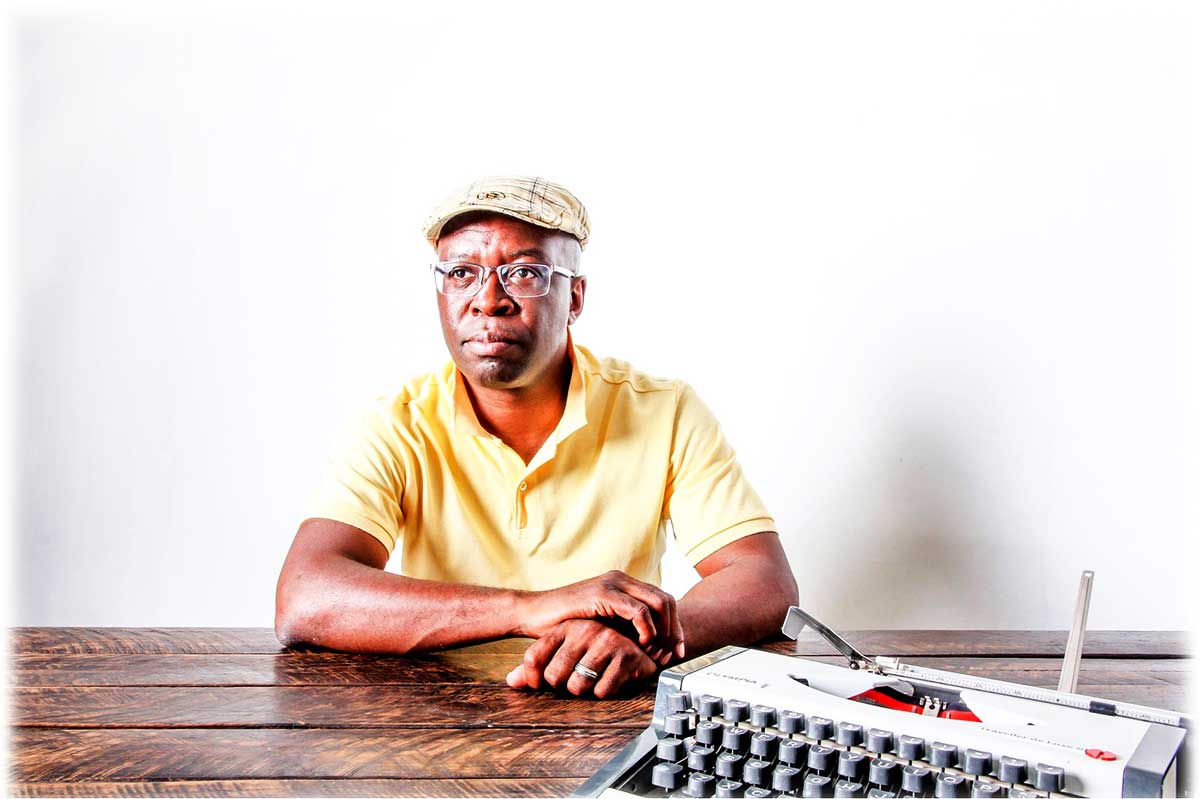
One of South Africa’s foremost contemporary writers, Fred Khumalo has made his mark as an author, journalist and columnist. He spoke to Daluxolo Moloantoa about his Catholic upbringing, his method of writing, and the importance of humour.
Among South African writers, journalist and author Fred Khumalo’s name is a beacon — and his life story is as steeped in the history of the Catholic Church in South Africa as it is in his outstanding journalism and writing career.
The multi-award-winning wordsmith is the author of acclaimed novels such as Touch My Blood, Seven Steps to Heaven, and Dancing the Death Drill, as well as the non-fiction Zuptas Must Fall and Other Rants. In 2008 the recipient of Harvard University’s prestigious Nieman Journalism Fellowship also hosted Encounters, a current affairs television programme on SABC 2.

Fred Khumalo was born the eldest of eight children on August 4, 1966, at Mariannhill Hospital in KwaZulu-Natal, and was baptised soon after at the Catholic mission’s St Francis church. When he was six years old, the Khumalo family moved to Mpumalanga township, near Hammarsdale. This is where Fred started school, and grew up. Upon the family’s settlement in Mpumalanga township, they became parishioners of St Peter’s/Umndeni Oyingcwele . The parish priest then was Fr Cornell. “For many years I served as an altar boy at the parish. I also sang in the youth choir,” Khumalo recalled.
The family’s Catholic connection goes back to Khumalo’s great-grandfather, who in 1907 named his son Clement Bhambatha Khumalo, after the Bhambatha Rebellion against a poll-tax of able-bodied Zulu men in 1906. “My grandfather’s parents were sympathetic to the cause, and named their son after the hero of the rebellion, Bambatha kaMancinza. But, newly converted Christians that they were, they also took their son for baptism at Mariathal Catholic mission in Ixopo,” Khumalo told The Southern Cross. When his grandfather started his own family, he gave all of his children biblical names, and they were all baptised immediately after birth. Fred Khumalo’s father was given the name Israel. Israel’s oldest sister became a nun — Sr Raymond Khumalo, now in her eighties, is based at a mission in the United States.
Church vs football
Much as Fred’s father was a Catholic, his Mass attendance became infrequent over time. “He had fallen so much in love with football that he started his own club. As a result, he stopped going to church and attended to his football business over weekends. He made it a point that I would also participate in his football enterprise. But in order for me not to miss church, he forced me to go to early Mass — after which I was expected to join him at the soccer stadium,” Khumalo recalls.
“When I started high school and joined the church youth choir, I rebelled against him. I stopped going to the football stadium, and instead attended choir practice after church. Then he started teasing me about church, saying it had lost its true spirit. He’d say: ‘You people say Mass in isiZulu! When I was growing up, we used to say Mass in Latin. That is the language God understands. Not isiZulu!’”
Another “distraction” to his devotion to the Catholic faith came when he was 12. This is when a new church arrived in Mpumalanga township. “Almost overnight, a group of people who spoke a variety of languages and were led by someone called Mfundisi Mashicila pitched a tent in our section of the township. The tent was called Isonto Laka Mashicila — the Church of Mashicila. These people caused a lot of excitement in the area. They invited everyone — children included — to come to their services which were held every evening on weekdays, and also during the day on Saturdays and Sundays,” Khumalo explained.
“To us children, the attraction to Mashicila’s church was the music. And the choir sang so well. They also showed us movies. Sometimes there were even snacks. People who were known and feared criminals in our community came and confessed their sins, and converted to the church. But in my family, the Mashicila church caused problems. One of my aunts suddenly turned her back on her Catholic roots. My father was furious. They had verbal fights, but my aunt, who is much younger than my father, stood her ground. To this day, more than 40 years later, she still belongs to an off-shoot of the church of Mashicila.
“Even though I went to Mashicila’s church to watch the movies and enjoy the music, on Sundays I would be at my regular Mass service. Mashicila did not shake my faith in any way, but only deepened my understanding of the many varieties of religious expression,” he said.
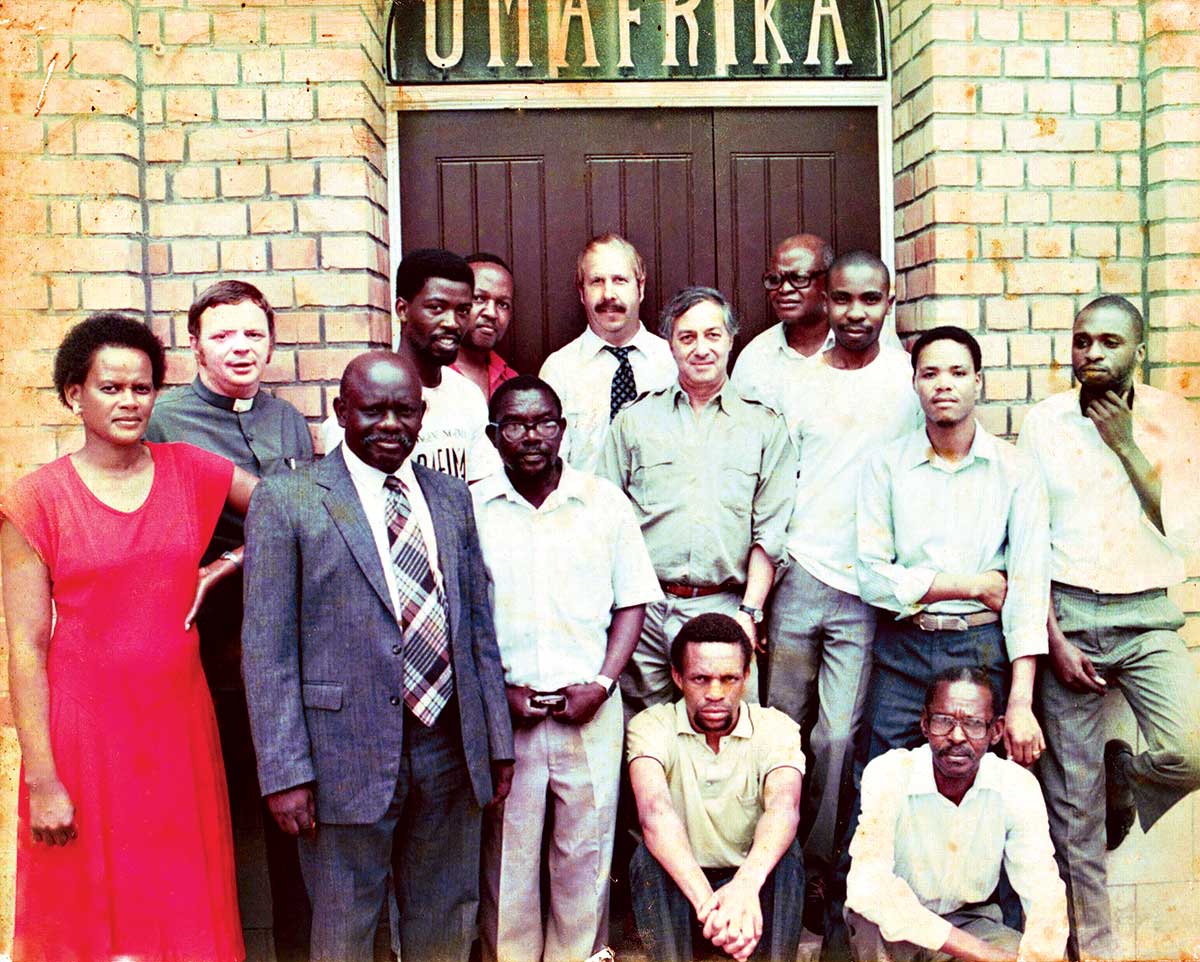
Fred Khumalo (back at far left) with colleagues at Umafrika in the late 1980s. Next to him are (from left) Simon Lushaba, Tony Vincent, Sydney Duval, editor Anthony Ndlovu and future editor Cyril Madlala. Fr Dieter Gahlen is second from left.
Young journalist
In the late 1980s, when he was 21, Khumalo started working for Umafrika newspaper, which was founded by the Congregation of Mariannhill Missionaries. The isiZulu newspaper’s circulation was dwindling, and funding was made conditional on Umafrika increasing its readership. “Fr Dieter Gahlen CMM, who was at the helm of the newspaper, commissioned editorial consultant Sydney Duval to help with the makeover. Sydney then went around scouting for new talent to turn the newspaper around. I was spotted as one of the up-and-coming journalists around. It also helped that I was Catholic. I also understood the Church’s stance on justice, and the Church’s stance on apartheid,” Khumalo explained.
His time at Umafrika coincided with the long war between members of the United Democratic Front and the Inkatha Freedom Party in KwaZulu-Natal. “Because we were not affiliated to the major newspaper publishing houses, we charted our own path. We covered stories that mainstream publications were not prepared to cover. As a result, the communities saw value in us. In just one year, the newspaper’s circulation grew from around 1000 copies to 40000 copies. I don’t believe that record has ever been repeated again in local journalism.”
Covering those stories came at a price, however. “One was caught in the crossfire between the two warring sides. I was beaten up, and my family was threatened. As a result, for some time I did not have a permanent address. Inkatha was hunting me down. The cops, too, were hunting me down, because in addition to my journalism career, I was also a political activist,” Khumalo said.
At 21, Khumalo was the youngest staff member among seasoned colleagues such as Anthony Ndlovu, Simon Lushaba, Tony Vincent and Sydney Duval, and this came with its own challenges. “Being that young, I had to navigate the precarious space of being a colleague to these men, but also to be a child to them. When they were wrong on editorial matters, it was difficult for me to categorically tell them they were incorrect. I had to find euphemisms to put my points across. I didn’t always succeed,” he recalled.
“But they were respectful of some of my ideas, so much so that I was given the freedom to work in all areas of the newspaper. I wrote news, covered showbiz, covered sports sometimes, took photos, designed pages, and so on. I am grateful for the experience because four years later, I was one of the most well-rounded journalists in town. I could write, edit, sub, develop photos in the darkroom…”
The novelist
As an author, Khumalo’s books tend to focus on South Africa’s past and present. His books’ overriding themes were described by one history literature website as bringing “South African history, particularly that which has been forgotten or generally unknown, into the forefront so that it may not disappear into the past…to reignite unfinished conversations around issues of race, identity and land, for example”.
“I am not a historian, per se, but I do read a lot of history books,” Khumalo said. “In reading these, I see lots of gaps. I then deliberately set out to write some novels that hark back to those pockets of South African history which have not been covered in our conventional history textbooks.”
He explained his processes of writing a novel and a short story: “Writing a novel is like running a marathon. It demands a lot of stamina, preparation and discipline. When you embark on a marathon, you’re not expecting instant gratification, instant applause. You start slowly. On your journey you can slow down, or pick up speed as you please. You have time to admire the road, the scenery that you’re gliding past.
“Writing a short story, on the other hand, is like sprinting. It starts fast and ends immediately. A burst of energy, and it’s over. The sprinter doesn’t have time to admire the scenery. He has to focus in those few seconds he has to finish the race. Sprinting has its own demands as well. To be a successful sprinter, you have to be super fit,” he explained.
“I could easily say sprinting is more competitive than running a marathon. Look at the thousands of people who enter the Comrades every year. How many sprinters can we speak of in any year?”
Khumalo dabbled in the short story genre in his books A Coat of Many Colours and Talk of the Town. “I love writing novels. However, I still enjoy the challenge of writing a short story. Contrary to popular belief, writing a short story is more difficult than writing a novel. A short story needs a clear focus, from beginning to end. In a novel there can be unnecessary deviations — which you can’t afford in a short story. A short story demands precision. Say much with less. Anton Chekov once said that every novelist is a failed short story writer; and every short story writer a failed poet. The most skilled writer says much, with less,” he explained.
His writing covers grave subjects, such as in his novels Dancing the Death Drill and The Longest March. But he also enjoys taking on humorous topics, as he did in his essay collection Zuptas Must Fall, or in his contributions to the books Zulu Boy Gone Crazy: Hilarious Tales Post-Polokwane and The Lighter Side of Robben Island.
“I systematically and deliberately tackle heavy subjects in my writing. I am always conscious of how good story-telling works, hence I use humour as my major tool in telling stories. Dancing the Death Drill, for example, is about war. It’s about the sinking of a ship and the instant death of more than 600 people, but there is lots of humour in it. There’s laughter galore on the ship before it sinks.” Khumalo’s love of comedy is reflected in his humourous and regular posts about South African languages and society on his Facebook page.
When not writing novels and short stories, Khumalo writes a regular column in the City Press newspaper. His latest novel Two Tons O’ Fun, a coming of age story set in Johannesburg, was published on Valentine’s Day.
This article was published in the May 2022 issue of The Southern cross magazine

- Cameron Upchurch: Making Music fit for God - February 27, 2026
- Sr Majella Quinn’s Life of Service - February 9, 2026
- Moloantoa and Seleke Present Inspiring Catholic Memoirs to First Lady Dr Tshepo Motsepe-Ramaphosa - February 4, 2026



