St Peter Claver: The Slave of the Slaves whom many loved to hate
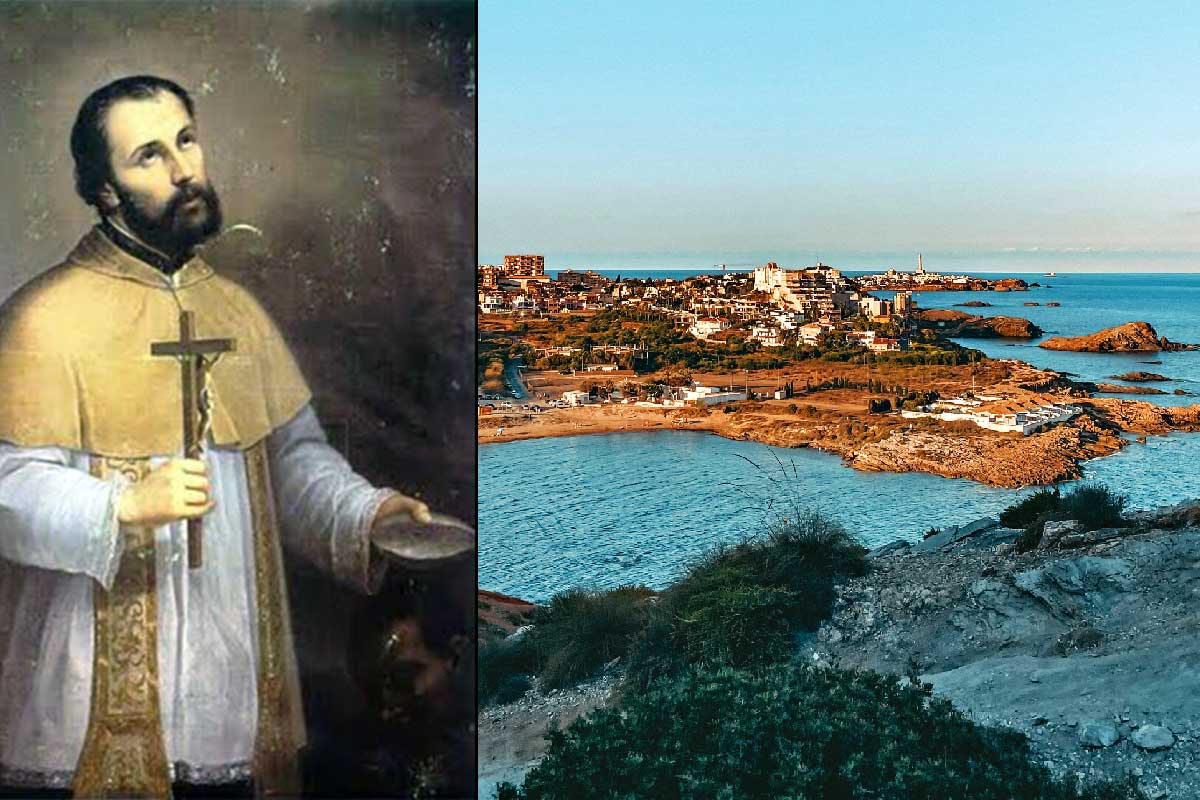
The shoreline of Cartagena, where St Peter Claver ministered to slaves.
In a time of slavery, many people despised St Peter Claver for his ministry to slaves — and Fr Patrick Noonan OFM knows the feeling!
Born: June 1580 in Spain
Died: September 9, 1654, aged 74 in Cartagena, Colombia
Beatified: 1850
Canonised: 1888
Feast: September 9
Patronages: Slaves, race relations, seafarers
Picture the scene: It’s a day in the 1630s. A boat arrived this morning with human cargo. It’s like any other morning in the coastal town of Cartagena, centre of South American slavery between 1595 and 1640.

At the port of Cartagena — on the northern coast of Columbia, near Panama — a vast Portuguese slavery story is unfolding. They are dropping, “unloading”, thousands of African slaves there each month. Perhaps 10000 a year. The Spanish authorities need them to drive their economy. They certainly don’t see it as trafficking in human beings. That’s hindsight. Besides, they reason, everyone is doing it. The markets need it. Lisbon’s “Financial Quarter” can’t survive without it. Madrid’s “Wall Street” would collapse without it, said the pundits.
A Spaniard, a Jesuit missionary living at the church in the city of Cartagena called Peter Claver, can’t take it any longer. He has had sleepless nights in this port after seeing what was being perpetrated by his own people — his own Spanish people.
Peter has prayed about it a lot. He decides to be the answer to his own prayer. He knows he cannot fight the system of slavery alone at the political level. He is too far from Spain, the centre of power. He decides to do what he can to influence the situation on the local level. The clergy supports him, but not unanimously. We find Peter waiting to help disorientated slaves as soon as they come off the ships — often more dead than alive.
Peter begins to have a doubtful reputation among the administrators of the colony. They wonder about him. Where do his loyalties lie? To the slaves or the Spanish government? To the blacks or the whites? Did he not come on the missions to provide for the spiritual welfare of his own people, the Spanish colonisers so far from home? Did he not want to make Spain great again? The authorities think that he is overzealous about “his” slaves and say he abuses the holy sacraments by giving them to black people who they claim are “without souls”. Some suggest a letter to his superiors in Spain or even Rome should fix that. Move him to a rural parish, away from “politics”, you understand.
And another thing: fashionable ladies refuse to enter churches where Claver and slaves have been at Mass. The pungent human smell, the sweat, is too much for their noses.
Under suspicion
On occasion when he ventures out to a public gathering at the governor’s residence, Peter is tolerated with a certain condescension — and sometimes suspicion. And he encounters even hate and distrust from the slave auctioneers at the port who would ask him with a thinly disguised unease what he is trying to prove. They feel he lets the side down. Where is his racial solidarity with his own people, the Spanish? So it’s not surprising that Peter isn’t generally on invitation lists to colonial receptions.
Spiritually, he embraces being shunned, and he finds strength and divine company in prayer and adoration. He calls himself “the slave of the slaves”. The moral stance of Peter Claver puts him into a sort of limbo in relation to his own people, the local Spanish authorities.
I know the feeling. I was in that space in relation to South African whites during apartheid. Peter Claver (1580-1654) knew the Spanish were on the wrong side of history. He also knew that slavery was obscene, even though it was justified by “state theology”, meaning the theological justification of the status quo.
We, the churches in the townships of South Africa, also knew apartheid was obscene, and we kept undermining it at every opportunity. An apartheid government inquiry into the 1984 uprising in the Vaal Triangle found, in typical scapegoat mode, that the mainline churches had used black, revolutionary and liberation theology to influence the demise of the apartheid system. The churches responded by pointing out, as calmly as possible, that they used the Bible’s prophetic word to announce, in season and out, “the way, the life and the truth”. I wrote about those events in my books They’re Burning the Churches (Jacana) and Township God (Write-On Publishing).
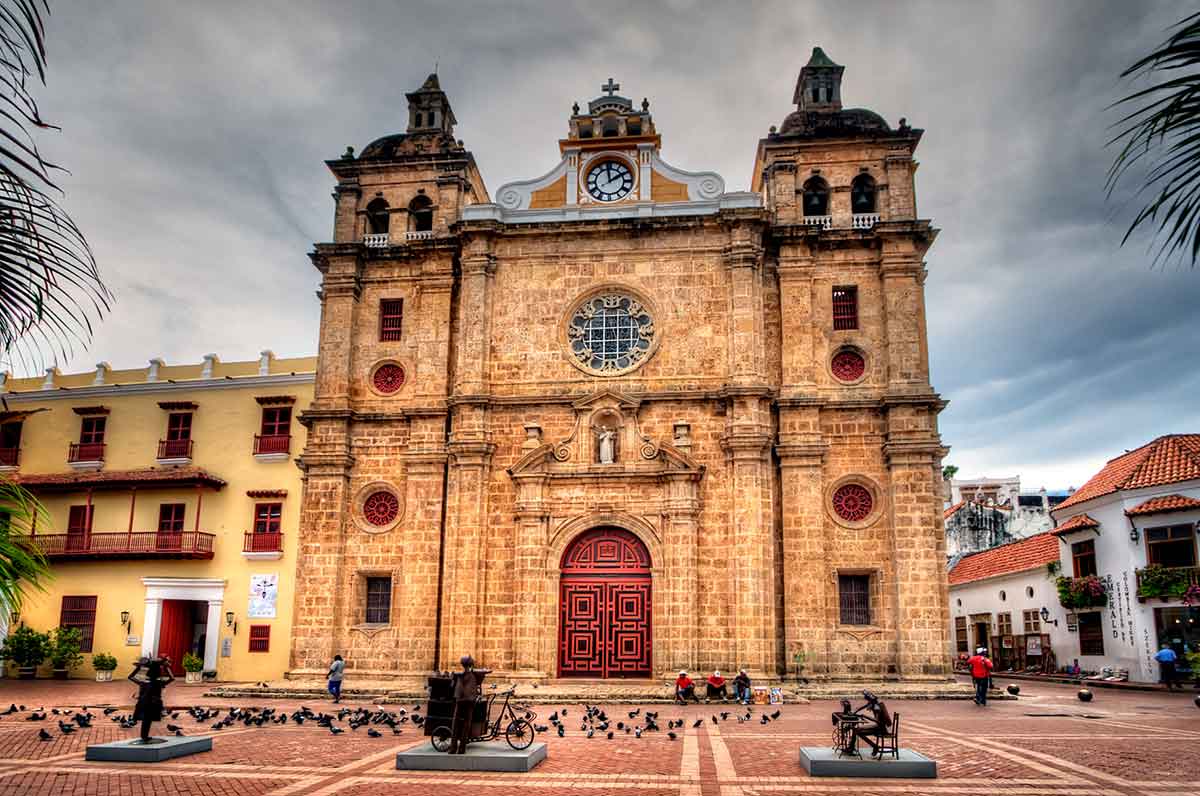
The church of St Peter Claver in Cartagena, which holds the saint’s tomb.
Hero in death
Of course, when it was all over, Peter became a hero to all and sundry. Nobody could remember belittling him or his ministry to the marginalised. Political amnesia had quickly set in. And in time, Peter was “rehabilitated” by his growing number of admirers, leading to his canonisation in 1888. The despised slave helper became the saint Peter Claver.
A 19th-century Catholic litany “for the conversion of the negro race” describes him, in the language of its day, as “the apostle of the negro” and “the shining light of Cartagena”. When Pope Gregory XVI condemned slavery in 1839, Peter Claver became a worldwide role model for Catholics against slavery.
Petitions appeared in prayer books “to obtain freedom for the slaves of Africa” (The Voice of the Sacred Heart, 1897). One prayer runs like this:
“O Jesus, Who didst die that all men should be free, look in pity, I beseech Thee, on the misery of the poor slaves in Africa, and come and hasten their deliverance. Let not their oppressors triumph over them, but by means which Thou alone canst devise, hasten the day which will set them free, and in that day make them know Thee, their own true God and Saviour.
“Our Lady of Mercy, pray for the poor slaves, and obtain their redemption. Guardian angels of the poor slaves, pray for them, and protect and console them in their misery. Amen.”
Remember that at the time, this was praying for the fall of an economic system that had lasted for hundreds of years. Slavery was the muscle on which the world’s most powerful economies were built. Business people and those in the pews who had lived off slavery must have found these prayers very disconcerting, even subversive. Again, I recognise the situation. I was accused of similar prayers for the fall of apartheid. Mary’s Magnificat could have been banned! Many white professionals were known in those days to anger easily when South African bishops distributed anti-apartheid statements to the faithful.
On one occasion in Vanderbijlpark in the 1970s, parishioners rolled up episcopal statements into balls, thrust them into the sanctuary, and then stomped out of the church in a serious huff. Those were distressing times for the parish priest, Fr Valerian Gavin OFM of happy memory.
As in the case of St Peter Claver SJ, all is forgotten now.
Fr Patrick Noonan is a Franciscan priest based in Johannesburg archdiocese. He is the author of several books.
This article was published in the September 2021 issue of The Southern Cross magazine

- The Angelus Prayer - March 25, 2026
- Palm Sunday Prayer - March 24, 2026
- Pope: We Cannot Remain Silent - March 24, 2026