
Bishops Reflect on 75 years of SACBC

Jubilee celebrations at Church of the Beatitudes, Pretoria (Photo: Sheila Pires)
The celebration of the SACBC’s 75th anniversary and the centenary of papal representation in South Africa has prompted the bishops of the region to reflect on the mission of the Catholic Church in Southern Africa since the establishment of the conference in 1947.
In their January plenary session, held in Pretoria, they noted “the successes, failures, and the challenges still facing us.”
The bishops noted the growth of the Church and its impact on society in various ways:.

- From a Church that initially focused on ministering to settlers to one that has become inclusive of all the local people in its membership. From a Church initially dependent on expatriate missionaries to one that is growing in becoming self-reliant, self-supportive, self-evangelising and self-ministering, in which all the faithful are taking ownership for its life and mission.
- During the time of apartheid, the SACBC was one of the prominent and recognised voices that constantly and continually advocated for change. The bishops played an important role in denouncing the ideological attitudes and practices against human dignity inherent in this system and in constantly calling for change and transformation.
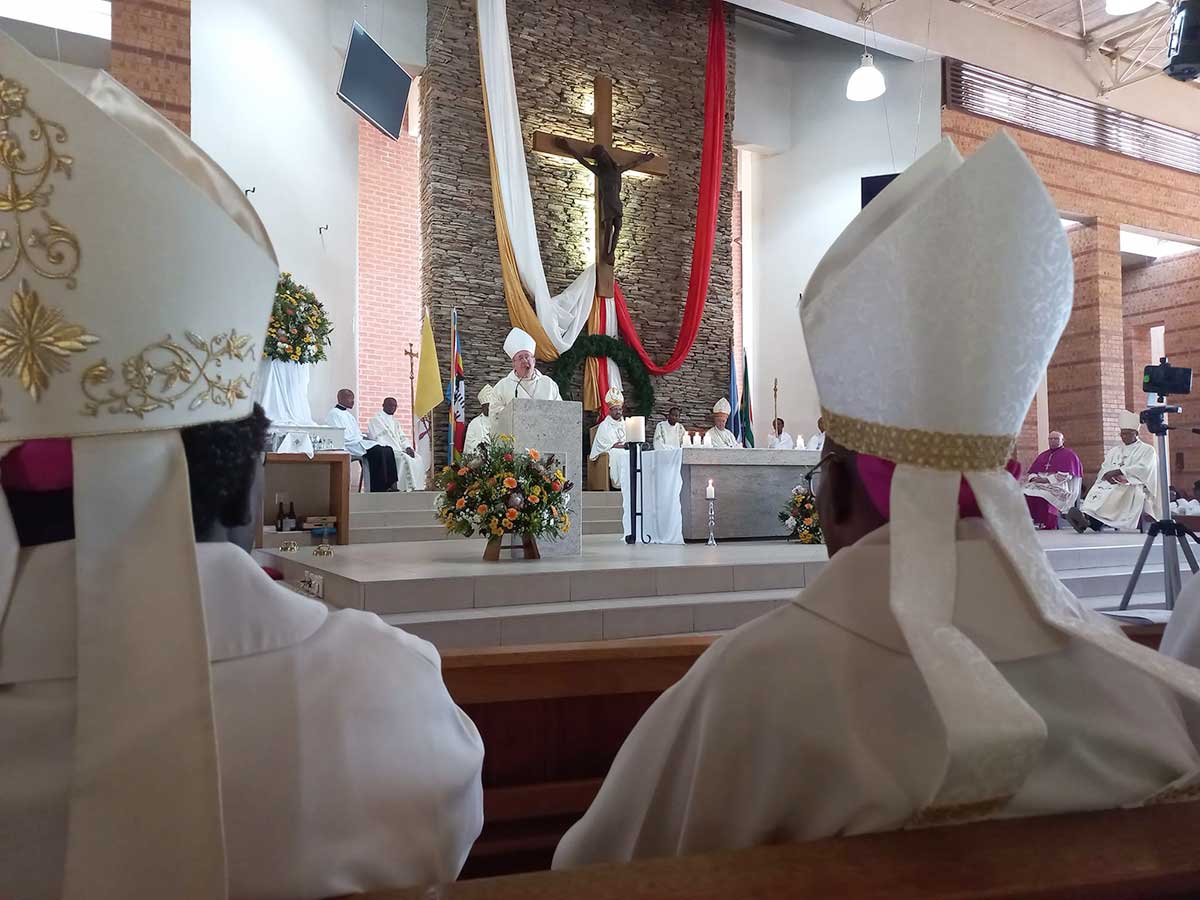
Archbishop Emeritus William Slattery OFM homily on the history of the Catholic Church in Southern Africa (Photo: Sheila Pires)
Through the numerous statements issued at different times, the Bishops not only condemned what was wrong but also offered pastoral guidance to the faithful on how to respond to the attendant social, political, and economic injustices.
- Through its various organs and departments, the Conference has served society beyond the confines of the Catholic Church and helped improve people’s lives. This is particularly true of our schools which, though few and under-resourced, continue to provide quality education to many children of poor backgrounds.
In recent times, the Catholic Church has been the number one institution in taking care of people with HIV and AIDS.
While thanking God for the growth that has taken place and the positive contribution made by the Church since the establishment of the Southern African Bishops Conference, at the same time we acknowledge with humility that there are still significant areas of growth and transformation that need to be dealt with.
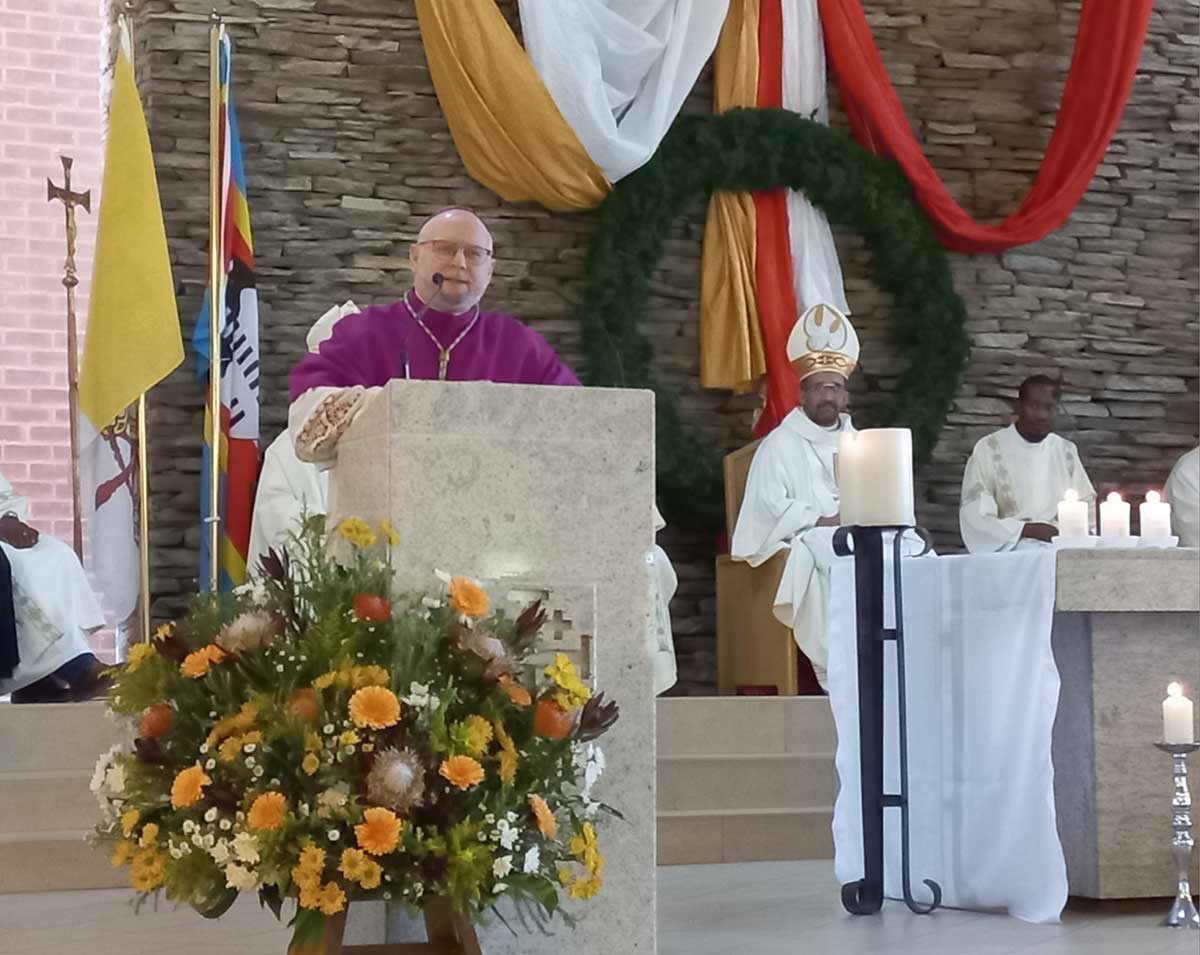
Apostolic Nuncio, Archbishop Peter Wells at Jubilee celebrations at Church of the Beatitudes, Pretoria (Photo: Sheila Pires)
- We note with some disappointment the slow march towards the ownership of the Church and its prophetic mission by the laity in general. The engagement of the Church with civic and political life has been, by and large, carried out by the hierarchy with no involvement of the laity. It has been the bishops who spoke and issued statements on matters of justice and economic inequality. This is also true regarding carrying out the mission of the Church, which is still largely viewed as the domain of priests and religious. The notion of a self-supporting Church remains underdeveloped among our laity.
- We continue to note with a sense of shame the failure in many of our parishes in South Africa to transcend the racial divisions of the past and be comfortable in being multiracial, multicultural, and multilingual. This is evident, for instance, in the perennial conspicuous absence of English-speaking Catholics in our diocesan celebrations. This is a painful reminder of the continued lack of racial cohesion within the Church.
Read our interview with Bishop Sithembele Sipuka on the occasion of the 75th anniversary of the SACBC

- The Angelus Prayer - March 25, 2026
- Palm Sunday Prayer - March 24, 2026
- Pope: We Cannot Remain Silent - March 24, 2026



