Equal in God’s eyes: discerning truth in Gaza when truth is the first victim of war
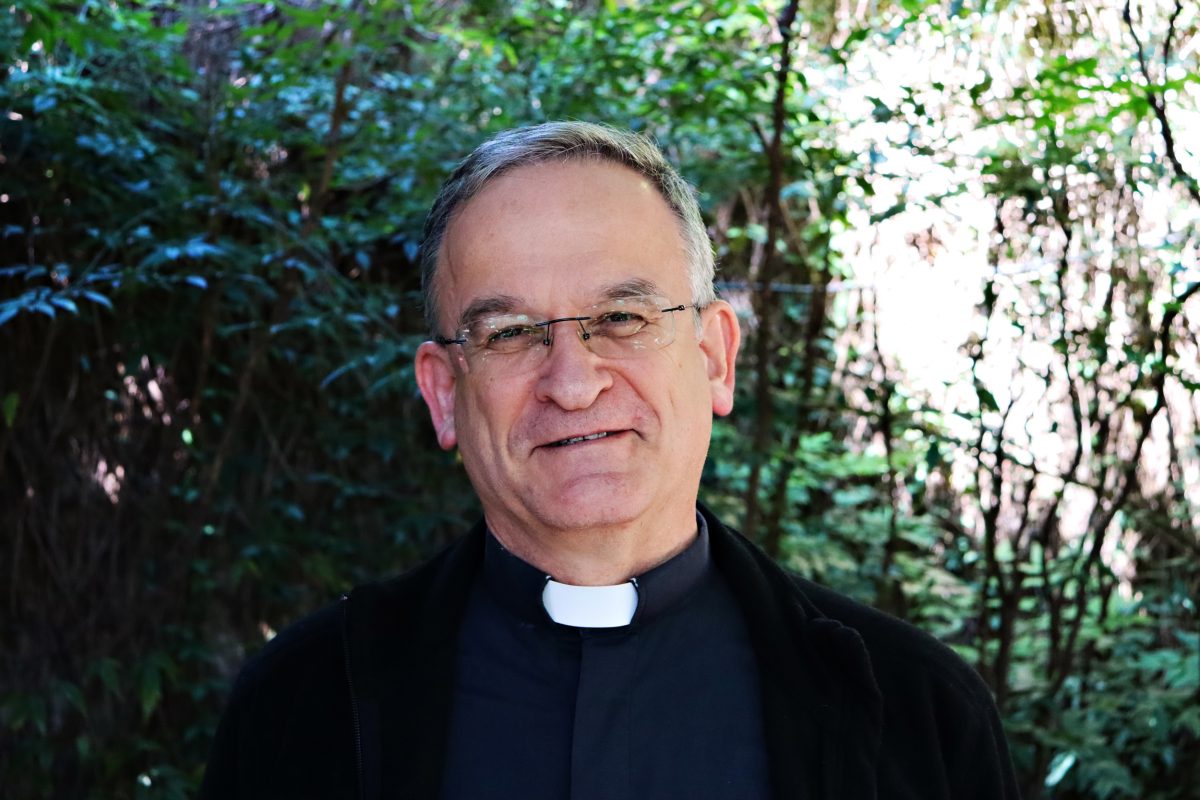
Jesuit Father David Neuhaus
By Terence Creamer – With truth being the first victim in any war – but more especially the current deadly conflict in Israel and Palestine, where traditional and social media is being heavily exploited for propaganda purposes – Jesuit Father David Neuhaus is urging Christians to discern their response through the truth of their faith rather than through one-sided media reports that often reinforce personal prejudices.
Speaking during a virtual dialogue hosted by the Jesuit Institute’s Fr Russell Pollitt SJ, Fr Neuhaus argued that a Christian response to the Gaza war should be informed primarily by what Christians know to be true: that every human being is created in the image and likeness of God and is equal in God’s eyes.
“These are truths that we know and should be at the very heart of any words we speak about what is happening in Israel and Palestine today. And I think that it is a Christian mission and vocation to proclaim this loud and clear,” said the South African-born Catholic priest of Jewish descent who has lived much of his life in Israel, where he is also a citizen.

Having returned briefly to Israel from South Africa on October 8, the day after Hamas mounted its appallingly violent and ruthless attack on parts of southern Israel, and as the Israeli Defence Force initiated an unprecedentedly brutal and indiscriminate bombing campaign on the densely populated Gaza Strip, Fr Neuhaus reported that the level of trauma and rage across both communities had risen to extreme levels.
View the full dialogue titled “Gaza: What the hell is going on?”, led by Fr David Neuhaus SJ
In a context of such heightened tension, it was incumbent on religious leaders to play a role in de-escalating the situation, by stating “very clearly that where there is war, God is weeping” and to demand that religion is not used as an “additional motivation to engage in horrific violence and bloodshed”.
This is not a religious war, Fr Neuhaus also stressed. “This is not a war between some kind of theoretical entity called Judaism and some kind of theoretical entity called Islam. It’s a clash between two modern national movements that started to evolve at the end of the 19th century and came fully into their being in the 20th century: that is Zionism, or Jewish nationalism, and on the other side, Palestinian nationalism.”
Despite the conflict being primarily rooted in a struggle between two national movements over land, heavily amplified by decades of repression and occupation, some religious extremists continue to exploit religion and religious tradition in a bid to claim that “God is on their side”.
“It’s already pretty toxic when you say, ’This land belongs to me and me alone’, but if you add, ‘This is what God wants, this is what’s written in holy writ’, then, of course, we have a very much more potent argument,” Fr Neuhaus explained, while stressing that several other religious leaders had been moderating influences, making religion a complex issue in the territory.
As a leading scriptural scholar, Fr Neuhaus is troubled, however, by the growing use of biblical terminology by some Israeli politicians, including Prime Minister Benjamin Netanyahu’s use of “Amalek” to define the Palestinians; a reference to a mythological figure in the Pentateuch that God ordered to be “wiped out” by King Saul, who was later punished for failing to do so.
“This biblical language together with Jewish trauma relating to the long centuries of anti-Judaism and the recent history of antisemitism all formed together into a kind of emotional state that makes many Israelis intransigent and determined to be victorious.” The word “Victory” is currently on public display all over Israel.
“War, as Pope Francis has so clearly stated, is defeat for everyone,” Fr Neuhaus reflected.
To discern a truly Christian response, Fr Neuhaus argued that it was crucial to listen to those in pain and to learn as much as possible about the trauma and anxiety being felt by those experiencing such agony through exposure to various sources of information.
It was then essential to pray, including with prayers asking God to reveal to us “what our prejudices are” so that any response is motivated by a genuine desire for justice and peace rather than individual biases. From this position of prayerful discernment, Christians would be in a better place to discover how to speak out using words that “sow justice, peace, equality, pardon”. Words, he added, that opened up the horizon rather than led to the building of walls.
“When we are emotional, and when we are manipulated by people telling us certain aspects of the truth, rather than the whole truth, words will flow out of us that could cause even greater harm. We must, thus, be very careful and watch our words.”
In discerning his own response to the Gaza war, Fr Neuhaus revealed that he repeatedly turns to the prayer Pope Francis prayed in 2014, when he invited Palestinian Authority President Mahmoud Abbas and Israeli President Shimon Peres to the Vatican for an evening of peace prayers, it reads:
We know and we believe that we need the help of God.
We do not renounce our responsibilities, but we do call upon God in an act of supreme responsibility before our consciences and before our peoples.
We have heard a summons and we must respond.
It is the summons to break the spiral of hatred and violence and to break it by one word alone: the word, ‘brother’ (‘sister’).
But to be able to utter this word, we have to lift our eyes to heaven and acknowledge one another as children of one Father – Pope Francis June 8, 2014

- The Angelus Prayer - March 25, 2026
- Palm Sunday Prayer - March 24, 2026
- Pope: We Cannot Remain Silent - March 24, 2026