
My friend, what are you looking for? 2nd Sunday in Ordinary Time
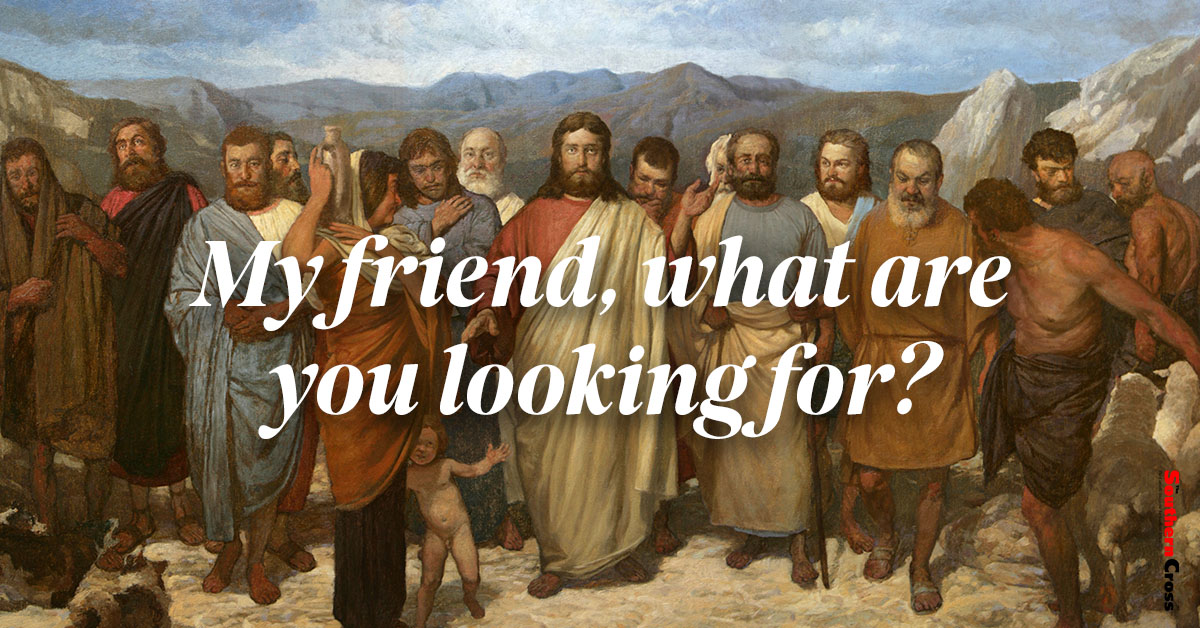
Sermon by Emmanuel Suntheni OSB – Second Sunday in Ordinary Time – Year B
Sermon and Christian Act In The Word
Theme: Discernment on God’s Call! We have found the Messiah! My friend, what are you looking for?

Point of Reflection: St Benedict in his rule for monks and nuns has posed a question to the priests and religious who want to join the monastery: my friend what are you looking for? (Cf. Rule of St Benedict 60) As a Christian, as a priest, as a bishop, as a religious brother or sister, what are you looking for in the Church? Are you looking for Christ? In today’s Gospel, we hear Jesus asking the two disciples, what are you looking for? This calls for discernment. We all need to discern on God’s call.
The response to this call requires that the one called discerns carefully what such a call implies. In the experiences of Samuel, Andrew, and Peter we see examples of such successful discernment which led them to offer their lives to the service of God.
Paul expected such a discernment of the Corinthians, knowing that it is required for conducting their Christian life in holiness. All believers are called to a similar careful discernment so that, with the Psalmist, they could confidently say, “Here I am… I delight to do your will, O my God.”
First Reading: 1 Samuel 3:3–10, 19
Psalm: Psalm 40:2, 4, 7–10
Second Reading: 1 Corinthians 6:13–15, 17–20
Gospel: John 1:35–42
Sermon (Reflection): We are all called by God. Do we hear our names every day? Today’s liturgy of the word calls for discernment of God’s call, a call which comes in different forms, and in the midst of ordinary human lives. Such discernment not only changes the direction of a person’s life, but also empowers him or her to live an authentic Christian life.
The Gospel reading of today narrates a very good call-story: the evangelist John the Baptist points out Jesus whom he calls, “the Lamb of God” to two of his own disciples. In response to this proclamation, the two men decide to leave John the Baptist and follow Jesus, thus embarking on a journey of discipleship in following Jesus. But Jesus asks them a question: “What are you looking for?” These words pose a challenge, and a call for the disciples to state who they consider Jesus to be, and to clarify their reasons for seeking him. As Christians, we need to constantly ask our friends who are close to us and who wants to be close to us, my friend what are you looking for? Because some people wants to be close to us for personal gains not for saving our lives and Christ.
The two disciples responded to Jesus by asking him, “Rabbi, where are you staying?”. The Greek verb translated here as “stay” means to “live”, “dwell”, and, most significantly “to abide”. This last sense is how the evangelist intends the word to be understood here. It expresses the theology of the abiding presence of God in Jesus, the Incarnate Word. Thus, the disciples asked not merely where Jesus is staying, but in whom he is abiding. They indirectly inquire about his relationship to God. Significantly, these two followers called Jesus “rabbi” which means “teacher”. At this stage, they are far from understanding who Jesus truly is.
Jesus’ response, “Come and see”, is an invitation to experience him and his presence, so that they might comprehend his nature and mission. However, this invitation also challenges these followers to discern their role as disciples, which will be defined by their discernment of Jesus’ true nature.
At a literal level, one may be inclined to think that the disciples were being invited to come and see where Jesus lives either his house or lodging. However, at a deeper level, the disciples are invited to embark upon a journey of discovery of Jesus and of their own discipleship. They embarked on the journey and “stayed” with Jesus, which led them to a profound discerning experience. As Christians, we are invited to always stay with Christ. Our comfort zones as Christians in this life is in staying in Christ.
The first reading of today narrates a dramatic story of the call of Samuel through the dynamics of divine initiative, and human response. The name “Samuel” literally means “God has heard”. The theme of God hearing the calls of his people is important in the book of Samuel. Thus, God hears the cry of a barren woman, Hannah, and responds to her pleas with the grace of motherhood. Later in the book, God will hear the cry of the people of Israel, asking for a king and, through Samuel, appointing Saul as their monarch. After the miraculous birth of Samuel, the young boy is turned over to Eli, a priest serving at the shrine at Shiloh. This is where God calls young Samuel to be his prophet. God’s call to the boy is direct and personal. Still, Samuel needed help in discerning God’s call fully and correctly. The old and nearly blind Eli, with wisdom and fatherly tenderness, enabled the young boy to hear the Lord’s voice and respond to his call. As Christians, how do we recognize divine call? And how do we respond to the divine call?
Samuel’s threefold return to consult Eli when hearing God’s voice is characteristic of the process of gradual discernment of God’s revelation. When Samuel, guided by Eli, finally recognized the voice of the Lord, his humble but powerful cry, “Speak O Lord, your servant is listening” marked the rise of a new prophet, through whom God’s word will once again be heard in Israel. Thereafter, Samuel will enable the people of Israel to discern God’s will concerning their covenant obligations, as well as guiding them in the religious and political matters that would shape their destiny.
In the second reading of today, Paul reproaches the Christians in Corinth for their failure to differentiate between what is holy and what is sinful. Corinth was a cosmopolitan port city, well known for its wealth, luxury, and affluence. It was also a city where pagan religions were mixed with sexual practices. Thus, the city was famed for its immorality associated with prostitutes often attached to pagan temples. This promiscuous environment apparently affected the Christian believers who were recent converts from pagan religions. They struggled to keep their faith in Christ alive in this pagan environment, and wrestled with many moral questions and demands that came with it. In today’s reading, Paul tells the believers to shun fornication, pointing out to them that such sexual misconduct is totally incompatible with belief in Christ. The apostle insists on the sanctity of the entire human person – body and spirit – whom he considers as the “temple of the Holy Spirit”. For Paul, being a follower of Christ involves no compromise, especially when it comes to sexual integrity. As a result, there is no room for an iniquitous and immoral lifestyle, which is incompatible with the Christian virtue of holiness. Paul’s instructions to the Corinthians imply that an authentic discernment of what is right and wrong in their life circumstances is necessary, and will be instrumental in keeping the faltering Corinthians from returning to their former, pagan way of life. We all need to discern the way we live our life.
Christian Act in Word of God “Discernment _Speak your servant is listening”
In discernment, we need other experienced people to help us discern and make us understand the divine call we receive. The piece of advice that Eli gave to Samuel, “if he calls you, you shall say, ‘Speak, LORD, for your servant is listening’”, is the key to activating the grace of discernment. A fundamental readiness to listen to what God is saying puts us in a state where we can easily discern the will of God. Unfortunately, there are quite a number of people who carry the tag of Christian and yet have put themselves in situations that make discernment almost impossible. These are people who, to use the phone analogy, have simply put themselves out of the coverage area. Paul addresses one such issue in the Christian community at Corinth, where sexual immorality had become a challenge and a hindrance to union with Christ. Paul issued a wake-up call and an efficacious reminder that being a true Christian is not just about being baptised, but a choice to live wholly and solely for Christ.
In this regard, the ultimate goal of Christian discernment is to follow in the footsteps of Christ. Thus, in the Gospel text, when the two disciples had heard the words, “Look, here is the Lamb of God”, they made a decision to follow Jesus.
There is an information explosion in our world today. On the radio, television and social media, many voices are screaming for our attention. The noisy world seeks to drown out the gentle and yet powerful voice of God. In discernment, we go deep into that sacred space within us and discover the exquisite voice of God calling us to take particular actions and directions in life. The voice that called Samuel and said to the two disciples of John the Baptist, “come and see”, is that same voice that is calling each one of us. As Christians we must respond to that voice of God like Samuel say, “Speak, for your servant is listening.” Here I am Lord send me!
Action: I will discern on God’s call and positively respond.
Prayer: Eternal Father, you call each one of us with our names, send your Holy Spirit to open our hearts and mind to faithfully respond to your call and help us discern to positively respond to your divine call each day. In your Son Jesus Christ, the Word made flesh, you have pitched your tent right in our midst. As we yield to the grace of your Son, may we come to discover you more and more. In his name, Jesus Christ, we pray with thanksgiving, Amen.

- God’s Call to Life: 5th Sunday of Lent - March 20, 2026
- Laetare Sunday: 4th Sunday of Lent - March 12, 2026
- Jesus Christ is the Living Water: 3rd Sunday of Lent - March 6, 2026



