
Deacons, Priests, Bishops, Religious: What Legacy do they Leave Behind?
(CNS photo/Lola Gomez)
By James Katende – A missionary, a deacon, a religious, a priest, and a bishop—all unique in vocation yet united in purpose—are called to be signs of God’s presence on Earth. Their lives are not their own. They are vessels, broken and poured out, offering themselves in sacrifice for the salvation of others. But what should remain when their breath fades into silence? What echoes should linger in the hearts of the faithful after they are gone? Their legacy must be nothing less than Christ.
The missionary must leave behind more than the boundaries they crossed and the languages they learned. Their legacy is the fire they ignited—the faith planted in foreign soil, the dignity restored to the marginalised, the hope whispered into despairing ears. What people remember is not the one who came, but the One they revealed. They are remembered not for what they brought, but for who they became: a mirror of Christ’s boundless compassion. They leave behind churches built of stone and souls built for eternity.
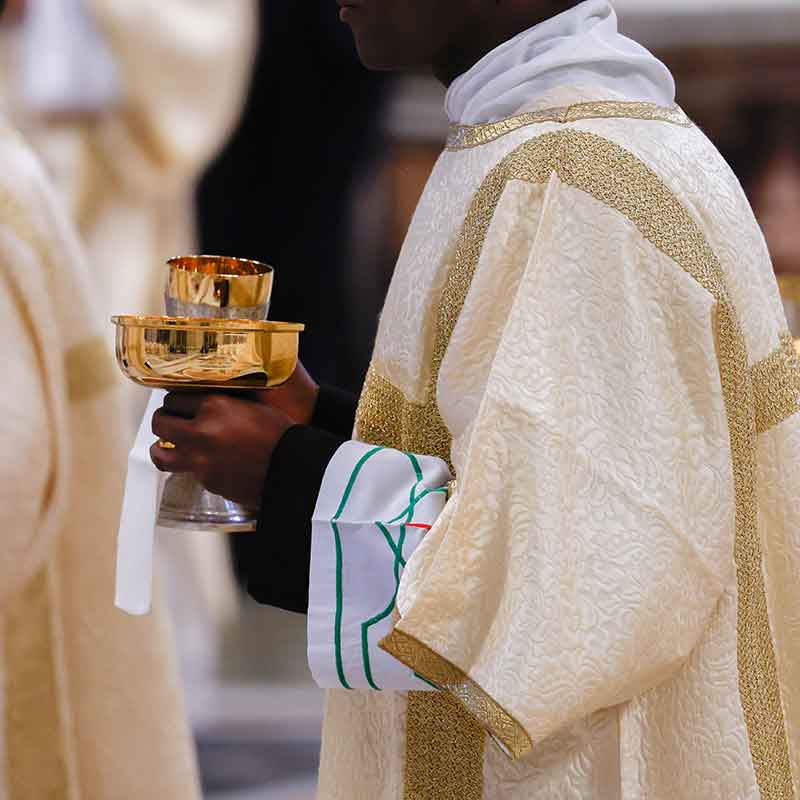
The deacon, called to service, must leave a legacy of humility. Their hands held the chalice, but they also wiped tears, fed the hungry, buried the dead, and walked beside the broken. Their greatness is measured in quiet deeds, in being present where others walked away. What people remember is the kindness that cost nothing but meant everything. They must die known not for titles or vestments, but for being the steady bridge between altar and street, between sacred rite and daily life.

The religious — man or woman consecrated in vows — must leave behind a testimony of radical surrender. Their legacy is found in the witness of a life stripped bare of self to be clothed in Christ. What remains is the discipline of prayer, the joy of obedience, the power of simplicity. The world may forget their name, but it will not forget the peace that came from their presence, or the silence that thundered with holiness. They will be remembered as those who chose eternity over applause.
The priest must leave more than homilies and sacraments performed. His true legacy is spiritual fatherhood—a people formed, healed, challenged, and loved. He leaves behind not a congregation, but disciples. The altar bears witness to his fidelity, the confessional to his mercy, the parish to his sacrifice. What people remember is not the priest’s eloquence but his availability. Not his charisma, but his constancy. Not how he performed the liturgy, but how he lived it. He should die having poured out every drop of himself, that Christ might be known.
The bishop, entrusted with the fullness of apostolic ministry, must leave a legacy of courageous shepherding. His leadership is not in dominance but in guidance, not in decree but in discernment. What must remain is the mark of unity he fostered, the truth he guarded, the love with which he governed. He should be remembered not as a prince of the Church, but as a father among his people, a man whose authority was wielded not for power but for protection. His legacy is a diocese formed in truth, growing in holiness, and burning with mission.
All of these servants—missionary, deacon, religious, priest, bishop—must leave behind a legacy that cannot be measured in stones or statutes, but in souls. When they are laid in the earth, what must remain is a trail of lives turned toward God. They must be remembered as those who bled quietly for the Gospel, whose voices thundered in the silence of prayer, whose touch healed not with power but with love. And when they are gone, let it be said: they pointed us to Jesus. They lived the Gospel until it hurt. They gave more than they had. They disappeared so that Christ might appear. Let their legacy be Christ, and let that be enough.
- The Lenten Season - February 19, 2026
- Celebrating 75 Years of Southern African Hierarchy - January 30, 2026
- The Role of the Catholic Church in South Africa in Uniting Churches for a God-Centred Nation - January 8, 2026



