
Jubilee of the Poor: Press the Reset Button
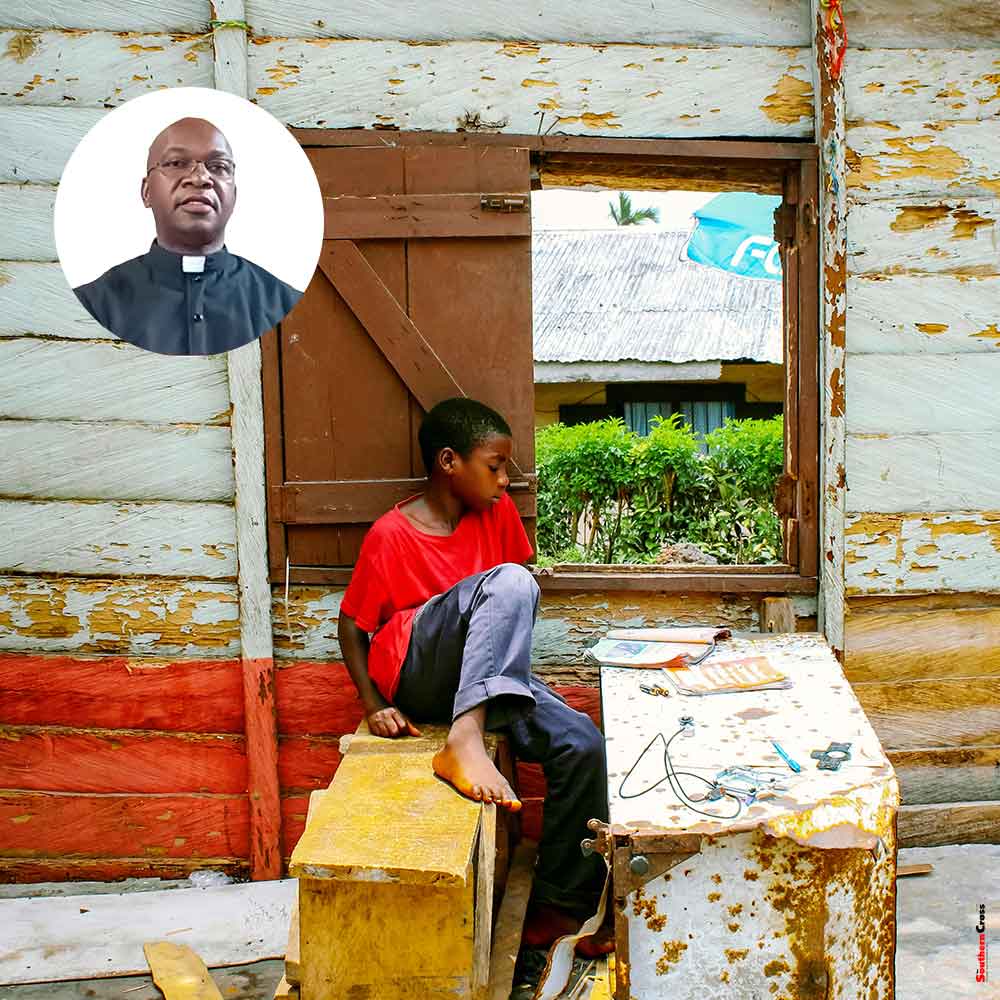
Fr Nhlanhla Mchunu on the Jubilee of the Poor
As the Church marks the Jubilee of the Poor, Fr Nhlanhla Mchunu reflects how the Old and New Testaments demand that we all change society’s attitudes towards those living in and with poverty.
The Bible is an invaluable source of guidance and wisdom for Christians. From its very first chapter, it proclaims the profound truth that every human being is created in the image and likeness of God (Genesis 1:26–27).
This foundational belief affirms the inherent dignity of every person — a dignity that is intrinsic, inalienable, and not dependent on external conditions. Human worth flows from existence itself and is grounded in the very being of the person.

The Church, as an expert in humanity, carries a moral obligation to uphold and promote this dignity. This conviction lies at the heart of Catholic Christian anthropology.
Throughout Scripture, God is revealed not as indifferent in the face of injustice but as a defender of the poor and marginalised. The Exodus narrative is a powerful testament to God’s preferential option for the oppressed.
The Law of Moses further reflects this divine concern through practical provisions designed to protect the vulnerable. Among these were laws on gleaning, debt forgiveness, and interest-free lending.
These regulations were not merely economic policies — they expressed God’s desire for a compassionate and just society. The prophets, especially Isaiah, Jeremiah, and Hosea, echoed and expanded on this vision, condemning exploitation and calling for justice.
What Jesus teaches
In the New Testament, Jesus clearly articulated his mission as one of conversion — for the sake of the Kingdom of God. This conversion begins in the heart but necessarily extends to relationships, institutions and society at large.
During his Galilean ministry, Jesus consistently challenged systems and practices that excluded people based on wealth, gender or religious affiliation. His ministry was radically inclusive, drawing the marginalised back into the community and affirming their worth. His solidarity with the poor and the vulnerable brought him into conflict with the political and religious elites of his time. Yet he remained steadfast in being a voice for those without one.
In the contemporary context, South Africa remains one of the most unequal societies in the world. The gap between the rich and the poor continues to widen. While the legacy of apartheid undoubtedly contributed to this disparity, the persistence of poverty today is exacerbated by widespread corruption. Corruption robs the poor of what rightfully belongs to them and undermines any efforts towards justice and equity. It is one of the chief drivers of poverty in the country.
The Church, following the example of Christ, must not remain silent in the face of such systemic injustice. She has a moral responsibility to stand with the poor and to work for the eradication of poverty in all its forms. As the late Archbishop Dom Hélder Câmara of Brazil once powerfully observed: “When I feed the poor, they call me a saint. When I ask why the poor are hungry, they call me a communist.” His words challenge the Church to go beyond charity and confront the deeper structural causes of poverty.
In the Jubilee of Hope
This year, the Church celebrates the Jubilee of Hope — a profound moment rooted in biblical tradition and focused on justice, restoration, and care for the poor. The concept of the Jubilee Year is grounded in the Book of Leviticus (25:8–55), which offers deep theological insights into its meaning and significance.
According to Scripture, the Jubilee was celebrated every 50th year. In biblical numerology, the number seven symbolises holiness. The multiplication of seven by itself (7×7) yields 49, and the following year — the 50th — was set apart as a sacred time of renewal. The Jubilee Year was marked by the cancellation of debts, the liberation of slaves, and the return of land to its original owners. At its heart was a call to restore justice and uphold the dignity of the poor.
The challenge
The Church affirms the universal destination of the goods of the earth, which teaches that creation’s resources are meant for the benefit of all. Pope Francis warned that a culture of accumulation hinders fair distribution, perpetuating inequality and injustice.
In this light, the Jubilee Year reminds us that God desires a just society — one where the needs of the poor are prioritised and human dignity is respected.
As disciples of Christ, we are called to use the principle of the common good to challenge and dismantle structures and policies that block the path to justice. A just society is one that offers every person — regardless of race, culture, religion or gender — the opportunity to flourish and reach their full potential.
This Jubilee Year presents a particular challenge to all followers of Christ: to become active agents of social change. The Church must continue to raise her prophetic voice to expose social injustices and advocate for debt relief and economic fairness.
Ultimately, the Jubilee is a time to press the reset button — a reminder that no one should be trapped in unending debt or permanent poverty. It is a sacred call to restore balance, renew hope, and build a more just and compassionate world.
Fr Nhlanhla Mchunu is the coordinating secretary of the SACBC’s Department of Laity.
Published in the November 2025 issue of The Southern Cross Magazine

- The Angelus Prayer - March 25, 2026
- Palm Sunday Prayer - March 24, 2026
- Pope: We Cannot Remain Silent - March 24, 2026



