
How the Catholic Church Helped Grow Coffee Culture
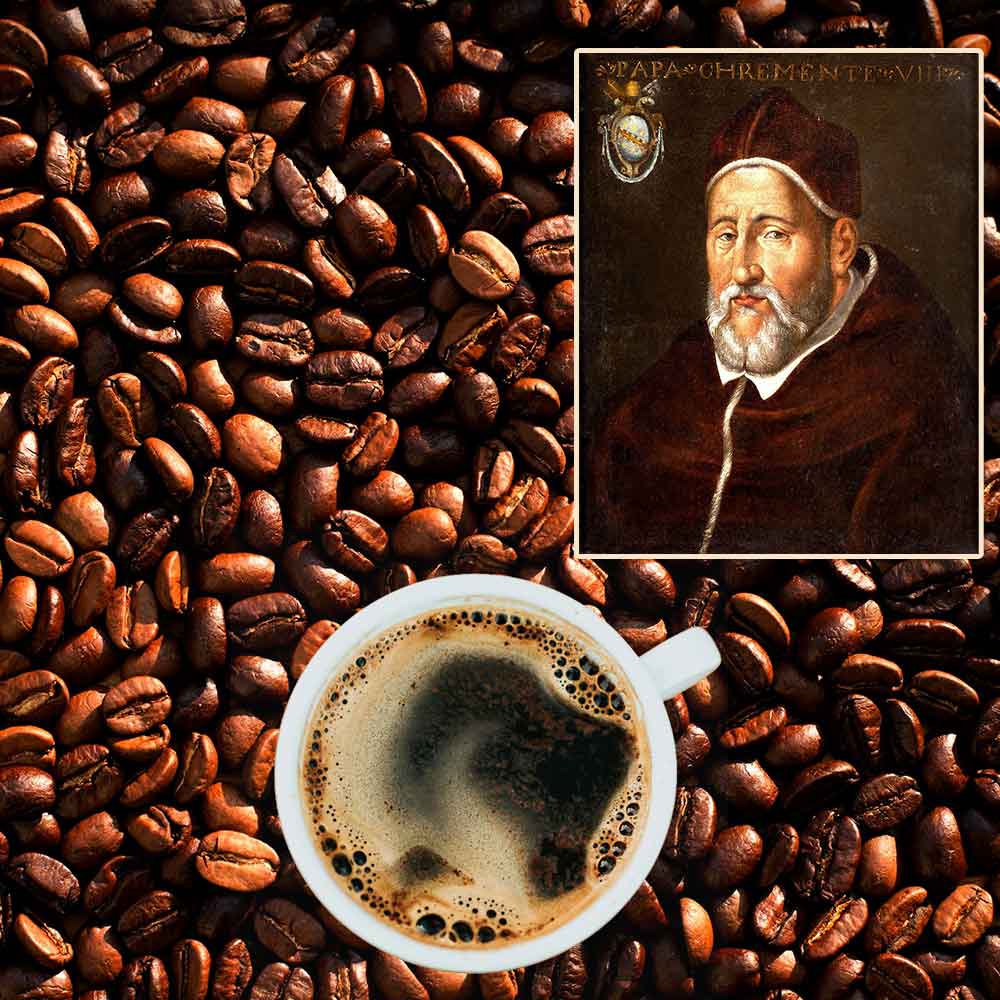
Pope Clement VIII, who in 1600 was given a cup of “Satan’s Drink” and liked it so much that he endorsed it.
Coffee originated in Africa, spread to the Arabian Peninsula, and eventually became popular across Europe — with the help of a pope, as Jason Scott explains.
When you next enjoy a cappuccino or a latte or just a good old cup of coffee, think of that cherished beverage’s links with the Catholic Church. It is a fascinating journey from South to East and West, marked by cultural exchanges, religious influences and innovative developments.
The story of coffee begins in Africa in the 9th century. Legend tells of an Ethiopian goat herder named Kaldi who discovered the energising effects of coffee cherries on his goats.

By the 15th century, coffee had spread from Ethiopia to the Arabian peninsula. Sufi monks in Yemen used these berries to make a drink that helped them stay awake during long prayers, and it became integral to Yemeni culture. From there, it spread to Persia, Egypt and the Ottoman Empire. Coffee houses —called qahveh khaneh — became popular centres of conversation, music and debate.
Attempts by Muslim rulers to declare coffee haram (forbidden) in the 16th century failed, so popular was the drink.
Merchants and diplomats carried knowledge of this drink to Europe. By the 16th century, Venice, a major trade hub, embraced coffee, pioneering its consumption on the continent.
A cup of ‘devil’s drink’
Initially, coffee faced resistance from some Catholic leaders who even referred to it as “Satan’s Drink”, warning that it might corrupt Christian morals, much as their Islamic counterparts had previously feared. This led to debates about its morality, with some calling for its prohibition.
The pivotal moment in coffee’s acceptance in the West came in 1600 when Pope Clement VIII was presented by Venetian clergy with a cup of the exotic beverage. According to historical accounts, upon tasting it, the pope declared, perhaps with a twinkle in his eyes: “This devil’s drink is so delicious that it would be a pity to let the infidels have exclusive use of it.” Embracing coffee, he then “baptised” it, giving it his blessing and thus effectively sanctioning its consumption among Catholics.
This papal endorsement not only legitimised coffee but also helped to dispel the fears of those who viewed it as a potential threat to Christian morals. Pope Clement’s favour marked a significant turning point, allowing coffee to become a beloved and widely accepted drink throughout Europe.
Like the Sufi monks in Yemen before them, many Catholic monks were grateful to licitly imbibe the caffeinated beverage which helped them stay awake through their nocturnal prayers and vigils.
Capuchin connection
The Capuchin monks contributed to coffee culture by inspiring the creation of a new coffee drink in Vienna in the early 17th century.
After the Battle of Vienna in 1683, the victorious Christian forces found bags of coffee left behind by the retreating Ottomans. Among other variations, the Viennese mixed the strong, bitter coffee with cream and honey. They called the drink Kapuziner, since it reminded them of the hoods worn by the monks.
It was a forerunner to Italy’s cappuccino, also derived from the local word for Capuchin. It was invented in the early 20th century, and, according to an Italian custom should be consumed only before 11:00 in the morning.
Coming to America
Jesuit priests were among the first to cultivate coffee plants in the Americas, particularly in Brazil — today the world’s biggest producer of coffee —and the Caribbean, during the 17th and 18th centuries. Their agricultural expertise and dedication — and the common slave labour — helped establish major coffee plantations, transforming coffee from a luxury import to a widely available commodity.
Today, the average person drinks about three cups of coffee per day. From bustling city streets to quiet suburban kitchens, coffee is everywhere, a testament to how the Catholic Church has helped shape and enrich Western civilisation.
It’s hard to imagine our daily lives without it, and we might not even have the coffee culture we know today had it not been for a pope who enjoyed the drink so much that he gave it his blessing.
Published in the September 2025 issue of the Southern Cross magazine
- What the Pope Said This Week - March 21, 2026
- Archbishop Sipuka Installed as New Archbishop of Cape Town - March 15, 2026
- What the Pope Said this Week - March 13, 2026



