Living by the Beatitudes: 4th Sunday in Ordinary Time
 Sermon by Emmanuel Suntheni OSB – Fourth Sunday In Ordinary Time – Year A
Sermon And Christian Act In The Word
Theme: Beatitudes! Living by Beatitudes! Blessed are you! Confidence & uncertainty!
Point of Reflection: Am I blessed? Do I follow Jesus, living out the Beatitudes, or does my life follow a different pattern? As Christians, we are all called to live a life of beatitudes and to always follow the patterns of the beatitudes. There is a tension between confidence and uncertainty in today’s readings.

First Reading: Zephaniah 2:3, 3:12–13
Psalm: Psalm 146:6–10
Second Reading: 1 Corinthians 1:26–31
Gospel: Matthew 5:1–12
Sermon (Reflection): All three readings of today are inviting us all to examine the uncertainties and tensions we encounter in our Christian life in this world. Both Zephaniah and the Christian community at Corinth experienced this first-hand in their historical and social circumstances. Jesus did not hide the difficulty either. On the contrary, he began his instructions by outlining the essential attitudes required for discipleship, the attitudes which stand in fundamental tension with ordinary and natural human expectations and ways. Such dichotomies and tensions appear an inevitable experience for a believer. Yet, the readings also convey a sense of unquestionable confidence that God can be trusted, and that following his ways leads to blessedness and salvation. The Beatitudes beautifully illustrate this unwavering confidence; present tensions will be resolved by God’s intervention, because only the values and attitudes set forth by God will endure for eternity.
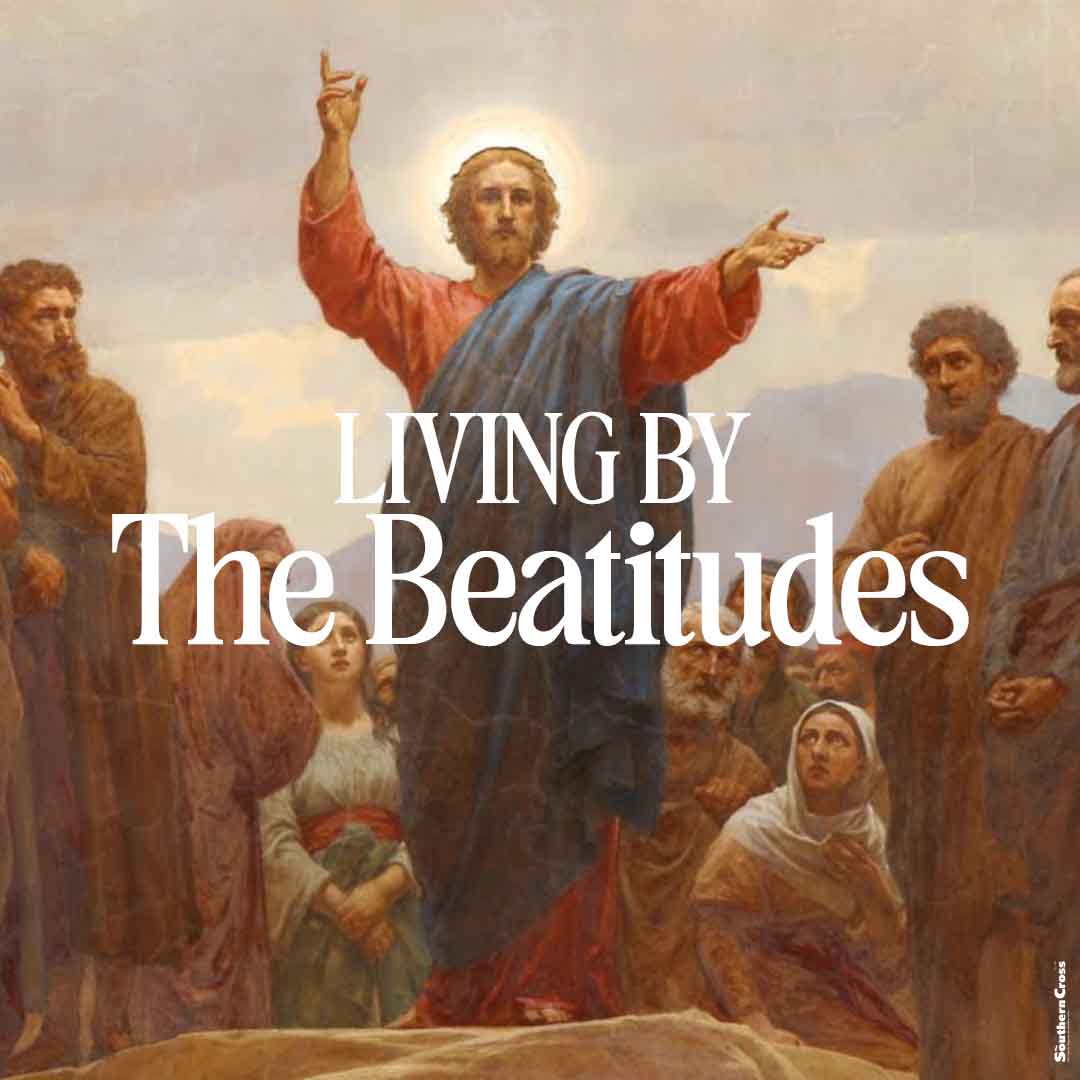
In the Gospel reading of today which is from the episode of the first of Jesus’ great discourses in the Gospel of Matthew, the famous “Sermon on the Mount,” we hear of the “Beatitudes.” A Beatitude is a literary form built on creating a link between an action or attitude and its outcome. This serves both to affirm and call the faithful to that particular way of behaving and living, as behaviour that brings about God’s blessing. The Matthean beatitudes can be interpreted in a number of ways; however, it is obvious that the behaviour and attitudes recommended by Jesus are not those normally adopted and followed by contemporary society. These beatitudes are a yardstick to our daily living by being poor in spirit, mourning, meek, hungering for righteousness, merciful, purity of heart, peacemakers, and being ready to be persecuted for being righteous.
- “Poverty in spirit”, thus, the attitude of reliance on God rather than on one’s own powers and efforts, thus, it is the opposite of the self-sufficiency and independence which people ardently pursue in life.
- “Mourning”, thus, being troubled by the world and its ways, this is not the emotion felt by those who welcome and follow the ways of established society.
- “Meekness,” thus, humility and modesty, thus, is not the way to secure one’s social position.
- “Hunger for righteousness”, thus, insistence on justice and fairness in society and the community, this is unpopular with the powerful and poses the risk of ridicule.
- “Mercy”, thus, the attitude of care and concern for the well-being of others, goes against the selfish and self-concerned attitudes that dominate society.
- “Purity of heart”, thus, honesty and integrity in life, often reduces the chances of enrichment and advancement in a society which favours dishonesty and manipulation.
- “Peacemaking,” thus, the pursuit of harmony in the community, is difficult because it requires compromises and unpopular solutions to secure the rights of all, not only one’s own.
- “Being persecuted for the sake of righteousness”, thus, the price one pays for upholding justice and integrity, is not the situation that a person would normally and readily welcome.
These beatitudes remind us to turn the standards of common life, and the values of society, upside down. Identifying them as the source of blessedness, Jesus traces a drastically different framework of life for his disciples. He knew full well that those who would follow these eight instructions would be bound to live in tension with the greater society, and even with their own families. Still, by describing the ultimate positive outcome of such behaviour, Jesus offers his disciples the supreme confidence that this unusual way of life is the right one to follow.
Today’s first reading looks at the other part of the divided kingdom of David, the Southern Kingdom, called Judah, through the eyes of another prophet, Zephaniah. His oracles come from a troubled period of gradual disintegration of the once glorious state. Zephaniah’s oracles, which were delivered soon after the reign of this wicked king, speak of God’s judgment, but, at the same time, convey a sense of hope for a new beginning. As Christians, do we give hope to others who are divided in heart and in spirit?
Prophet Zephania offers a glimpse of hope that shines for those who are humble and just. There were only a few of them, a “remnant”, which will survive the destruction and lay the foundation for a renewed nation. These are the few who followed the advice to be humble and just. They are promised rest and peace – signs of God’s salvation. Today’s oracle addresses this remnant with an exhortation to seek the Lord through humble observance of God’s law and the pursuit of justice. As Christians, we are called to follow God’s laws for the happiness and peace in our hearts and in our families.
In the second reading of today, we encounter another type of tension is evident in the words of St Paul to the Corinthians. This troubled community was deeply divided. However, in today’s passage, the Apostle does not address internal conflicts, but the tension between the Christians and the larger Greek society they were a part of. Paul implored the Corinthians to refrain from judging themselves according to society’s standards. Instead of pursuing power, wealth and significance, he admonished adherence to Christ. Christ, who, according to the standards of the society of the time, was a social failure who came into conflict with society and suffered a shameful death reserved for criminals. Following him as Christians, we are to pursue different goals and values, not the ones acknowledged and followed by contemporary society. His admonition would and did place the Corinthians in a situation of inevitable tension with their own social context.
Christian Act in Word of God: “Am I blessed?”
Today, we encounter two mountains: Mount Sinai and the Mount of the Beatitudes. They offer us the roadmap for life and a summary of our responsibilities to God and neighbour, summarised in the Ten Commandments and the Beatitudes.
It might appear strange that Jesus exalts those whom the world generally regards as weak. We could paraphrase and summarise the Beatitudes in the statement: “Blessed are you who seem to be losers, because you are the true winners, the kingdom of heaven is yours!”
These words present a challenge to us living today, a challenge which demands a deep change of heart. Why is this change of heart necessary? Because today we continue to hear a contradictory message, a voice which says: “Blessed are the proud and violent, those who prosper at any cost, who are unscrupulous, pitiless, devious, who make war not peace, and persecute those who stand in their way”. We hear and see this message everywhere: it shouts at us from the TV screen, newspapers, and the very set-up of our society, which advertises success in life regardless of the cost, often through force, cheating and even violence. This voice seems to make sense in a world where success is the measure of the good life, where the violent and dishonest often triumph, and the devious seem to succeed. “Yes”, says the voice of evil, “they are the ones who win. Happy are they!”
Jesus offers a very different message. He calls us to choose between the two voices competing for our hearts, the choice between good and evil, between his ways and the ways of the world and society at large. But he cautions us through the beatitudes that the choice is not only between living in this or that way now; the choice is between life and death. To put your faith in Jesus means choosing to believe what he says, no matter how strange it may seem, and to live in the world belonging to his Kingdom.
Action: I will choose one particular attitude recommended by Jesus in the Beatitudes and live by it this whole liturgical year.
Prayer: O Lord Jesus Christ, listen to our hearts! Teach us the truth of the Commandments and the Beatitudes! As reflected in today’s Gospel, make us joyful witnesses to your truth and peace! Be with us always, especially when following you and your Gospel becomes difficult and demanding! Be our strength and victory in our worldly divisions and in our family divisions! O Lord Jesus, you have made us your friend: keep us forever close to you, and make us peaceful instruments of your salvation by being poor in spirit, Amen.

- 2nd Sunday of Easter: Divine Mercy Sunday - April 10, 2026
- He Has Truly Risen: Easter Sunday - April 3, 2026
- We are Easter People: Easter Vigil Mass - April 2, 2026