
St Vincent Pallotti: The Saint Who Built up the Laity
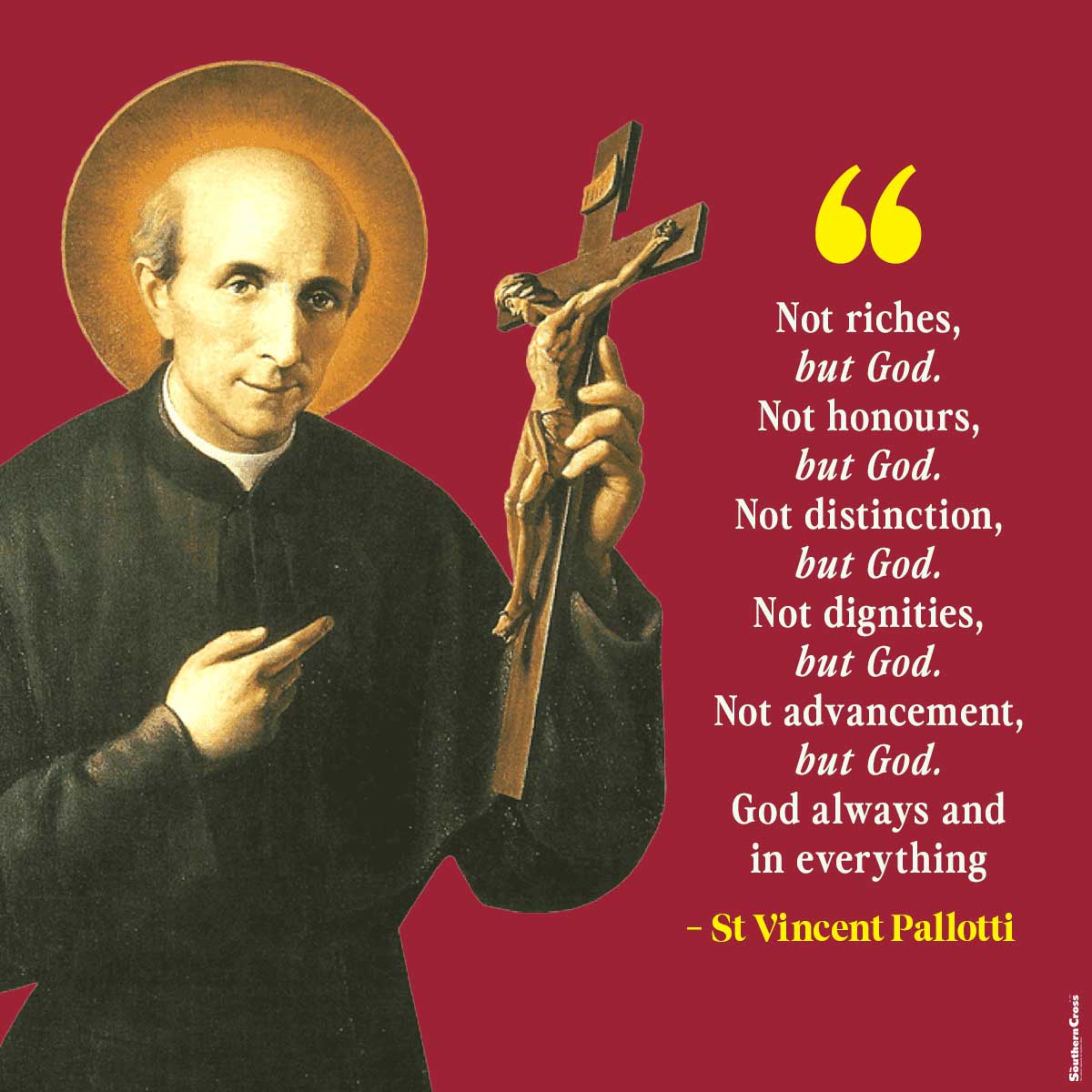
St Vincent Pallotti was the founder of the Pallottine orders, which are active in South Africa, and a century before Vatican II, he pioneered the engagement of lay people in the Church’s mission.
St Pallotti’s at a glance
Name at birth: Vincenzo Pallotti
Born: April 21, 1795, in Rome, Papal States
Died: January 22, 1850, in Rome
Beatified: 1950
Canonised: 1963
Feast: January 22
Patronage: Pontifical Missionary Union of Clergy
One of the most famous hospitals in the Cape is called Vincent Pallotti, but few residents know that the facility is named after a Catholic saint. The hospital was established by Sisters belonging to an order founded by the 19th-century Italian saint.

Vincent Pallotti was born in Rome at 4pm on April 21, 1795, the third of ten children of the merchants and devout Catholics Pietro Pallotti and Magdalena De Rossi. He was baptised the following day in St Lawrence basilica.
His parents, both of noble descent, instilled in their children a profound sense of faith and service from an early age. As a young boy, Vincent exhibited an extraordinary inclination towards spirituality. He was deeply affected by the social conditions around him, particularly the plight of the poor and marginalised in Rome.
Vincent showed great piety, but at school he struggled academically. On the advice of a friendly priest, Magdalena and the boy made a novena to the Holy Spirit — after which he became the best student in his class.
At the age of 16, Vincent decided that he wanted to become a priest. After his schooling, he studied philosophy and theology at the University of Rome, obtaining doctorates in both disciplines.
He was ordained to the priesthood on May 16, 1818, in the basilica of St John Lateran.
Small and blue-eyed
After his ordination, Pallotti, a man of small stature with big blue eyes and a penetrating glance, was appointed assistant professor at Sapienza University, but this was not the mission he had in mind. Although very popular with the students, he left academia.
Instead he began his pastoral work, focusing on the spiritual and social needs of the people. He quickly recognised the spiritual impoverishment that plagued the urban poor and the insufficient pastoral care of the laity. His empathy for their suffering led him to create various initiatives aimed at uplifting the destitute and providing them with the support they desperately needed. To that end he set up advanced training for shoemakers, tailors, coachmen, carpenters and gardeners, and evening classes for young farmers and unskilled workers.
He also emphasised the pastoral ministry to prisoners, accompanying many to their execution and holding the crucifix before their eyes, so that the last thing they would see was the Lord.
In crisis, Pallotti was hands-on. During Rome’s cholera plague in 1837, he ministered to the suffering and their families. He also organised a barefoot procession of religious, which was penitential but also showed that they did not fear the disease.
In his pastoral concerns, Pallotti could be inventive. Once he decided to hear the deathbed confession of a man who had threatened “to kill the first priest who comes through the door”. So the priest came through the door dressed up as an old woman.
On January 9, 1835, Pallotti founded the Society of the Catholic Apostolate, which became informally known as the Pallottines. The same year he and his followers established the Union of the Catholic Apostolate, a trailblazing institute in its aim to promote the active participation of the laity in the Church’s mission. Fr Pallotti envisioned a society where lay people could collaborate with the clergy to spread the Gospel and serve the community, thereby addressing both spiritual and social needs.
The Congregation of the Sisters of the Catholic Apostolate, also called Pallottines, was founded in 1838.
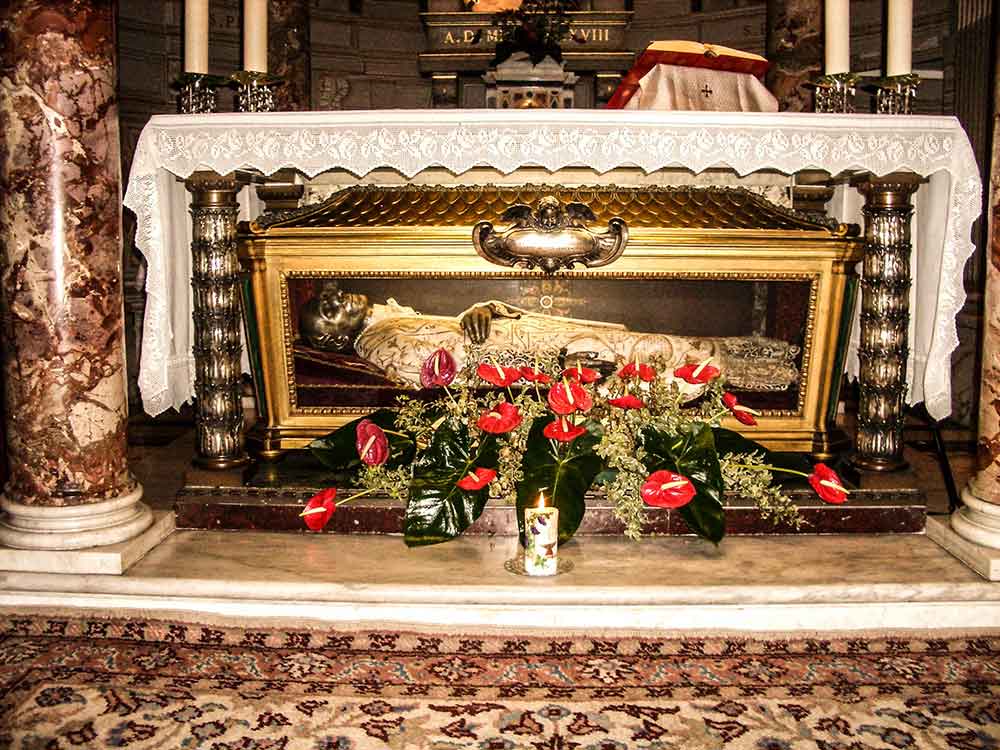
The tomb of St Vincent Pallotti in Rome’s church of San Salvatore in Onda.
A revolutionary idea
Pallotti’s approach was innovative for his time, and helped form the basis of how mission is defined in the Catholic Church today. He understood that the Church needed to engage more dynamically with contemporary society. To that end, he encouraged lay participation in the Church’s mission, emphasising that every Christian, regardless of their status, had a role to play in evangelisation. This was a revolutionary idea in the 19th century, a time when clericalism dominated Church life.
As one would expect, this created opposition from various quarters, including those who felt threatened by such reforms and the changing dynamics within the Church. Pallotti felt that first-hand. When he was appointed to serve in a Roman parish, he was subjected to persecutions and humiliations from the parochial rector and other priests, all of which he suffered patiently for ten years, placing his trust in divine providence and the power of love to overcome obstacles.
He established many charitable institutions, including schools, hospitals and orphanages, in Rome as well as in other cities and rural areas, and even other countries. He was particularly concerned about the education of young people, believing that this was essential for breaking the cycle of poverty.
Pallotti was not only a priest but also a mystic. He dedicated much of his time to prayer and reflection, seeking to deepen his relationship with God. His preaching and writings reveal profound spiritual insights. His spiritual letters encouraged others to cultivate a personal relationship with God, urging them to live their faith actively and authentically. Pallotti had a special devotion to the Blessed Virgin and the Holy Trinity.
Humility was another hallmark of Pallotti’s life. He lived simply, often sharing what little he had with those in need. His lifestyle testified to his belief that true service to God and others requires personal sacrifice and humility. He often said: “The greatest saints are not those who are the most powerful but those who are the most loving.”
Death at the age of 54
Pallotti’s health began to decline in the late 1850s. He continued to work tirelessly for the Church and the community until his strength finally gave way. He died at the age of 54 on January 22, 1850, in Rome.
After Pallotti’s death, Church authorities changed the name of the society he had founded to the Pious Society of Missions. Pope Pius XII restored the original name in 1947. Still, the Pallottines spread to various countries across Europe and beyond.
The Pallottines came to South Africa in the early 1920s. Led by Bishop Franziskus Hennemann, they evangelised in what is now the dioceses of Oudtshoorn and Queenstown. After Hennemann became bishop of Cape Town in 1933, he asked the Pallottine Sisters to set up a convent there. Later the Sisters built the famous hospital, which retained its saintly name even after it was sold.
The international Schoenstatt Movement grew out of Pallottine spirituality when it was established in Germany in 1914 by a priest of the order, Fr Joseph Kentenich. The Schoenstatt Movement is active in Cape Town, Johannesburg, and Cathcart, near Queenstown.
Pallotti was beatified by Pope Pius XII on the centenary of his death, January 22, 1950, and canonised almost exactly 13 years later, on January 20, 1963, by Pope John XXIII. His feast day is on January 22.
St Pallotti’s body is enshrined in the church of San Salvatore in Onda in Rome. His body was exhumed twice, in 1906 and 1950. On both occasions, his body was found to be incorrupt.
St Vincent Pallotti is the principal patron of the Pontifical Missionary Union of Clergy. In the 1960s he was considered a patron of the Second Vatican Council.
Read the story of the male Pallottines in South Africa and of the Pallottine Sisters
Published in the January 2025 issue of the Southern Cross magazine

- The Angelus Prayer - March 25, 2026
- Palm Sunday Prayer - March 24, 2026
- Pope: We Cannot Remain Silent - March 24, 2026



