
Christ-Shaped Hearts: 6th Sunday in Ordinary Time
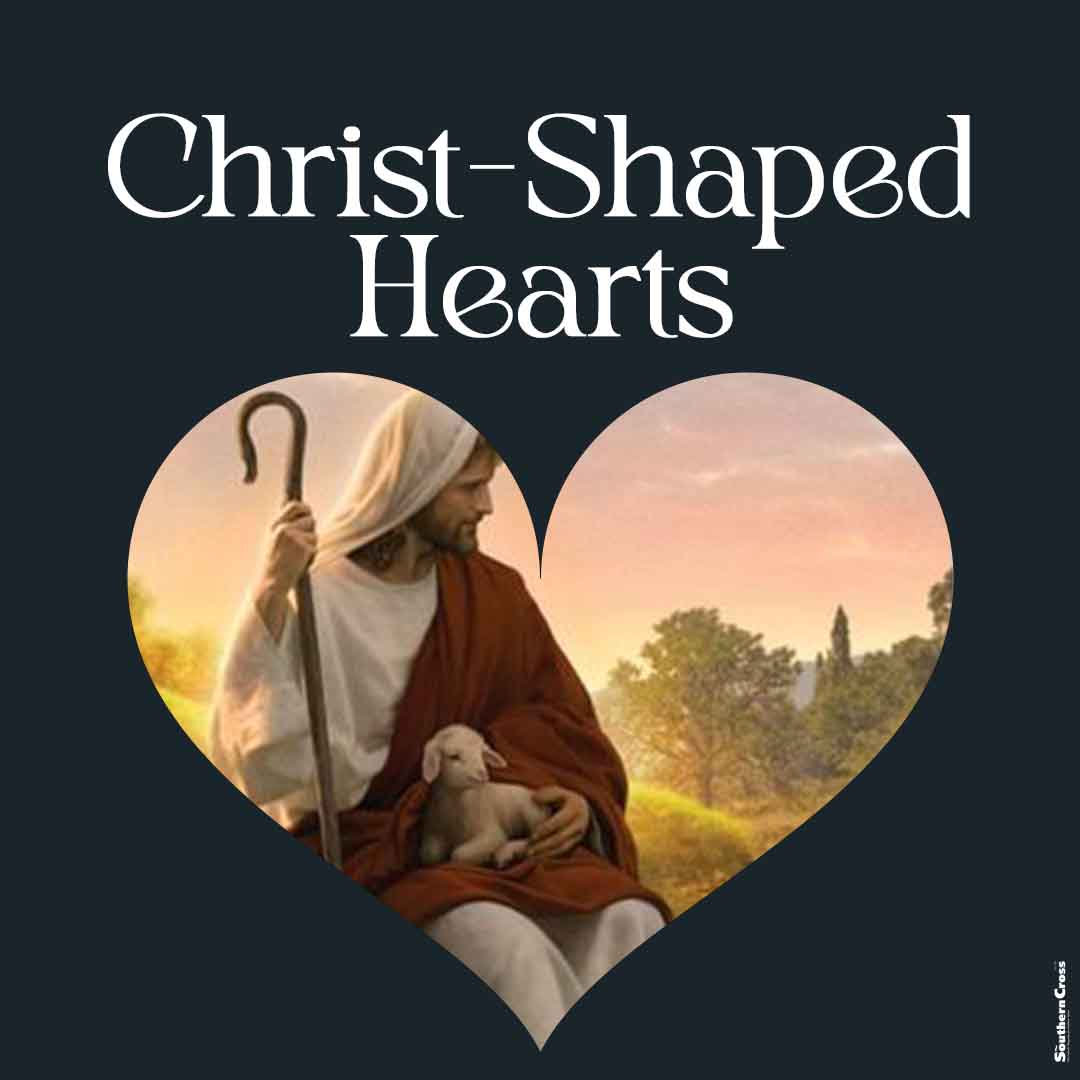 Sermon by Emmanuel Suntheni OSB – Sixth Sunday In Ordinary Time – Year A
Sermon And Christian Act In The Word
Theme: Right and Wise Choices! “Salting the Earth” Christ-shaped Hearts!
Point of Reflection: What kind of Choices do I make in my life? What are the positive, Christ-like emotions and desires that I carry and experience in my heart? What are the negative and destructive emotions and desires that I carry and experience in my heart?

Today’s liturgy calls attention to the human responsibility to make right and wise choices. God has established a certain order in creation and in human society. An order which reflects his wisdom. Sirach emphasises that human free will is active in the choice to live wisely, by adhering to God’s commandments, which amounts to choosing life over death. Paul wrote about God’s eternal wisdom that leads to the heavenly glory, motivating the Corinthians to rise above their childish quarrels and live as wise and mature believers. Jesus taught the disciples that the right way to adhere to God’s order and fulfil his commandments is to allow their hearts to be moulded according to his teaching. This teaching was beautifully summarised earlier by the prophet Jeremiah, who spoke of having God’s law written on the heart (cf. Jeremiah 31:33). Those who understand and embrace this teaching can only pray with the Psalmist, “give me understanding, that I may keep your law and observe it with my whole heart”.
First Reading: Sirach 15:15–20
Psalm: Psalm 119:1–2, 4–5, 17–18, 33–34
Second Reading: 1 Corinthians 2:6–10
Gospel: Matthew 5:17–37
Sermon (Reflection): Last Sunday’s Scriptural readings focused on the necessity for outward expression of one’s faith. But this Sunday, the readings consider the interior effects of adherence to Jesus and how the practice of faith transforms the person inwardly. And Jesus today is teaching us how to form our conscience. We need to learn to follow the commandments, and with the commandments, we can make right and wise choices. Before we exegetically analyse the Gospel of today, let us understand free will and choices from the first and second readings of today.
The first part of the first reading of today emphasises free will. A person is free to choose whether to follow God’s commandments or not. The respective outcomes of this choice are vividly described through two sets of graphic antitheses – fire and water, life and death. A person is invited to “stretch out the hand” to get hold of what their choice would bring. As Christians, we need to form our conscience with the Commandments.
The second part motivates the person to choose God’s ways, referring to “the wisdom of the Lord”, found in the commandments. While giving humanity freedom, God never commanded anyone to be wicked or gave them permission to sin. Still, as the guardian of the established order, God will ensure that human decisions will have appropriate consequences. Hence, Christians need to use the wisdom of the Lord in their choices.
Paul, in the second reading of today, motivates the Corinthians by pointing out to them their destiny as the followers of Christ; those who love God and are united to him have a glorious destiny that surpasses all imagination. How can the Corinthians (today it is we Christians) gain access to the hidden wisdom of God and know his ways? This wisdom and knowledge come through the Holy Spirit. Living according to the Holy Spirit makes them “mature”, and today it can make us Christians mature too. In this brief discourse, Paul instructs the Corinthians to place themselves freely under the guidance of the Holy Spirit so that they can live wisely, with the focus on their eternal destiny.
The Gospel reading of today contains an extensive section of the “Sermon on the Mount”, closely related to today’s two other readings. First, Jesus emphasises that he does not intend to abolish the commandments but to “fulfil the law and the prophets”. Thus, his mission is to continue what God has begun with revelation to the people of Israel, and to bring it to completion. The novelty of Jesus’ work lies not in the introduction of an alternative set of precepts to guide human life, but in teaching the right way to fulfil what had already been revealed. Jesus illustrates this right way using three commandments as examples. These commandments regulate three of the most important and challenging spheres of human life: anger, sexuality and personal integrity.
Jesus begins with the commandment, “do not murder”. Violence is endemic in human society, destroying lives and communities. It is the greatest enemy of harmony and well-being. Jesus immediately identifies the root cause of murder – anger. Without anger, murder and violence would not occur at all, the commandment would be fulfilled and followed. Jesus forbids even insults and insists on reconciliation before performing any religious duties as the means to preserve the harmony and peace in the community.
The second commandment is, “do not commit adultery.” Unrestrained sexual desire destroys families. Again, Jesus identifies the root cause of adultery – lust. Using the metaphor of “tearing out the eye and cutting off the hand”, he emphasises that sexual lust and other disruptions of the family life, such as divorce, must be avoided at all costs because they destroy the fundamental building block of the human community, the family.
The final commandment Jesus addresses is the prohibition of false testimony. Taking oaths was common in Jesus’ day. An oath was taken to ensure that a person told the truth, or that an action would be performed. Importantly, however, it was taken if the person swearing an oath was considered insufficiently reliable and trustworthy. In such a case, a reliable and trustworthy external witness by whom one swore was called upon to confirm the truth or to ensure that what was being sworn actually took place. Oath-taking was, and still is, a matter of personal integrity and commitment. Jesus forbids the practice. In his view, personal integrity should ensure truthfulness and reliability, without the necessity for an eternal assurance.
In all these cases, Jesus’ instruction on the fulfilment of commandments can be summarised through one principle: thus, interiorise the commandment. Absence of anger and lust in the heart will remove the danger of murder and adultery. Personal integrity will ensure truthfulness and honesty in dealing with others. This approach differs from the common approach of Jesus’ day, where the emphasis was placed on an external observance of the commandments without addressing the state of the human heart. If the human heart is not transformed, then the commandments will repeatedly be violated. But if the human heart is transformed according to the ways of God’s wisdom laid out in the commandments, then their fulfilment will be guaranteed. Jesus does not alter the commandments. He advocates their fulfilment through altering the human internal disposition and attitude. Thus, he takes the fulfilment of God’s commandments to a new and much deeper level.
Christian Act in Word of God “Making right & wise choices”
It is easy to think that I am a Christian because I know all the things, all the stories and all the truths. Maybe you are a leader or a great choir master, or you have told all kinds of people about Jesus and led many to him, yet if your own heart does not react as the heart of Christ, then you are not truly Christian.
Often, we know what the right thing to do is, but we do not do it. Instead of having loving, warm and friendly fellowships in this world, we often withdraw more and more from each other and become selfishly self-centred. Our hearts become cold, and then our relationship with God falls apart, and our relationships with others are disrupted. We feel anger, we gossip, criticise or are irritable, we become resentful, hateful, violent and sexually promiscuous. We know the consequences of such attitudes, especially the pain we inflict upon others, but our hearts grab every opportunity to tear somebody else down in the public eye and build ourselves up. Separation, divorce, and sexual transgressions are other consequences of a divided and unformed heart.
Unfortunately, many in our society and Church do not have Christ-shaped hearts.
We find ourselves with hearts that are far from the heart of Christ. We need hearts that are different from those who do not live in a Christ-like way, hearts that are kind to our spouses, our children and those with whom we come into daily contact.
As Christians, we are called to change our hearts so that they reflect the tender affection of Jesus’ heart directed to all humanity. Let’s be honest and self-critical in acknowledging where we fail in this regard. Our God wants us to live according to his ways found in the commandments and teachings of Jesus. He trusts that we can do it and teaches us that we must pay attention to our hearts and shape them through the practice of prayer and by growing through knowing his teaching in an ever deeper way. We can always count on Jesus’ help.
Action: From now on, I will follow God’s Commandments and make the right choices.
Prayer: Almighty Father, we are grateful for your gracious offer of commandments and love. Open our hearts to follow your commandments with love to our families and neighbours. Create in us that new Spirit to be committed to your Word and commandments by seeking your face through prayer and worship through Jesus Christ, your Son, who lives with the Holy Spirit forever and ever, Amen.

- God’s Call to Life: 5th Sunday of Lent - March 20, 2026
- Laetare Sunday: 4th Sunday of Lent - March 12, 2026
- Jesus Christ is the Living Water: 3rd Sunday of Lent - March 6, 2026



