
How a Lie Killed a Saint: St Oliver Plunkett
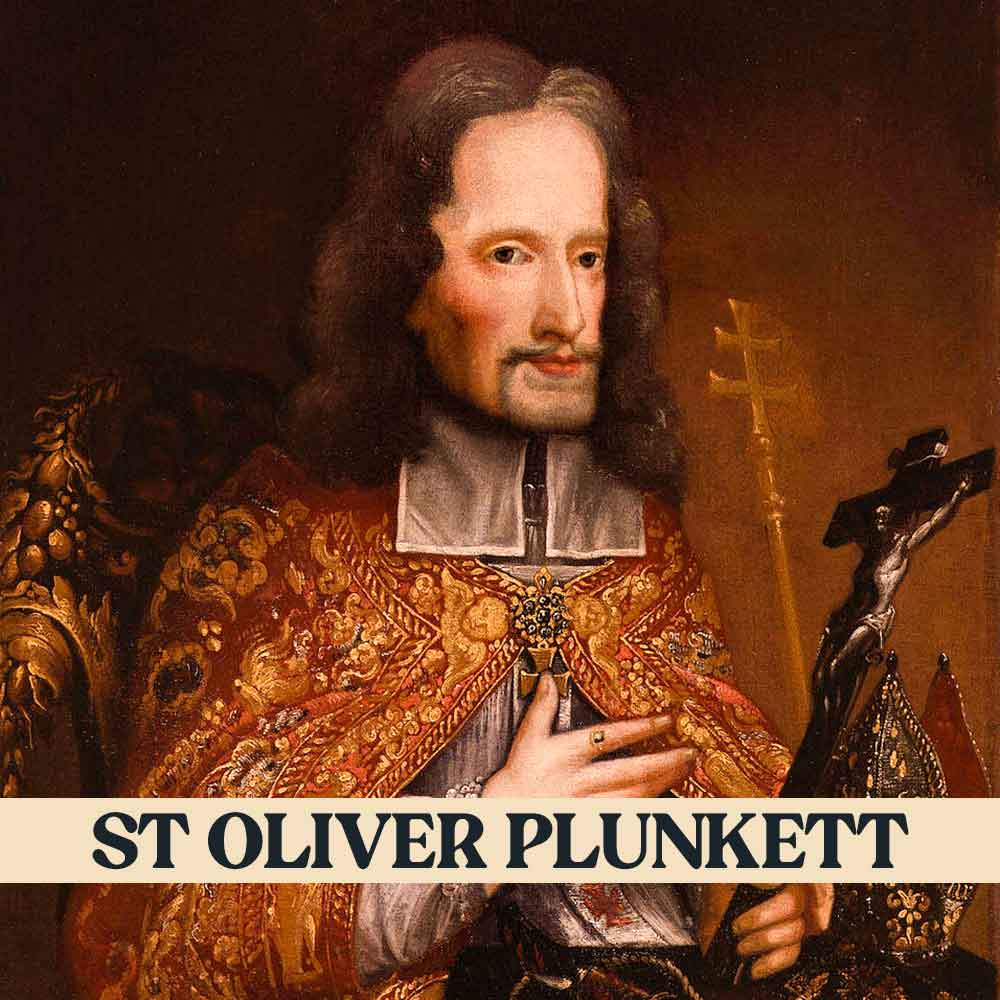
By Jason Scott – In 1681, St Oliver Plunkett was executed in England after a devious priest spread a vicious lie. Jason Scott looks at the life and death of the holy archbishop, and what lessons he teaches us today.
One of the Catholic Church’s great bishops and martyrs was born 400 years ago this month. St Oliver Plunkett was found guilty of “high treason” in 1681 — “for promoting the Roman faith” — during an English persecution, condemned to death in a kangaroo court, and executed.
Born into a wealthy family in the Irish town of Loughcrew, County Meath, on November 1, 1625, Oliver Plunkett decided to become a priest just as the Irish Confederate Wars between Irish Catholics, Anglicans and Nonconformists were raging.

Sent to Rome in 1647 for education at the Irish College, he absorbed the theological precision and pastoral methodology of the reforms mandated by the Council of Trent, which was called in response to the Reformation. Plunkett’s ordination in 1654 coincided with his appointment as professor of theology.
For 12 years, Plunkett remained in Rome, developing relationships with curial officials and mastering the diplomatic arts essential for effective Church leadership. His correspondence from this period demonstrates remarkable theological sophistication combined with practical wisdom about Church governance.
Return to Ireland
In 1669, Plunkett was appointed archbishop of Armagh. Returning to Ireland, he found that the Catholic infrastructure had been systematically dismantled. He immediately began the patient work of ecclesial reconstruction.
His confirmation tours across Ulster required extraordinary courage. Travelling in secret, often in disguise, Bishop Plunkett brought the fullness of Catholic sacramental life to communities that had been deprived of episcopal ministry for decades. His surviving records indicate that he confirmed over 10000 people during his 12-year tenure — a remarkable achievement under conditions of legal prohibition.
Education remained central to his episcopal vision. Plunkett established schools, recruited teachers, and ensured that Catholic doctrine was transmitted accurately to new generations.
The crisis that ultimately claimed Plunkett’s life emerged from English political paranoia rather than Irish Catholic activity. In 1678, the devious and degenerate priest Titus Oates appeared before King Charles II, claiming knowledge of a Catholic conspiracy to assassinate the king and restore papal supremacy in England.
The “Popish Plot”, as Titus Oates’ allegation became known, was entirely fabricated. Oates had constructed an elaborate conspiracy theory involving supposed Jesuit meetings, forged correspondence and imaginary plots. Modern historical research has proved conclusively that no such plot existed — Oates had simply created a narrative that confirmed existing English suspicions about Catholic loyalty.
Victim of a show trial
Plunkett’s arrest on December 6, 1679, followed the Plot’s established pattern. Informants claimed he had raised money for foreign armies and coordinated with continental conspirators. The charges bore no relationship to his actual activities, but accuracy was irrelevant in the paranoid atmosphere of predetermined guilt.
Plunkett’s first trial in Ireland collapsed when local witnesses refused to support the prosecution’s fabricated charges. Even in Ireland, where anti-Catholic sentiment was strong, Plunkett’s actual reputation made the accusations impossible to sustain. His known activities — pastoral visits, ecclesiastical administration, scholarly correspondence — contradicted the revolutionary conspiracy his accusers described.
The English regime therefore moved his trial to London, where local knowledge could not interfere with judicial proceedings. Before English judges and Protestant juries, with testimony from paid informants, Plunkett faced charges that had already been discredited in Ireland.
His response during these proceedings reveals the character that made him a saint. Rather than mounting a desperate defence or making a political compromise, Plunkett maintained both his innocence and his Catholic identity. His patient endurance of judicial hostility and his clear articulation of Catholic teaching was a masterclass in dignified witness under extreme pressure.
In what was a show trial orchestrated by Chief Justice Francis Pemberton — Plunkett was not even permitted a lawyer — the jury returned within 15 minutes with a guilty verdict. Plunkett simply replied: “Deo Gratias” (“Thanks be to God”).
Death of St Plunkett
On July 1, 1681, he was hanged, drawn and quartered — the last Catholic to suffer this fate on English soil — at Tyburn, the notorious execution site.
Plunkett’s death sentence was immediately seen by many as a gross miscarriage of justice, and it marked the end of anti-Catholic execution in England.
The liar Oates would soon be found guilty of perjury and suffered disgrace and public humiliations.
Plunkett was canonised in 1975 by Pope Paul VI, who recognised not merely individual sanctity but the vindication of principled Catholic resistance to religious oppression.
When offered life in exchange for doctrinal compromise — the denial of his Catholic faith — Plunkett’s refusal demonstrated that some truths transcend political expediency. His willingness to die rather than deny fundamental Catholic teaching challenged both his accusers and subsequent generations of Catholics facing similar pressures.
As we commemorate St Oliver Plunkett’s birth, we may reflect on his example of scholarly pastoral leadership sustained by inordinate courage. In our own cultural challenges, we may find in him both inspiration and intercession — a reminder that authentic Catholic witness transforms even hostile circumstances into opportunities for grace.
Published in the November 2025 issue of The Southern Cross
- What the Pope Said This Week - March 21, 2026
- Archbishop Sipuka Installed as New Archbishop of Cape Town - March 15, 2026
- What the Pope Said this Week - March 13, 2026



