What the Pope Said Last Week
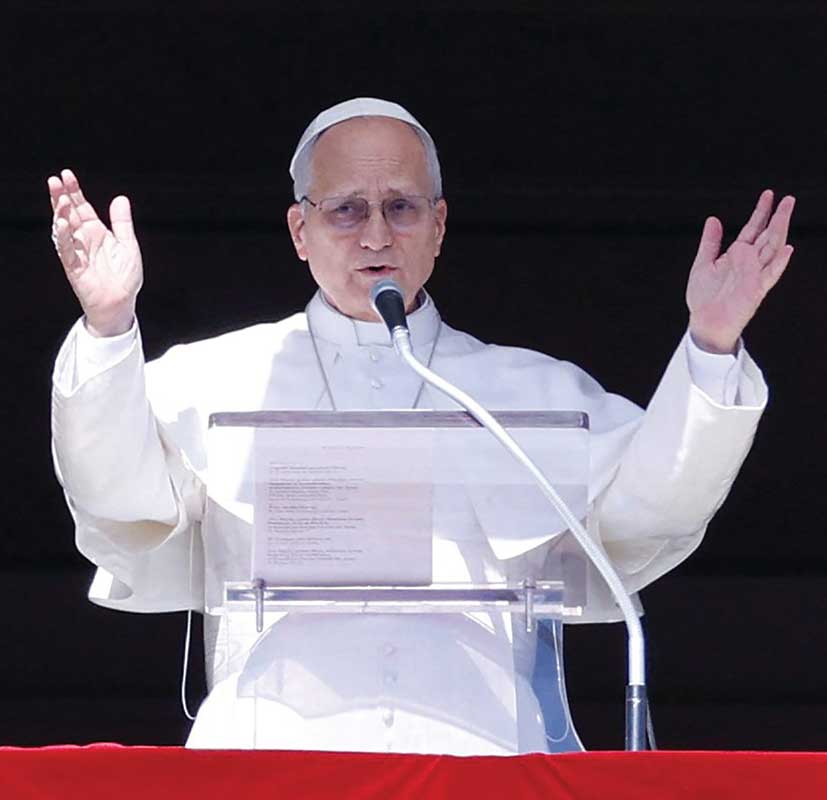
Jason Scott’s weekly review of Pope Leo XIV’s audiences –
Sunday, 1 March: Pastoral Visit & Angelus
On the Second Sunday of Lent, Pope Leo XIV made a pastoral visit to the parish of the Ascension of Our Lord Jesus Christ in Quarticciolo, a neighbourhood in Rome’s eastern suburbs.
In his homily, he reflected on Abraham’s journey and Christ’s Transfiguration, drawing out their common theme of trusting God’s call even when it requires loss:

“Abraham’s journey begins with a loss: the land and the home that hold the memories of his past. However, it will be completed in a new land and with an immense lineage, in which everything becomes a blessing. We too, if we allow ourselves to be called by faith on a journey, to risk new decisions of life and love, will cease to fear losing something, because we will feel that we are growing in a wealth that no-one can take away from us.”
He praised the parish’s commitment to building community in a challenging context, and encouraged its “Magis” youth programme, inspired by St Ignatius of Loyola, which calls teenagers to overcome mediocrity. “Faced with everything that disfigures man and life,” he concluded, “we continue to proclaim and bear witness to the Gospel, which transfigures and gives life.”
At the Angelus in St Peter’s Square, he reflected on the Transfiguration as foreshadowing Easter:
“The Transfiguration foreshadows the light of Easter: an event of death and resurrection, of darkness and new light that Christ radiates on all bodies scourged by violence, crucified by pain, or abandoned in misery. Indeed, while evil reduces our flesh to a commodity or an anonymous mass, this same flesh shines with the glory of God.”
After the Angelus, he expressed deep concern over tensions in the Middle East and Iran, insisting that “stability and peace are not achieved through mutual threats, nor through the use of weapons… but only through reasonable, sincere, and responsible dialogue.” He also appealed for dialogue following clashes between Pakistan and Afghanistan, and expressed closeness to flood victims in the Brazilian state of Minas Gerais.
Monday, 2 March: Address to Theology Faculties
Pope Leo addressed members of the Theological Faculty of Puglia and the Theological Institute of Calabria, urging them to embrace a bold vision of theological formation. Quoting Pope Francis, he said:
“The Catholic must not be afraid of the open sea, must not seek the shelter of safe harbours.”
He emphasised that “theology serves to proclaim the Gospel” and is not merely for specialists but “a call addressed to everyone.” His central invitation was to “do theology together” — sailing the open sea not as solitary navigators but in communion:
“By doing theology together, intellectual, spiritual and pastoral horizons widen and merge, generating common perspectives and a more embodied ecclesial commitment in the territory.”
He praised the two institutes for unifying previously independent programmes — “a real historical step forward” promoting communion between dioceses and overcoming “old parochialism.”
Wednesday, 4 March: General Audience — Lumen Gentium
Pope Leo began a new series of catecheses on Vatican II’s Lumen Gentium, exploring the Church as a “complex reality” in which human and divine dimensions coexist “without separation and without confusion.” Just as those who met Jesus experienced his humanity yet encountered God through him, so the Church manifests Christ’s presence through her limited earthly aspects:
“An ideal and pure Church, separated from the earth, does not exist; only the one Church of Christ, embodied in history.”
He quoted St Augustine on the centrality of charity:
“If only we could all just let our thoughts dwell on the one thing, charity! It’s the only thing which both surpasses all things, and without which all things are worth nothing.”
Thursday, 5 March: Prayer Intention for Disarmament
The Pope’s Worldwide Prayer Network released his video message for March, dedicated to disarmament and peace. In the accompanying prayer, Pope Leo prayed:
“We believe you created us for communion, not for war, for fraternity, not for destruction… Help us understand that true security does not come from control fuelled by fear, but from trust, justice, and solidarity among peoples.”
He called on God to “enlighten the leaders of the nations, so they may have the courage to abandon projects of death, halt the arms race, and place the lives of the most vulnerable at the centre. May the nuclear threat never again dictate the future of humanity.”
Take-Away Points:
- Faith calls us to risk new decisions; by trusting God’s call, we grow in a wealth no-one can take away.
• The Transfiguration foreshadows Easter — Christ’s glory shines on all bodies “scourged by violence, crucified by pain, or abandoned in misery.”
• Peace requires “reasonable, sincere, and responsible dialogue” — weapons only sow destruction and suffering.
• “Do theology together” — formation for proclaiming the Gospel requires communion, not solitary navigation.
• The Church is both human and divine — “an ideal and pure Church, separated from the earth, does not exist.”
• True security comes not from fear-fuelled control but from “trust, justice, and solidarity among peoples.”
Sources:
2026-03-01 (Angelus) – https://www.vatican.va/content/leo-xiv/en/angelus/2026/documents/20260301-angelus.html
2026-03-01 (Homily) – https://www.vatican.va/content/leo-xiv/en/homilies/2026/documents/20260301-visita-pastorale-settore-est.html
2026-03-02 – https://www.vatican.va/content/leo-xiv/en/speeches/2026/march/documents/20260302-teologica.html
2026-03-04 – https://www.vatican.va/content/leo-xiv/en/audiences/2026/documents/20260304-udienza-generale.html
2026-03-05 – https://www.vatican.va/content/leo-xiv/en/prayers/documents/20260305-popesprayer-marzo.html
- What is Catholic Integralism? - March 31, 2026
- Pope Leo XIV: Latest Messages - March 30, 2026
- What the Pope Said This Week - March 21, 2026