Every Proclaimer Stands on the Road to Emmaus
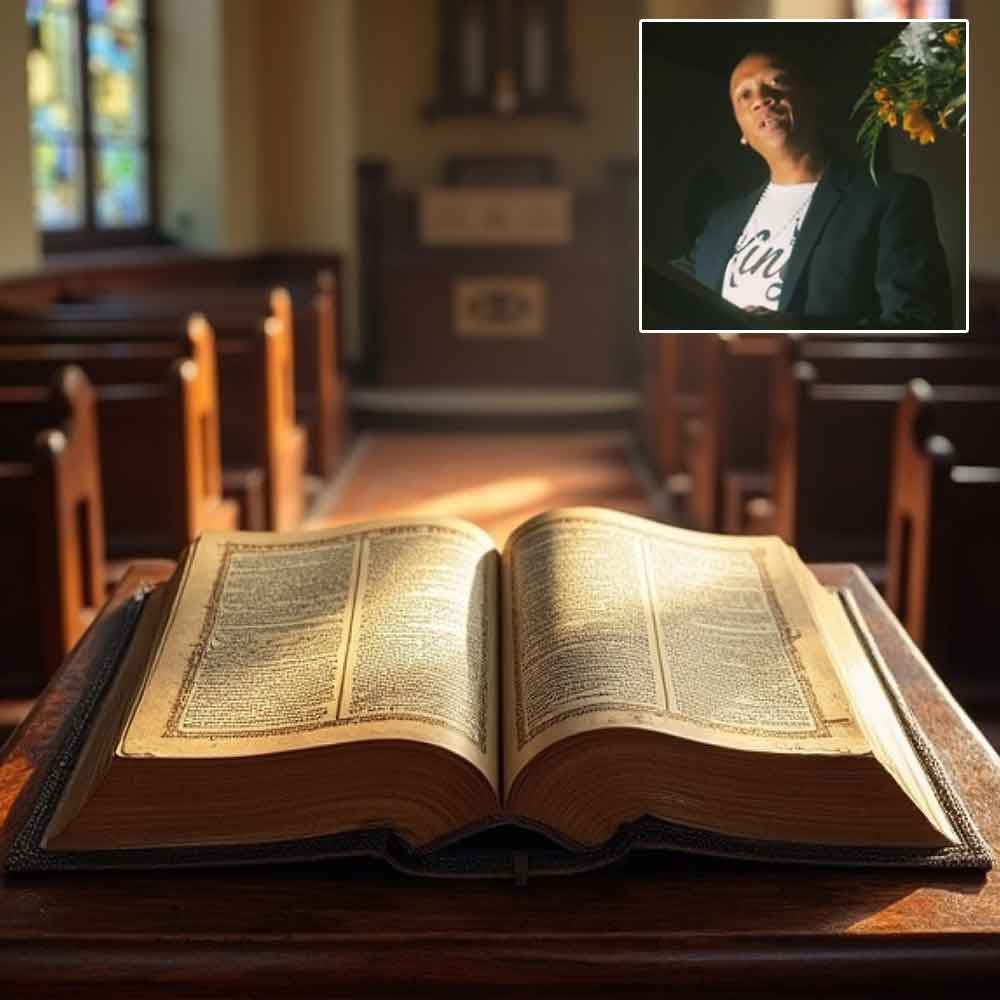 By Gregory B. Stephenson, Author of Jesus In The Kallid Times –
“Did not our hearts burn within us?”
There was a time, in my teenage years, when a simple invitation from our then Parish Priest, Father Sean Tucker, changed the course of my spiritual journey. I was asked to serve as a lector — a proclaimer of the Word. I said yes, but not without hesitation. Deep within, I wrestled with a quiet unworthiness. Who was I to stand and give voice to something so sacred? And yet, in that reluctance, something holy began.
Over time, I came to understand that this ministry was never about worthiness—it was about surrendering to the will of God.

Yes, there is preparation. One studies the text, entering into its depth, discovering the rhythm of the words, allowing both meaning and movement to take shape within. One practises technical aspects such as projection, enunciation, and pacing, and reads the passage over and over until it flows naturally. A fellow parishioner once said to me, “It must have taken a lot of practice.” It was not an easy yes or even a no, and I shied away, almost sheepishly, from giving a proper answer. You see, the technical side is there—but more than that, it is about giving yourself completely over to the Holy Spirit, allowing the Advocate to speak through you.
The Word also chastises you. That is why, one Sunday, as I proclaimed a specific verse, it was so hard for me to utter those words. It touched me so deeply that I became acutely aware of my own unworthiness, my sinfulness, and my need for grace. In that moment, I felt as though I was proclaiming my own confession before the congregation: “Father, forgive me, for I have sinned.” That is what the Word does—it humbles, convicts, and transforms.
But no amount of preparation truly prepares you for that moment:
“A reading from…”
Or the sacred finality of:
“The Word of the Lord.”
Because in that moment in between, time collapses. You are not merely reading ancient words written thousands of years ago — you are standing in a living stream where heaven meets earth. The Word is no longer ink on a page; it becomes breath, presence, encounter. It is, in the deepest sense, overwhelming in its mystery. And yet, it is entrusted to us.
Like Christ Himself, who stood and opened the scroll (Luke 4), proclaiming freedom for captives and sight for the blind, so too does the proclaimer step into that same mystery. We do not perform. We do not dramatise. We do not take ownership of the Word. We become vessels.
In those moments, I have always experienced a complete yielding — giving myself over to God entirely, allowing His Spirit to carry the Word where it needs to go. Because what we do as proclaimers is sacred: we draw people into the past, anchor them in the present, and open a path for them to encounter God.
The Catechism of the Catholic Church teaches that in the liturgy, “Christ is present in His word, since it is He Himself who speaks when the holy Scriptures are read in the Church” (CCC 1088). This truth gives even greater weight to the ministry of the proclaimer. It is not simply a reading, but a participation in the living voice of Christ. The lector becomes an instrument through whom God addresses His people in the present moment.
The Road to Emmaus and the Ministry of the Word
On the road to Road to Emmaus, two disciples walked in confusion and grief, unable to understand what had taken place. It is there that Christ Himself drew near, though they did not recognise Him at first.
In his initial interaction with them, he spoke to them about Scripture.
“And beginning with Moses and all the Prophets, He explained to them what was said in all the Scriptures concerning Himself.”
Before the breaking of the Bread came the opening of the Word. Before recognition came explanation. Before communion came proclamation.
And something stirred within them:
“Were not our hearts burning within us while He talked with us on the road and opened the Scriptures to us?”
This is the mystery into which every proclaimer steps. The proclamation of Scripture is not preparation for something lesser — it is the very place where Christ draws near, speaks, and reveals Himself.
The Liturgy of the Word is therefore not separate from the Eucharist; it is the road that leads to it. It is Emmaus unfolding at every Mass, where hearts are set alight before Christ is recognised in the breaking of the Bread.
For the proclaimer, this is both awe and responsibility: to stand where Christ still opens the Scriptures, and where hearts are still burning before they see.
There are times I find myself shaking, my voice breaking, overcome with emotion. There are moments I genuinely shed a tear. In those moments I know, Greg, that was definitely not you… it was something far more powerful. Something beyond performance or preparation.
It is mystic. It is humbling. It is sacred.
As a proclaimer, I have come to love this ministry deeply. It has awakened in me a hunger for Scripture, a desire to grow, to listen, and to be formed by the Word I am called to speak. In carrying the light, you yourself are illuminated — in all our weakness, our sins, our failures, our joys, our challenges, and even our repeated struggles. It is within this very tension that the mystery deepens: we are formed, corrected, and at times chastised by the very Word we proclaim. And yet we continue to stand, because grace does not call the perfect — it perfects those who are called.
As reflected in Dr Raymond Perrier’s article in The Southern Cross, “Lumen Christi! Deo Gratias!”, at the Easter Vigil, “we have the thrill of the light of Christ being shared.” Yet he also reminds us that once all the candles are lit, we may feel our small flame no longer matters. But it is precisely then that the call becomes personal: “Where there is darkness, let me bring light.” In bearing Christ’s light, we are also exposed by it—our lives brought into clarity, our hearts into honesty, and our faith into action.
To be a proclaimer is not to stand above others,
but to stand among them—
as one who has encountered the light,
and dares to carry it forward.
And even if your flame feels small,
carry it anyway.
Because somewhere in the darkness,
It is everything.
- Every Proclaimer Stands on the Road to Emmaus - April 13, 2026