Catholic education
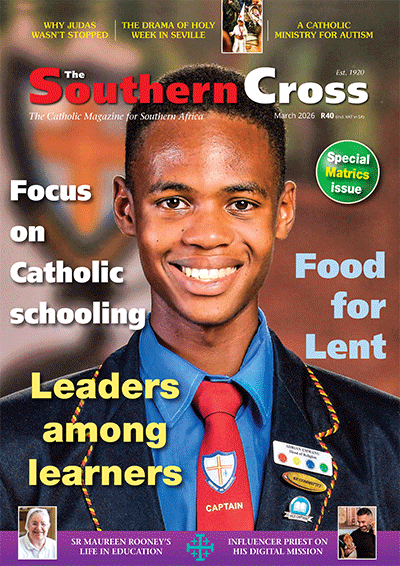
This week we publish the third special Southern Cross supplement on Catholic schools and education, the previous two having been published in 1999 and 2001.
This year, we have aimed to provide insights into the gospel-based culture shared by Catholic schools of a different background, and their problems and concerns. In presenting four case studies, we have selected (mostly quite at random) Catholic schools that are private, others that are independent, and others yet that are situated on Catholic-owned property, but are funded by the state.
Their experiences and struggles may contrast, sometimes fundamentally so, but all the schools featured (and their many non-featured counterparts) have in common one central aim: to provide children with a gospel-based education, one which underpins the pursuit for academic accomplishment with the infusion of ethical virtue.
Some Catholic parents believe that Catholic schools fail to achieve this, holding that children are best educated at home. In this week’s supplement we look at the pros and cons of home schooling. However, even if home schooling represents a suitable alternative to institutional education (and the jury is still out on that), it is an option only for families with the requisite resources: time, finance and skill. This rules out the vast majority of parents.

Not every Catholic family enrolls its children in Catholic schools. There will be a multitude of reasons for that ranging from geography to finance and this phenomenon must not be interpreted as a vote of no confidence in Catholic schools.
Conversely, many non-Catholic parents choose Catholic schools for their children, usually because of those schools’ tradition of fostering academic excellence.
This is a tribute to Catholic schooling but it also speaks of a lack of confidence in state schools.
We agree with Sr Mary McAleer, principal of Mary- vale College in Johannesburg, when she says: “I would want parents to choose us for positive reasons, because of the quality of what we offer, rather than because they are unhappy with government schools.”
In other words, it should not be the function of Catholic schools to compete with other educational institutions on the level of academic accomplishment (it goes without saying that scholastic objectives should always be aimed at the optimum). More importantly, the value of a Catholic education should be measured in its development of “the whole person” in terms of values, spirituality and knowledge.
This week’s supplement shows that Catholic education in South Africa is in a good state. For this, Catholics must pay tribute to the many dedicated educators (religious and lay) and to the admirable guidance and assistance they receive from the Catholic Institute of Education.

- The Look of Christ - May 24, 2022
- Putting Down a Sleeping Toddler at Communion? - March 30, 2022
- To See Our Good News - March 23, 2022