
Behind a Good Homily
To what extent listeners positively respond to a homily is not readily noticed by the preacher at the most there might be few vigorous nods, an enlightened expression or eyes tightly closed, indicating intense concentration. For the previous two articles in this six-part series, go to www.scross.co.za/category/mollett/
For the rest, the seeds sown will hopefully germinate in time. After all, the homily is a short, low-key, reflection which, because of its three readings, is wider in its scope of application than the sermon, which being a longer, more focused high-key discourse is more likely to evoke an immediate response.

If the homily is sacramental, as pointed out in the first article of this series (available on The Southern Cross website), then it too has its material elements: these being acoustics, diction, form, language and style.
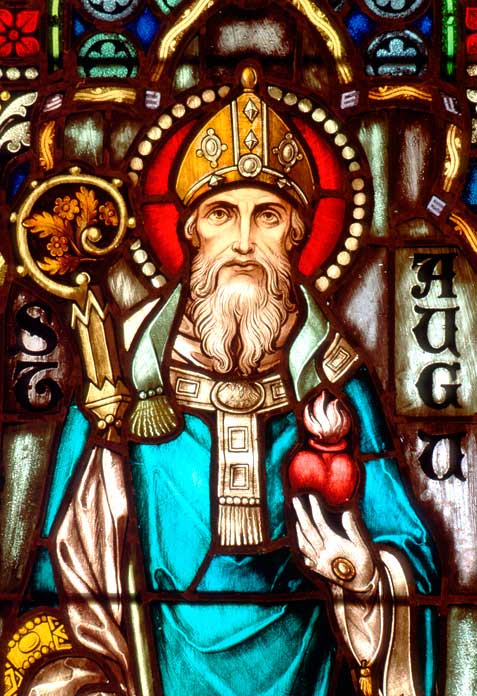
St Augustine understood this all too well, and he leaned on Aristotle’s logos, pathos and ethos construct.
Logos: is the message so constructed that its purpose is clear and logical? Pathos: does the message really move the hearts of the hearers? Ethos: does the message match with the personal witness and reputation of the preacher?
Although these proofs were already evident in John Chrysostom’s preaching, it was Augustine who elaborated on them in manuals for use by preachers and catechists.
Augustine bolstered the three proofs by discerning different kinds of audiences and occasions and proposed a preaching style for each the subdued, the ornamented and the majestic. Whichever of these three forms the preacher uses, and whatever style he may adopt, his aim is to speak persuasively unless he succeeds in persuading, his eloquence has not received its object (On Christian Doctrine 4.25:58).
The crowds freely expressed their approval of Augustines sermons with loud acclamations: Thanks be to God! or Praised be Christ! Fr Hugh Pope OP remarks that Augustine always seems to know what they are thinking and even catches the murmur of those who recognise a passage from the Bible.
As we read these sermons even at a distance in time, they seem almost like a dialogue between preacher and the people, Fr Pope writes. He sways with them so that we almost picture them rocking to and fro as he makes point after point. He is not content to think for them, but contrives somehow to think with them.
Even when catechising! Augustine was always at the giving end, but the responses of his hearers, the handclapping, the tears and the groans put him at the receiving end. More tolerant than Chrysostom in the matter of boisterous feedback, Augustine would say: For so great is the power of a sympathetic disposition of mind, that, as they are affected while we are speaking, and we are affected while they are learning, we have our dwelling in each other; and thus, at one and the same time, they as it were in us speak what they hear, and we in them learn after a certain fashion what we teach (Instructing the Unlearned 12:17).
Augustines preaching, impressive as it was, can never be cloned, but it is a good starting point for the renewal of preaching in any age.
One rule in any artistic endeavour is that one must first master the rules before creatively playing around with them. Although many successive preachers have had the same persuasive abilities as Augustine, it was Archbishop Francois Fenelon who best understood the nature and application of logos, pathos and ethos, though he never named them as such.
We will see next month how Archbishop Fenelon reached for the natural and tasteful.
- When was Jesus born? An investigation - December 13, 2022
- Bishop: Nigeria worse off now - June 22, 2022
- St Mary of the Angels Parish puts Laudato Si’ into Action - June 17, 2022



