Does the Creed Contradict Jesus?
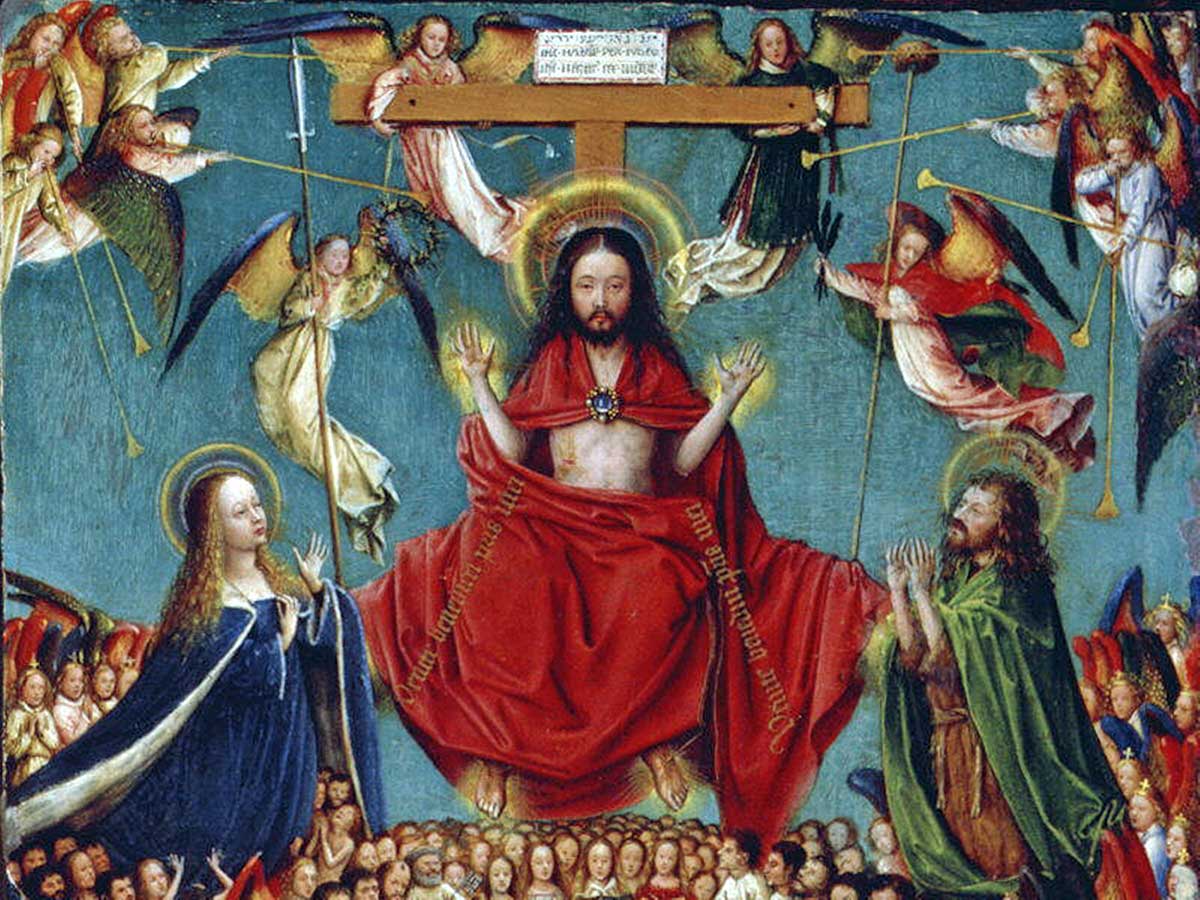
The Last Judgment – Jan van Eyck
Jesus said: “Very truly I tell you, whoever hears my words and believes him who sent me has eternal life and will not be judged but has crossed over from death to life” (Jn 5:24). In light of these words of our Saviour, why does the Creed state: “He [Jesus] will come again to judge the living and the dead”? This clearly contradicts Jesus’ words quoted above. – Dave Bradshaw
There is no contradiction. When Jesus speaks of eternal life he is referring to the life that is given to us when we are baptised.
Think of our Lord’s words: “I have come so that they may have life and have it to the full” (Jn 10:10). And also: “The water that I shall give will turn into a spring inside him welling up to eternal life” (Jn 4:14).

It is not enough to believe that whoever hears Christ’s words and believes in him who sent him will have eternal life. Catholics believe that the sacrament of baptism is essential to belief: “Unless a man is born through water and the Holy Spirit, he cannot enter the kingdom of God” (Jn 3:5).
The first converts were told: “Every one of you must be baptised in the name of Jesus Christ for the forgiveness of your sins, and you will receive the gift of the Holy Spirit” (Acts 2:38).
From these texts you can gather that faith and baptism produce a person who is now without sin, having crossed over from spiritual death to spiritual life. Such a person will not be judged simply because there is no sin to be accounted for, no case to be answered.
However, judgment is applicable in the case of sins committed after we have fallen and damaged the clean slate given us in baptism. Post-baptismal sins are known as actual sins. They are either grave (mortal sins) or less grave (venial sins).
Catholics can repent of these sins and turn to the sacrament of reconciliation (penance) to confess them and receive absolution according to Christ’s instruction (Jn 20:23).
Perfect contrition and reparation restore us to our baptismal purity because God is a merciful Father.
The Catechism (678-679) explains that by rejecting divine grace in this life, one already judges oneself by rejecting the Spirit of love.
When Christ returns to judge the living and the dead he will bring about the final triumph of good over evil. This will be done in a way that will reveal everyone’s conduct and secret thoughts, and particularly when he says: “Truly I say to you, as you did it to one of the least of these my brethren, you did it to me.”

- The Day a Saint Shoved Me - November 11, 2025
- Is the Doxology Part of the Lord’s Prayer? - September 25, 2025
- Can a Christian Doubt Heaven? - June 24, 2025