South Africa Needs Unity in Action
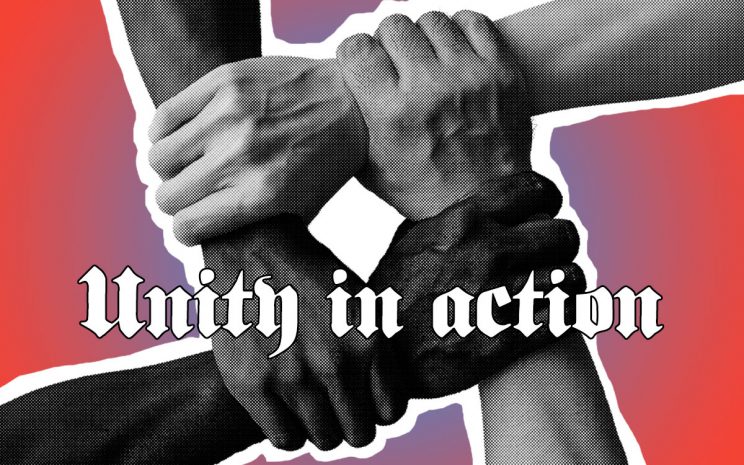
Almost a quarter of a century since the optimistic days when the Rainbow Nation stood together in queues to vote in South Africa’s first democratic election, we are acutely aware that racism has not been defeated yet.
There is plenty of interracial contact and friendship in South Africa, especially in urban centres. But there is also a huge amount of racism which manifests itself in many ways, from casual comments by people who might not even know that they are being racist to the aggression of white supremacists and the incendiary rhetoric of populists. South Africa is still a fundamentally racist country. But, thanks to the political Class of 1994, we also have access to constitutional mechanisms to deal with incidents of racism.
South Africa is still a fundamentally racist country. But, thanks to the political Class of 1994, we also have access to constitutional mechanisms to deal with incidents of racism.

Whereas the victims of racism in countries such as the United States have little recourse other than to pursue a case in a civil court, South Africans treated in a similar fashion have the option of presenting their case to institutions such as the Human Rights Commission and the Equality Court, as well as civil courts. Vicky Momberg, Kessie Nair, Andre Slade and Velaphi Khumalo learnt this the hard way in 2018.
South Africa has a lively discourse on race. And even if that discourse almost invariably is exasperating in its ferocity, disingenuousness and stubborn ignorance, and even if it gives a platform to opportunist politicians, it must be waged in the open.
The discourse must give a voice to those targeted by racism and to all people of goodwill, and expose those who cultivate the poisonous fruits of bigotry. Of course, the end goal must not be a perpetual game of provocation and reaction, followed by more provocation and reaction. Indeed, if there is no end to it in sight, our society will destroy itself.
Of course, the end goal must not be a perpetual game of provocation and reaction, followed by more provocation and reaction. Indeed, if there is no end to it in sight, our society will destroy itself.
While racial inequality is at the centre of almost everything in South African life, and must be dynamically corrected, the relentless focus on it is toxic in our politics, economy and society. An equilibrium must be found.
The cycle of provocation and reaction can divert us from other issues.
For example, last month’s clearing of Clifton Beach in Cape Town by a private security company was less compellingly a case of race and class—though it was that as well — than it was a security threat in which a group of armed men enforced policing on the public in a public space without legitimate authority.
The implicit racism of the incident is an obvious source for concern, but the notion that armed private militias, in Clifton and around the country, presume to enforce their will on the public — and thereby usurp the prerogatives of the state — should unite all South Africans in alarm. The kneejerk denial of racism by many white people, and the symbolic slaughter of sheep as part of a protest against racism, precluded any unity in action against the incident’s perpetrators, namely the security company and those people whose orders it was executing.
The kneejerk denial of racism by many white people, and the symbolic slaughter of sheep as part of a protest against racism, precluded any unity in action against the incident’s perpetrators, namely the security company and those people whose orders it was executing.
So where united action was possible and necessary, the question of race instantly caused sharp divisions.
Our discourse on racism is indeed lively, but too often it is immature. Among many people, there is an unwillingness to acknowledge racism where it exists, to deflect from it when it occurs, and sometimes to claim it when it hasn’t occurred. And that discourse is further contaminated by those charlatans who use issues of race for their own ends, with no interest in solving them.
And that discourse is further contaminated by those charlatans who use issues of race for their own ends, with no interest in solving them.
While most South Africans can recognise the most egregious kinds of racism, not all are able to spot the casual and implicit manifestations of racism, and many will see racism (or a genocide) where there is none.
An open dialogue on race and racism, governed by charity rather than offensive or defensive fury, can help us arrive at definitions and boundaries. It can create that much-needed unity in action. South Africans must have a collective change of heart that would regard all prejudice, every bigotry, any form of hatred based on colour, nationality, religion, gender or sexual orientation, as an act of aggression against society
This requires a change of heart. South Africans must have a collective change of heart that would regard all prejudice, every bigotry, any form of hatred based on colour, nationality, religion, gender or sexual orientation, as an act of aggression against society.
The Gospel shows us Christians the way. Let the Word of God guide us so that we may lead.

- The Look of Christ - May 24, 2022
- Putting Down a Sleeping Toddler at Communion? - March 30, 2022
- To See Our Good News - March 23, 2022