
Why Does the Church Condemn Free Masons?
Question: What is the Catholic Church’s position on Freemasons?
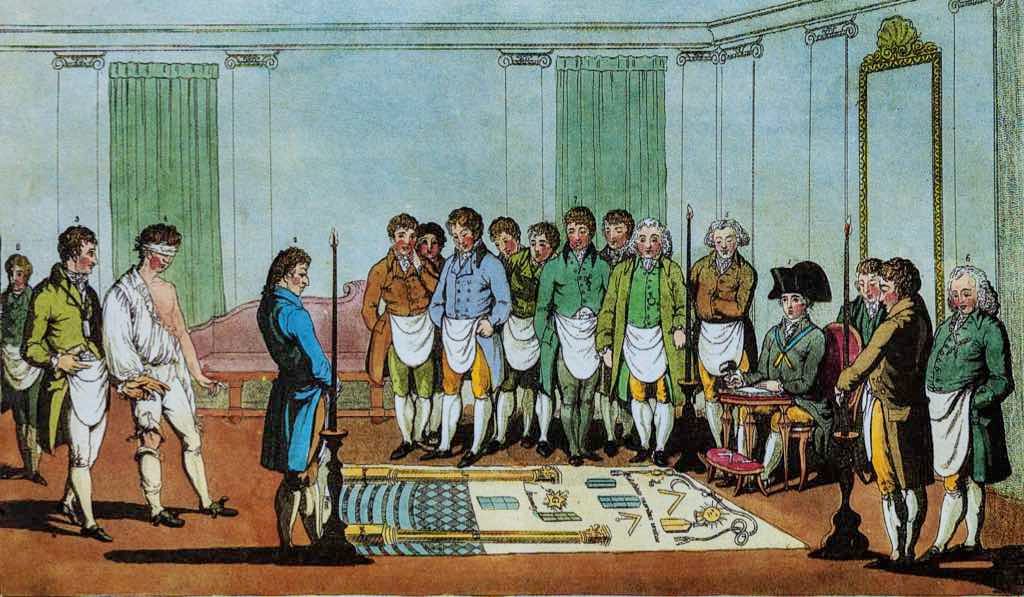
Answer: Pope Clement XII in 1738 condemned freemasonry for, among other reasons, its religious indifferentism, its use of oaths, and its possible threat to Church and state. Many popes have added similar disapproving statements.
In 1983 the Vatican’s Congregation for the Doctrine of the Faith (CDF) reaffirmed the penalty of excommunication for Catholics who become Freemasons. CDF prefect Cardinal Joseph Ratzinger, the future Pope Benedict XVI, affirmed: “The faithful who enrol in masonic associations are in a state of grave sin and may not receive Holy Communion.”

In recent times masonry has shed its image as a cloak-and-dagger secret society. It is now more of a social club whose members work for the good of one another and of the broader society. Nevertheless, the Church continues to object to its quasi-religious practices and acts of worship, and takes particular exception to its administration of oaths.
Initiates have to swear solemnly not to divulge masonic secrets even before they are told what these secrets are, and to swear that they will be punished by death or mutilation if they do. The Church considers it immoral to take such a serious oath without first having full knowledge of what the initiate is swearing to.
Masons maintain today that they don’t take the threat of death and mutilation literally, only in a symbolic sense, but the Church holds that, in that case, trivialising the solemn taking of an oath before God is blasphemous.
Presumably, if the Freemasons stopped using their secret acts of worship and objectionable oaths, the Church might allow Catholics to join its ranks.
Published in the October issue of The Southern Cross magazine

- The Day a Saint Shoved Me - November 11, 2025
- Is the Doxology Part of the Lord’s Prayer? - September 25, 2025
- Can a Christian Doubt Heaven? - June 24, 2025



