Are We the Church of the Poor?
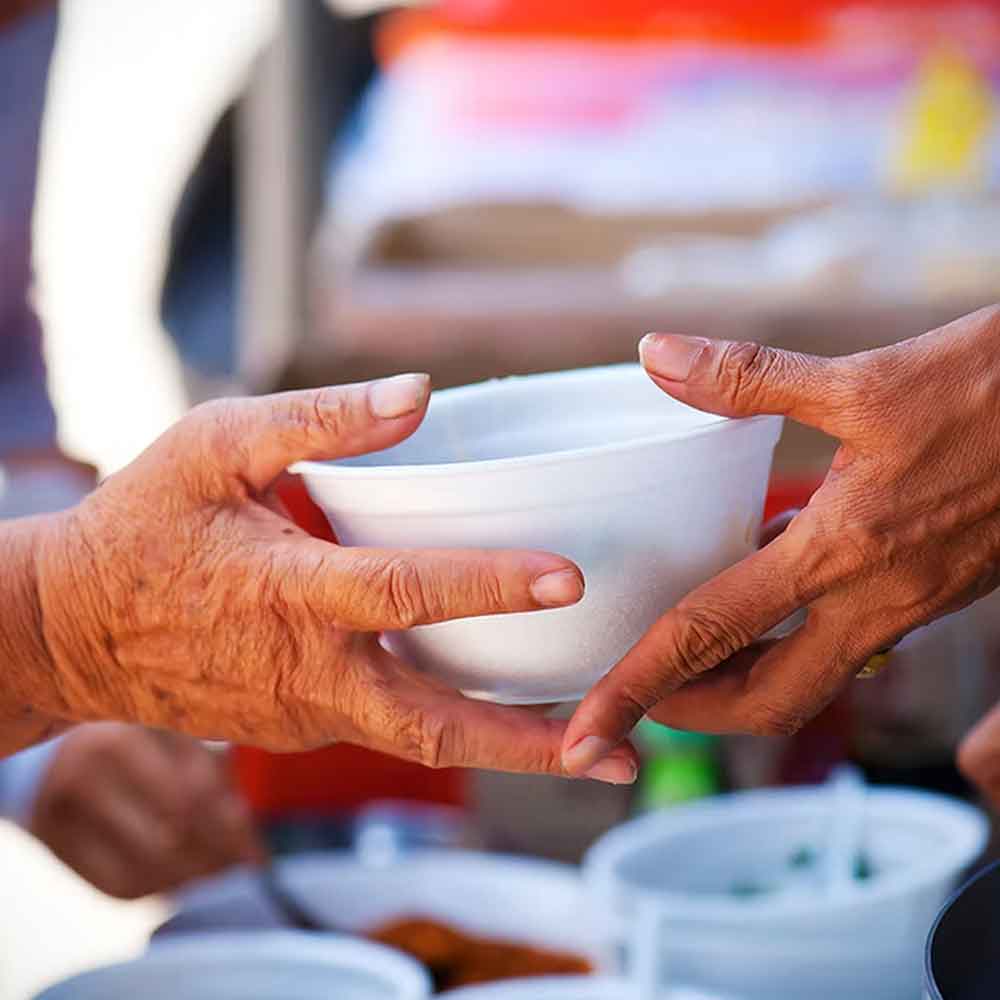 As the Jubilee Year 2025 heads towards its natural end, a focus in November is on “the poor”. It might seem odd to have a focus on a group that makes up such a large proportion of the world’s population. According to the World Bank, about 3,5 billion people (or 44% of the globe) live in poverty, with 700 million in extreme poverty.
The statistics for our own country are even worse, with more than half of South Africans (30,4 million, or 55%) living below the national poverty line and 13,8 million (or 25%) experiencing food poverty. To put that into perspective, one in four of our neighbours do not know where their next meal will come from. Here, the term “neighbour” means more than just the people living in your area. As the young lawyer famously asked Jesus: “Who is my neighbour?” (Luke 10:29).
A phrase of Jesus’ that is, I believe, often misused is his famous “The poor will always be with you” (Mt 26:11). This can be exploited as an excuse for Christians not to do much about addressing poverty — after all, the problem isn’t going to go away. But Jesus is, in fact, reminding us that the poor will always be around us, close to us, our neighbours — and so we are not allowed to forget them. After all, when we say, “your friends will always be with you”, we don’t think that means we can’t get rid of them!
So that puts a very different emphasis on how Christians should respond to poverty. Not resigned and dismissive (“We can’t get rid of them, so why try?”) but engaged and accepting: “The poor are part of our community and so what are we challenged to do in response?”

How will God judge us?
This was an approach foremost in the mind of the late Pope Francis. Recall that he chose his name specifically because of the devotion the saint of Assisi had to the poor — indeed, the choice of that name was prompted by Brazilian Cardinal Cláudio Hummes, who whispered to the newly-elected pope seated next to him: “Don’t forget the poor.”
Pope Francis frequently said that we should be “the Church of the poor”. That challenge should motivate us but, if your preferred motivation is fear, you need only re-read Matthew 25 (which in some years is the designated reading for the last Sunday of the liturgical year at the end of November). It is very clear that we will be judged — as the sheep are separated from the goats — by how we treat the poor among us: “Whatever you did to the least of my sisters and brothers, you did to me” (Mt 25:40).
So as we reflect on this Jubilee of the Poor, how well are we doing as a Church? Globally, we can claim a good record. The Catholic Church coordinates one of the leading networks of development funding and emergency relief through its network of Caritas agencies (though it has different names in some countries, such as Cafod in the UK). Religious orders have been at the forefront of addressing poverty — especially through providing schools, hospitals and clinics where no one else has — in many countries in the Global South.
And popes going back to St John XXIII have repeatedly used their political platforms to speak out for the poor when other world leaders would rather keep silent. In this they have been joined by internationally known figures such as St Teresa of Kolkata, St Oscar Romero and Dorothy Day, as well as countless local bishops, priests, religious and Catholic lay people. As Catholics we can be justifiably proud.
The situation in SA
And as Southern African Catholics? The picture is much less consistent. We can certainly be proud of the Society of St Vincent de Paul (SVP). This lay-run organisation is represented in almost every parish and, by being on the ground, is well-placed to understand and respond to the needs of individuals and families who are suffering from poverty.
But before we get too complacent, we might ask ourselves how many members of our parish are actively involved in SVP? Ten, 20, perhaps 30? Out of a parish of several hundred? That would sound a lot like taking the credit for someone else’s virtue.
Meantime, despite years of trying, the Southern African Catholic Bishops’ Conference has struggled to create a national Caritas network of fundraising and poverty relief comparable to what you would find in other parts of the Catholic world.
A counter-example
Before we reach for the excuse of local economic or cultural reasons, we only have to glance across at our Muslim neighbours to see a counter-example of what is possible in South Africa. Gift of the Givers, in its 32 years of operation, has distributed over R6 billion in funds! Bearing in mind that the Catholic community in South Africa is about twice the size of the Muslim community, has Caritas raised and distributed R12 billion? I suspect not.
If that sounds like too high a target, it would actually be the equivalent of each Catholic in South Africa giving less than R10 per month for the work of Caritas.
You might respond that Catholic initiatives are not just national but also local. And as the director of the Denis Hurley Centre (DHC) in Durban, I would certainly endorse that. We pride ourselves on being a local response to a local problem, as is our sister organisation, the Napier Centre 4 Healing. Both were set up by the archdiocese of Durban and initially received great support from the Catholic community. But it is sad to report that in recent years, Catholic parishes (with a few honourable exceptions) have been less supportive, with the standard excuse of Covid being used.
It is not just lack of funds but also lack of public support. Archbishop Mandla Siegfried Jwara has spoken out very firmly against the attacks on poor foreign nationals at our Durban hospitals — but other clergy have been very slow to get engaged.
Meanwhile, other once-impressive Catholic responses to poverty — such as the Mater Dei homes in Durban or Catholic Welfare and Development in Cape Town — have diminished or even collapsed, further reducing the contribution of the Church to the pressing needs of our country.
If this all sounds like a grumpy moan, then it is. But not on behalf of the DHC or Caritas or any other organisation. It is a cry on behalf of the poor. Psalm 34, and the hymn based on it, tells us that the Lord hears the cry of the poor. He does — but are Catholics in South Africa listening to that cry?
Let me offer some simple tests:
- How much of your parish’s weekly collection goes on outreach to the poor?
- How much of the discussions of the parish pastoral council or in general Church discourse centre on the needs of the poor?
- How much of the time of our bishops, priests and deacons is spent on actively responding to the poor?
- Can we really call ourselves “the Church of the Poor”? Do we even want to?

- Lumen Christi! Deo Gratias! - April 7, 2026
- The Gift of the Irish - March 10, 2026
- Catholic Schools in the Market - February 10, 2026