The Day a Saint Shoved Me

In 1965, Michael Shackleton was a priest and private secretary to Cardinal Owen McCann. As we enter the year of jubilee marking 60 years since the Second Vatican Council closed, he recalls three encounters with Pope Paul VI.
I had first heard of Cardinal Giovanni Montini, archbishop of Milan, when he visited South Africa in July 1962 to dedicate the church of Regina Mundi in Soweto. Less than a year later, in June 1963, he was elected to become Pope Paul VI.
Naturally, like so many others, I was keen to know whether this new Bishop of Rome would reconvene the Second Vatican Council after the death of Pope John XXIII. He was expected to do so because there remained so much unfinished business from the Council’s earlier sessions. As pope, it was his right to prolong or end the Council with the stroke of a pen.

His decision was that the Council would carry on. And that decision brought me into closer contact with a pope than I could have imagined.
Fast-forward to 1965: I was the private secretary to Archbishop Owen McCann of Cape Town, whom Pope Paul had made a cardinal in February that year. McCann had managed to get through the earlier sessions of the Council without a secretary, but now he would have extra workloads due to his promotion. So this time he would need me with him. And, of course, I knew that I was surely going to meet Pope Paul.
My first contact with the Holy Father took place early in October 1965, when Cardinal McCann and I were scheduled to have a private audience. I was aware of the big privilege this was for me.
Victim of communist rule
While Cardinal McCann was deferentially ushered away by an attendant to discuss business with the pope, I was left to wait impatiently. Directed into a very small waiting room to cool my heels in the meantime, I met Bishop Petar Cule of the diocese of Mostar, which was then in Yugoslavia under communist rule and is now part of Bosnia-Herzegovina, near Medjugorje. Bishop Cule had been imprisoned and even put into solitary confinement by the anti-religion authorities. He and his diocese were still enduring many indignities at home. Lost for words, I could only show him sympathy with the promise of prayers.
Abruptly, I had to leave him as I was called to join His Holiness who stood waiting, flanked by McCann, both with warm smiles. Aware that this was my first time in Rome, the pope welcomed me. He asked if both my parents were alive and gave me rosary beads to give them, with his blessing.
After a photographer had come in to snap us and we were leaving, McCann asked if there was anything we could do for the pope. His Holiness turned to me and said: “Pray for me. I have so much work.” I promised to do so, grasping at that minute how the Council had loaded him with extraordinary duties.
Not long afterwards, the bishops of the Southern African Catholic Bishops’ Conference paid their ad limina visit to the pope. I was included in their number, alongside Dominican Father Dominic Scholten, the secretary-general of the SACBC.
We stood in a long line as Pope Paul moved leisurely down it, greeting each person. On my left stood Bishop Gerard van Velsen OP of Kroonstad. I felt a little embarrassed because he was reading a newspaper even as the pope was approaching. Abruptly, he crumpled it, passed it to me and asked me to get rid of it. Taken aback, I resisted, asking: “How?” I half-stuffed its bulk into my ample cassock pocket, glad that I was wearing a clerical cape to cover the prominent bulge.
After greeting the bishop, Pope Paul came to me. Before Cardinal McCann was able to introduce me to him, he instantly remembered me from our earlier meeting. He nodded and moved on. That was my second meeting.
Crush at the college
The third encounter was exceptional. Pope Paul was scheduled to visit the Propaganda Fide College in Rome where Owen McCann had studied for the priesthood, now located in another part of the city since McCann’s day. Its student body was made up from many lands and lingoes. Of course, as an old boy of the college, the cardinal was invited. I went along too.
We first called on Cape Town students there. Among them were Lawrie Henry, who later succeeded McCann as archbishop of Cape Town, and Eddie Adams, who in 1983 would become bishop of Oudtshoorn.
Then we adjourned to a hall where McCann addressed the college’s faculty and students. He spoke in Italian with mispronunciations and mistakes, causing laughter from some. The cardinal turned the tables on them when he pointedly declared that he was not speaking Italian but “the language of Propaganda College”, which was received with loud cheers of appreciation.
When the moment came for Paul VI to enter, the hall swelled as many onlookers crowded in through back doors. Standing at the front, I found myself being gradually pushed forward as a result.
All at once the Holy Father appeared. Everyone spontaneously surged ahead, so much so that I was jostled and propelled with a thump straight into the pope himself. With faces centimetres apart, we silently blinked at each other.
Then he took hold of my shoulders and shoved me away with surprisingly powerful arms. I doubt if he recognised me this time, but it was the closest I could have been to a pope, let alone a saint.
Yes, Giovanni Montini would become a saint. He was canonised in 2018 by Pope Francis, and I can understand why. He had to take the helm of three of the four sessions of the Council as well as his other duties. He did so with cool patience, which must have been extremely trying amid all the international pressure at the time and long afterwards. No wonder he asked for prayers because of “so much work”.
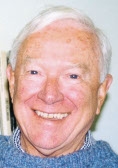
Michael Shackleton is a former editor of The Southern Cross.
- The Day a Saint Shoved Me - November 11, 2025
- Is the Doxology Part of the Lord’s Prayer? - September 25, 2025
- Can a Christian Doubt Heaven? - June 24, 2025