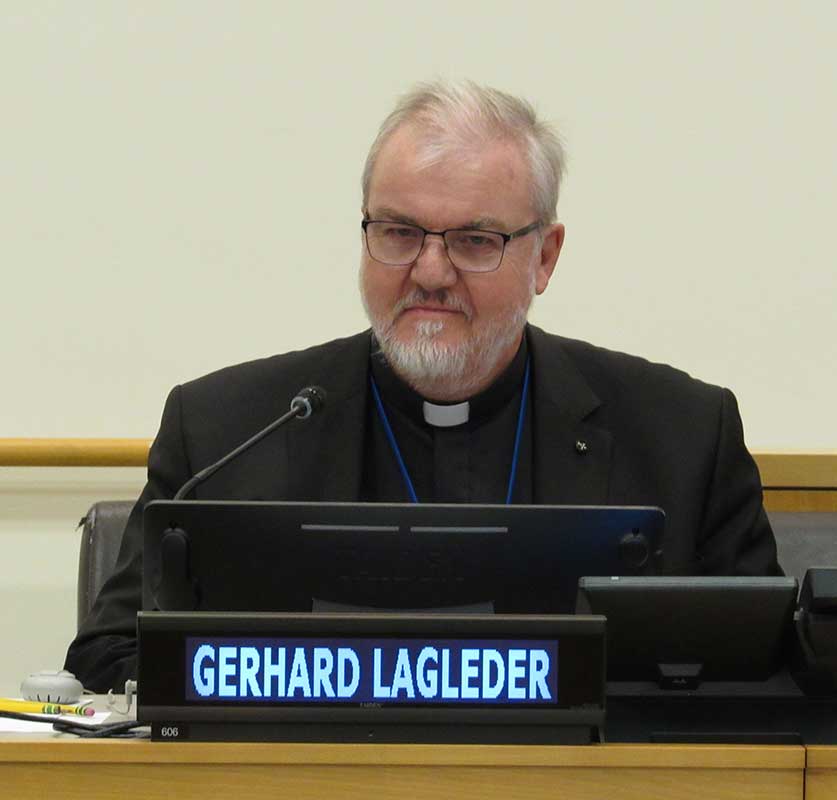
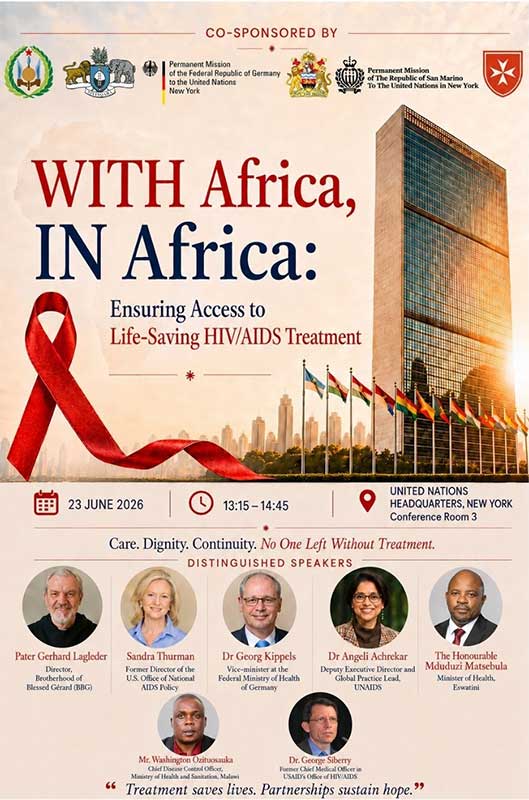
A small, community-based healthcare initiative from rural South Africa took centre stage at the United Nations Headquarters on June 23, 2026, offering a powerful blueprint for global health during a High-Level Meeting on HIV/AIDS titled “With Africa in Africa – Ensuring Access to Life-Saving HIV/AIDS Treatment.”
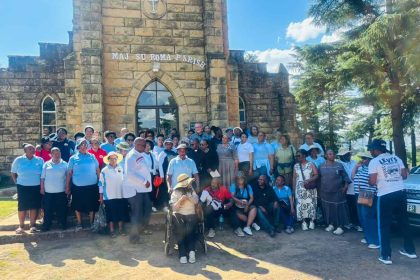
The presentation marked a full-circle moment for Blessed Gérard’s Care Centre, located in Mandeni, KwaZulu-Natal—a region once gripped by the peak of the global AIDS epidemic. In 1997, the area was so devastated by the disease that the South African magazine Drum infamously labelled its Sundumbili Township as “Death City – The AIDS Capital of KwaZulu-Natal.”
From a “Death Sentence” to Life-Saving Care
Founded as a hospice in 1992 by Christian missionaries, the Brotherhood of Blessed Gérard initially focused on providing comfort, pain management, and dignity to patients facing what was then an inevitable death sentence. While antiretroviral therapy (ART) was already transforming HIV into a manageable chronic condition in Europe and North America by the late 1990s, the medication remained entirely out of reach for rural Africans.
The crisis was further compounded by a tense political climate in South Africa. Under the presidency of Thabo Mbeki, scientific consensus on HIV/AIDS was publicly questioned, severely delaying the rollout of large-scale national treatment initiatives.

A critical turning point arrived in September 2003, when the Southern African Catholic Bishops’ Conference selected Blessed Gérard’s Hospice as a pilot site for one of the first faith-based antiretroviral treatment rollouts in the region.
Defying the Experts
At the time, international healthcare experts widely doubted whether sophisticated, long-term drug regimens could succeed in impoverished, remote communities where patients lacked reliable transportation, running water, or basic electricity. The therapy required strict, lifelong adherence and precise laboratory monitoring.
Defying those assumptions, the clinic mobilised a grassroots network. Local nurses, counsellors, and community caregivers were quickly trained to establish robust home-based monitoring systems. On August 25, 2004, the facility received official accreditation from the KwaZulu-Natal Department of Health, administering its first round of antiretroviral treatment just two weeks later, on September 7.
The impact on the community was immediate and profound. Patients who had been completely bedridden walked back into the clinic unassisted months later. Parents who had prepared for their own deaths were suddenly able to return to work and raise their children.
Among those saved were Nelisiwe, an HIV counsellor who had crossed the fragile line into becoming a critically ill patient herself before regaining her health, and Mvelo, a young boy orphaned by the disease who survived to attend school and build a future.
A Global Lesson in Human Dignity
What began as an isolated 35-patient trial eventually scaled up to provide lifelong treatment to more than 700 patients at its peak, enrolling well over 1,600 people into its care program over the years.
Addressing the UN delegation, speakers emphasized that the program’s success relied on a holistic model that paired pills with trust—integrating medical treatment with nutritional aid, psychological counseling, home visits, and spiritual care.
The presentation served as a stark reminder to international policymakers that scientific breakthroughs are meaningless unless they reach the world’s most vulnerable populations. As global health leaders stand at a crossroads—armed with long-acting treatments but facing funding shortages, global conflicts, and shifting financial priorities—the story of Mandeni stands as an enduring model of resilience, human rights, and systemic hope.

- Pope Leo’s Prayer for Mission Sunday - October 17, 2026
- A Call to Unity and Love: Pope Leo on the 100th World Mission Day - October 17, 2026
- Walking in the footsteps of Blessed Joseph Gérard: Missionary Associates renew their missionary call - October 15, 2026