Compiled by Fr Andisiwe Samente (Priest in charge of McKay’s Nek, uFather wakoRonta)
In Cruce Salus (In the Cross there is salvation). “Thus far the Lord has helped us” (1 Samuel 7:12)
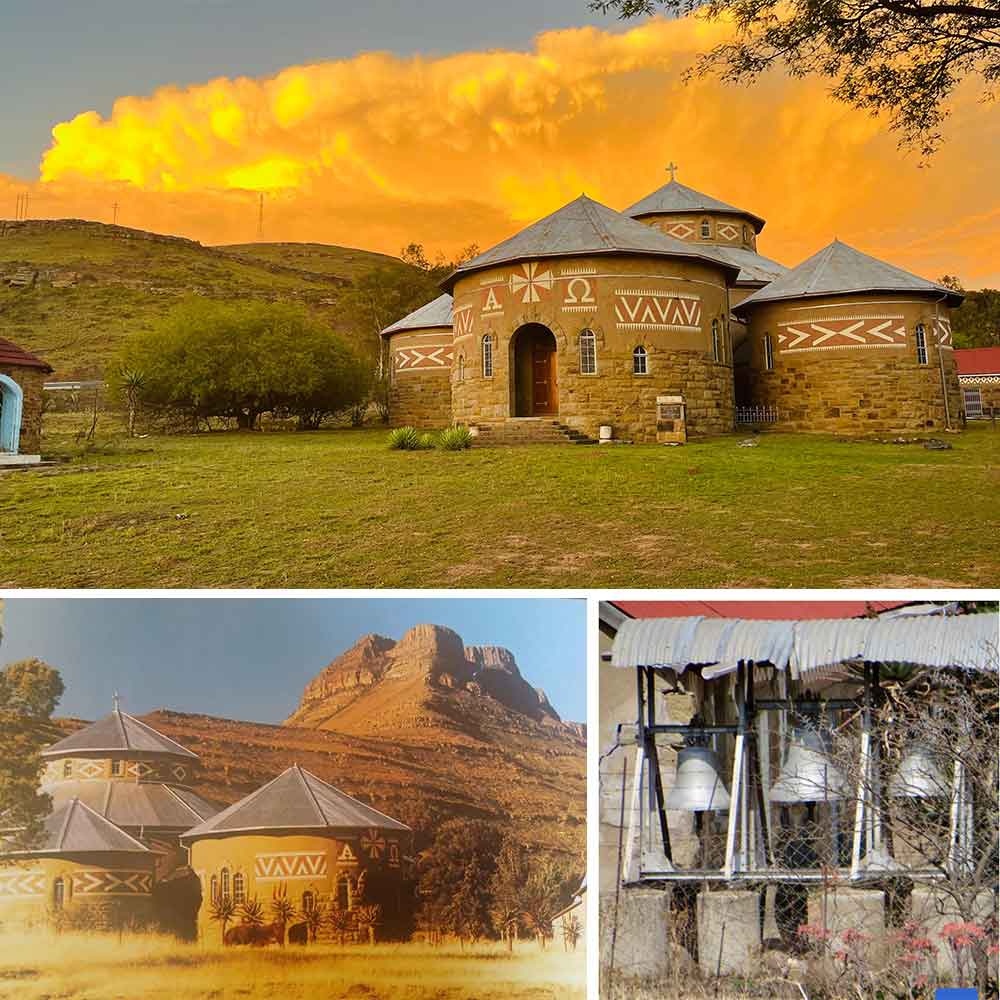
The Holy Cross Catholic Church, in McKay’s Nek in the Catholic Diocese of Queenstown celebrates 70 years of the blessing and opening of its Church. This event will be held on the 20th of September 2026. This Church is situated between Queenstown and Cacadu (formerly known as Lady Frere) on the side of the road; immediately you will see a breathtaking, big church.
Early foundations
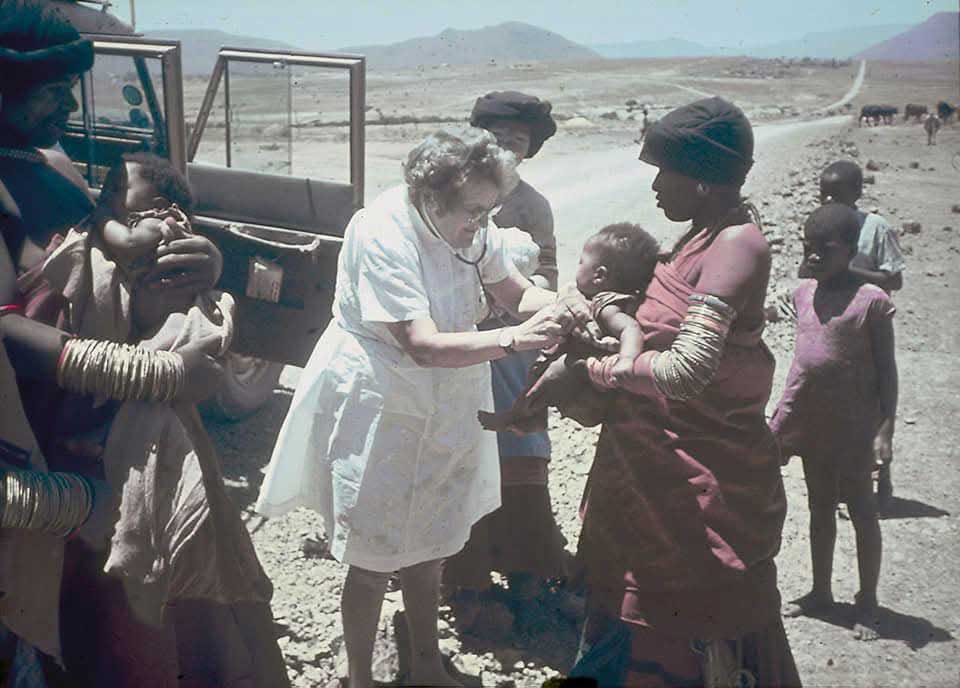
According to the chronicles of the Lumko mission (St Michael’s and All angels), McKay’s Nek mission begins to appear around June 1931. This land is believed to have been obtained around 1931 and when Dr Marie Kunz arrived in 1936 (a Swiss missionary doctor known by locals as Nonkunzi), she started up a mission hospital. However, in 1941 (8th of May) due to unfavourable conditions, to be specific lack of water supply, the hospital was moved to the current location close to town.
At this point, the Mission territory of Queenstown was under the rule of the Pious Society of Missions (PSM), later known as Pallottine Brothers and Fathers or Society of Catholic Apostolate (SAC), and Monsignor Vogel was the “Apostolic Protonotary” in charge of this mission territory. It was Msgr. Franz Joseph Vogel in 1934 who requested the Schoenstatt sisters to come and assist in the mission territory of Queenstown, of whom some proceeded to Queenstown and some eventually landed in McKay’s Nek. Therefore, this mission was run by Pallottine Fathers and Schoenstatt sisters.
From 1931 – 1953
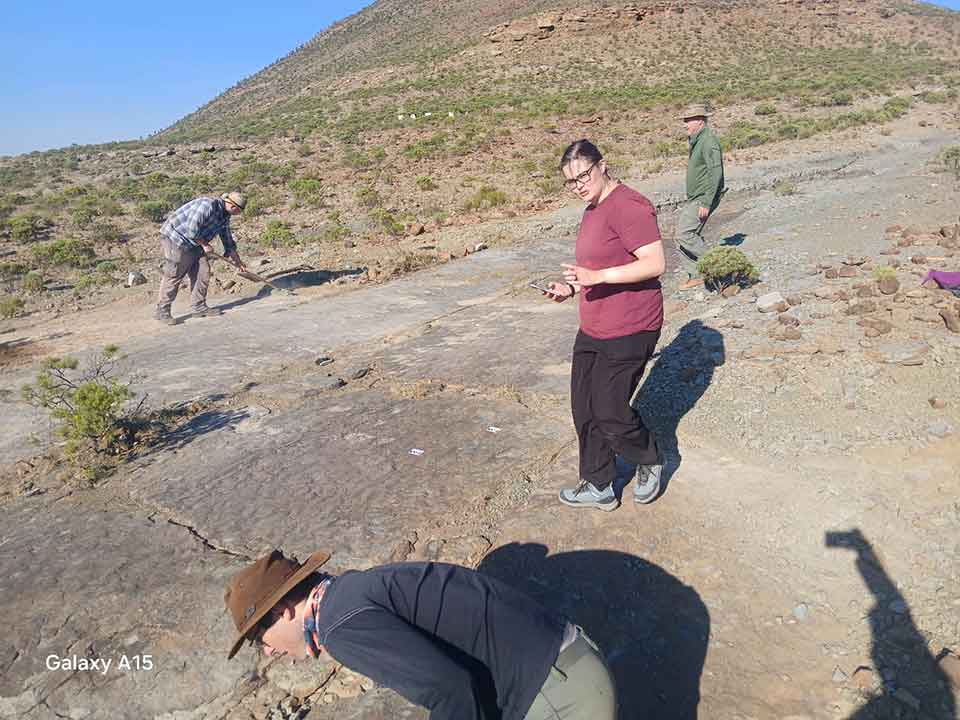
This mission was served by great priests who shaped the faith of the local community. According to the earliest baptismal register, the first priest to appear is Fr. Paul Reubsamen (PSM later SAC). He was a missionary and a palaeontologist who discovered the fossils known as Lumkuia in 1950 (cf. Suid-Afrikaanse Joernaal van Wetenskap October 1950). Just recently in August 2026, a group of researchers following up on this, led by Dr. Julien Benoit and Dr. Derik Wolvaardt (from the Evolutionary Studies Institute of the University of the Witwatersrand). Father Paul’s discovery was around the great Lumko mission (hence the name of the fossil).
The baptismal register indicates that he might have worked here at McKay’s Nek mission between 1931 and 1934 (January). He was succeeded by Father Bernard Stiller (PSM), who worked here until 1936. After him came a priest named Father B. W. Rogsch (PSM), who appears to have stayed between 1937 and 1940 at the mission. Then he was succeeded by Father Peter Hoffend (PSM) between 1941–1942.
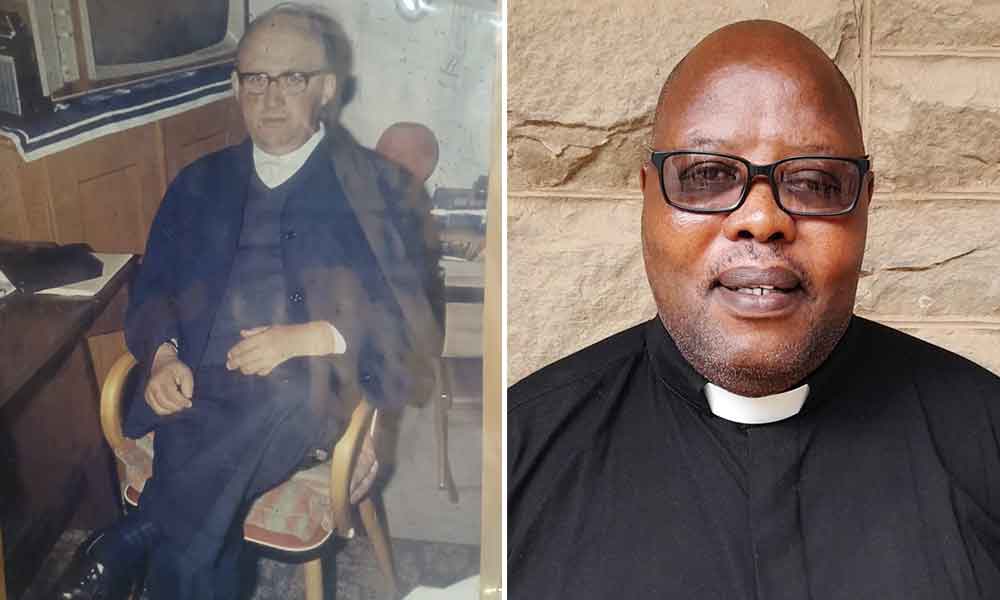
Father Henry Damans followed as the priest in charge of this mission from 1942–1946. Father P. Gross (SAC) was the priest in charge of the mission from 1946 until 1953. He was then succeeded by Father Augustine Skottnik (SAC), who was commonly known to the locals as uSiva (because of the bullet mark on his face from World War II) and uMgcina (his local clan name). Fr. Skottnik was the longest-serving priest at this mission; his apostolate began in 1953 until 1996. uMgcina used the old church building (currently used as the hall) for two years, and in November 1955, the foundation of the new church was begun.
The new Church (1955 – 1958)
Inspired by the mountain behind called Three Crowns (known by locals as Uzingxonde) and the rondavels that the local people had in their homesteads, uMgcina adopted these as the style of building the church which was to be used by the people of McKay’s Nek village. This was a prophetic move because soon after, the popular theme of inculturation was to be discussed in the Second Vatican Council (1962–1965). Instead of building a Romanesque, Gothic, or Baroque style of Church, he built uNgquphantsi or uGqingaye (a hut or rondavel), something common and close to the daily lives of the people.
He is known to have been so generous to the people; he welcomed them as they were. He allowed the local women to come in their own traditional wear (Imibhaco), something which was not accepted by other missionaries. Up to today, people still refer to this and say our mothers came to this church ngamajikolo (umbhaco dress) nancebetha (the small apron covering the front), namabhayi or intente (the big cloth to cover the shoulders). He mastered the local language (even ukunonipha, a language only known to married women). McKay’s Nek people still admire him for his love for their culture. Father also adopted the paintings that he saw in the local huts and for the material, he used stones found around the villages of McKay’s Nek.
The structure of the church therefore became a home to the locals, and when you look at the Three Crowns mountain and the church, you can clearly see the resemblance—the Church is the copy of the mountain. This church was blessed and dedicated to the Holy Cross in 1956 by Bishop Rosenthal (SAC) of Queenstown. However, it was completed in 1958 and the old church was left to be used as a hall. Behind the Church, Father Skottnik mounted three bells, also related to the Church and the Mountain; two of those bells were unfortunately stolen on the 5th of December 2021.
The interior
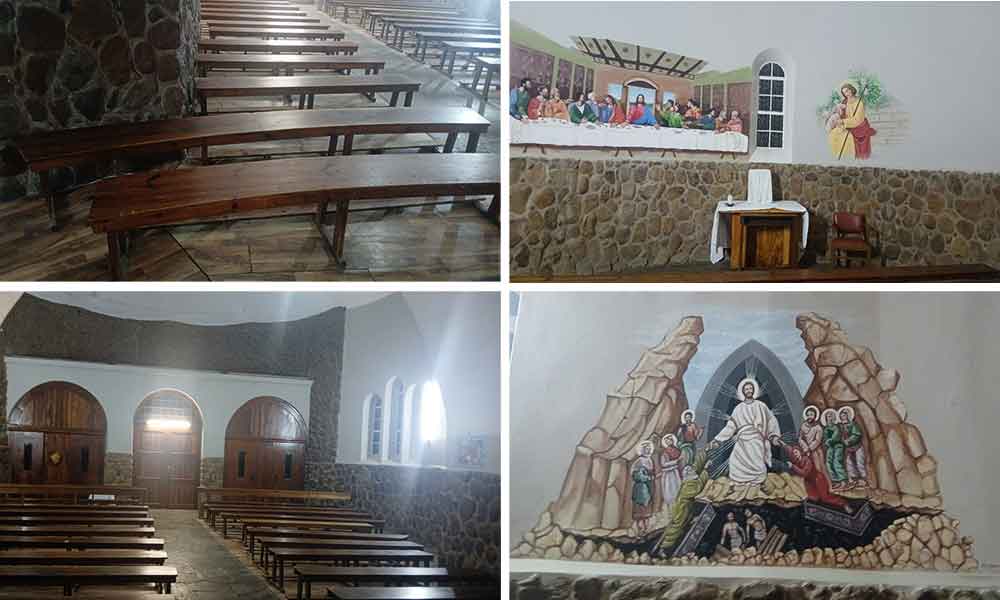
An interesting part of this Church is the interior of the Church. The building inside had one High Altar which was built in the centre of the church rather than fixed on the wall as in churches prior to the Second Vatican Council. This makes it possible for everyone to be around the table of the Lord. The pews of the church also take the shape of the building; they follow the circular shape of the church, each being linked with another according to the part of the church it is found in.
Originally the church had three Mosaics:
The main Mosaic has Christ the King, Crucified, and under his cross there is a chalice being filled with blood. This cross is placed on the globe and behind Christ’s body and the cross there is a galaxy to show that he is the King of the whole universe (the main feast of the diocese of Queenstown). Underneath the cross stands Mary and the beloved disciple who carries a parchment. On top of the cross are the four gospels: a bull with wings (Luke), an eagle (John), a human face with wings (Matthew), and a lion with wings (Mark) (cf. Ezekiel 1:10).
On the side where the tabernacle is situated, there is a mosaic of Our Lady of Perpetual Help and an inscription “Maria Mama wethu khawusincede” (Mary our Mother help us). On the side next to the sacristy, there is a mosaic with St. Joseph the protector of the Church. He is depicted carrying McKay’s Nek Church in his hand, with an inscription “Yosefu oNgcwele khusela ityalike kaYesu” (Saint Joseph protect/defend the Church of Jesus).
This Church had wooden Stations of the Cross which were later removed and replaced with ones painted on the wall in 2016 by a painter from Durban named Stone, during the time of Fr. Thembalethu Matywatywa. The floor was made of flat stones, nicely carved; this was a unique style different from the wooden floors that were common in the churches of the time. The Church also has stained glass on the lower part, and the upper part of the rondavel structure has clear windows to provide lighting to the church. McKay’s Nek has stood firm since then till today.
Later Developments
This mission station has had other apostolates that were very helpful to the local communities. It has been a health centre since Dr. Kunz; the Schoenstatt sisters also ran a clinic here, and later the Ntabamaria sisters ran a clinic here too. The local primary school (McKay’s Nek Junior Secondary School) began in this mission and was later moved to its current premises.
In the 1970s, it also functioned as a convent and a house to receive candidates for the newly founded local congregation of sisters—the Congregation of Our Lady Mother of Divine Love (CMDA), known as the Ntabamaria sisters. Fr. A. Skottnik played a big role in publishing church literature through the printing press that was in this mission. He, together with Mr. Hokwana, translated most of the Church literature into isiXhosa.
Not forgetting Fr. Arnold Fischer (SAC) (named by locals uSorhali, his clan name being umTshawe), who assisted Skottnik around the ’60s and ’70s here at McKay’s Nek and also played a role in translations; he contributed to the isiXhosa dictionary as well. The people also recall the scouts and girl guides that were established by Fr. Schoeder (SAC), known as Fr. Macebo. Later, the Catholic Apostolate (CA) and Chiro were introduced by the Ntabamaria sisters for the youth of this mission. In recent years, it has been a sewing school—a project that was run by Sr. M. Kathleen (a Schoenstatt sister of Mary who was recently called to the Father this year).
From then until now
Due to ill health, Father A. Skottnik had to leave South Africa for Germany, and Fr. Dezelina (Dez) Martin Mbulawa took over from 1996 to early 2006. A great musician, a good homilist, a good liturgist, a man of simplicity, love, and filled with zeal for building small communities—that is how he is remembered at McKay’s Nek.
After him followed Fr. Zwelinjani Mark Fongoqa (Fongs or uDethu, short form of uFada wethu, “our Father”), another great man who restored McKay’s Nek. He repaired all that was broken, fenced the church properly, and was a man who had zeal for agriculture—he even supplied local schools with vegetables from the grounds of McKay’s Nek. It was during his term that Ntabamaria convent was also added as the seventh station in the six that were served from McKay’s Nek initially. He was stationed at McKay’s Nek from 2006 to 2015.
Then the Church sent another zealous priest, Fr. Thembalethu Thomas Matywatywa, who was deeply involved in the formation of children’s sodalities in the parish and the training of Extraordinary Ministers of Holy Communion. Some of his works include the grotto built in 2016 and the painting of the church interior, lighting, and the wall paintings added by the painter named Stone. He was priest in charge of McKay’s Nek from 2015 to August 2018, when he left for Kenya.
Finally, there came another zealous priest who took over and carried on with the mission. He encouraged the revival of Small Christian Communities, encouraged Masses for sodalities, organised workshops for extraordinary ministers, and advised the community to put laminate flooring under the pews and perform repairs around the mission. That priest is Father Andisiwe Anthony Samente, and he has been in charge of McKay’s Nek from 2018 to date. With great love for the people and the growth of the local church, he encouraged self-sustenance of the parish. It is during his term that this church celebrates this jubilee.
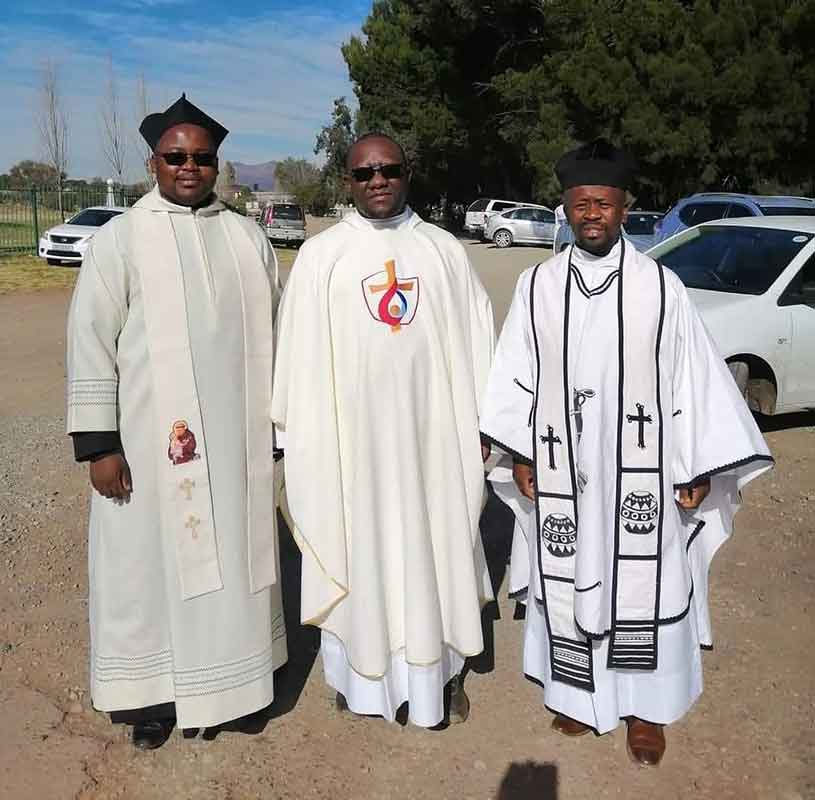
Platinum Jubilee
These have been seventy years of God’s blessing indeed: “Thus far God has helped us,” and we are grateful. This church has been a house of healing, safety, growth, a centre of education, a source of support and joy—a home for all. Even the leader of the Communist party (Chris Hani) was once hidden in the cellar of the presbytery at this mission, showing that this is truly a home to all.
Therefore, we are celebrating a Church that has deep roots. It has contributed a lot to the livelihood of the people in the surrounding areas and continues to be a sign of hope today. We take pride in the fact that from this Church came a number of vocations: Fr. Dominic Nxala (SAC), Fr. Vincent Zandisile Kupiso (SAC), Fr. Siphiwo Paul Devilliers Vanqa (SAC) (who is the current bishop of the diocese of Queenstown), Fr. Phakathi Bani, Fr Vuyisa Mtirara and Brother Mthetho George Nojekwa (in his final year at St. John Vianney Seminary). Fr. Zolile Brooke (later Bishop of Umtata) also worked at McKay’s Nek mission in the ’60s with Fr. Skottnik. We also take pride in the fact that we have sisters born here: Sr. Ancilla Luthuli (CMDA) and Sr. Peter Snaigo (CMDA). We think of many others who passed through these premises who have contributed to the betterment of our country.
With thanks
We are forever grateful to all the Pallottine Fathers and Brothers, many of whom have gone to the Father. To the Schoenstatt Sisters of Mary from Germany who worked with the people here, of whom most are also now with the Lord—the people have fond memories of them and had local names for them: Sr. Agnesina (Sister omde – tall sister), who was the superior; Sr. Nombulelo (in charge of the Clinic), also known as Nongquvela (because she was limping); Sr. Jovita (Sr. Noboyana – she was hairy); and Sr. Hedwick (known as Sr. Nkos’kakhulu because she would always say “thank you very much”).
To the Ntabamaria sisters and all the religious who might have gone through this mission, we are thankful. How can we forget Dr. Kunz (“Nonkunzi”) and all the bishops of Queenstown diocese? We are forever indebted to their tireless work. We are grateful to all the benefactors and all the faithful who contributed so that this church is still standing.
Thank you to all the priests of the diocese of Queenstown, even those that have been forgotten due to a lack of recording their presence at this Church. To the Deacons—Reverends Ngxowa and Selana—and their families, we give thanks for your work. How can we forget the Catechists and their families who worked with the priests and religious to build this mission? We are forever grateful. Catechists Mbetha, Qashani, Fini, and many others who worked here: your work is highly appreciated.
To all the faithful, sodalities, and the local people of McKay’s Nek, we are grateful. Indeed, in the Cross is our Salvation (In cruce salus), as Paul says: “for the message of the cross is foolishness to those who are perishing, but to us who are being saved it is the power of God” (1 Corinthians 1:18).
Siyabulela kakhulu!
Compiled by Fr Andisiwe Samente (Priest in charge of McKay’s Nek, uFather wakoRonta)
For reference:
Check the website of the King Williams Town Domincan sisters
Pallottine Fathers of South Africa
Schoestatt sisters of South Africa
Transkie History on Facebook
Mr. Mzandisi (who was a young boy when the church was built – still alive)
Mr. Songelwa (late)
Ms. Nomvula Songelwa (who noted the information from Mr Mzandisi and Songelwa).

- When We Reject the Stranger, What Happens to Our Christian Faith? - October 13, 2026
- Mass Readings: 18 October – 25 October, 2026 - October 13, 2026
- Pope Leo on our Wedding Feast and Upcoming Surgery - October 12, 2026