Question: Some people accuse us Catholics of “idolising” or “worshipping” the Blessed Virgin Mary. Of course, we don’t. We venerate her. But why do they dismiss Mary so easily, and why do they reject our veneration of her?
Answer: Such suspicion of Marian devotion is not usually rooted in hostility to Mary herself, but in a very different way of reading Scripture, understanding salvation and defining worship.
At the heart of the issue is the Reformation principle of Sola Scriptura. Most Protestants accept only what they believe is explicitly taught in the Bible, interpreted apart from binding Church Tradition (of course, without Tradition, we would not know with certainty what is Scripture, and what isn’t).
Because Marian doctrines and devotions — such as her Immaculate Conception, Assumption, or intercessory role — developed over centuries and are not stated verbatim in Scripture, many regard them as later accretions rather than apostolic faith. As a result, Mary is often reduced to her minimal biblical role: the woman chosen to bear Jesus, honoured for her obedience, but otherwise not central to Christian life.

Linked to this is a fear of compromising the unique mediatorship of Christ. Passages such as 1 Timothy 2:5 (“There is one mediator between God and men, the man Christ Jesus”) are often read in a strictly exclusive sense. From that perspective, asking Mary to pray for us appears to add a rival mediator, even though Catholics understand Marian intercession as entirely dependent on and subordinate to Christ, in the same way Christians ask one another to pray for them.
Clash of definitions
Another key difference lies in the meaning of “worship”. Catholic theology draws a careful distinction between latria (adoration owed to God alone), dulia (veneration given to the saints), and hyperdulia (a unique veneration given to Mary because of her singular role in salvation history).
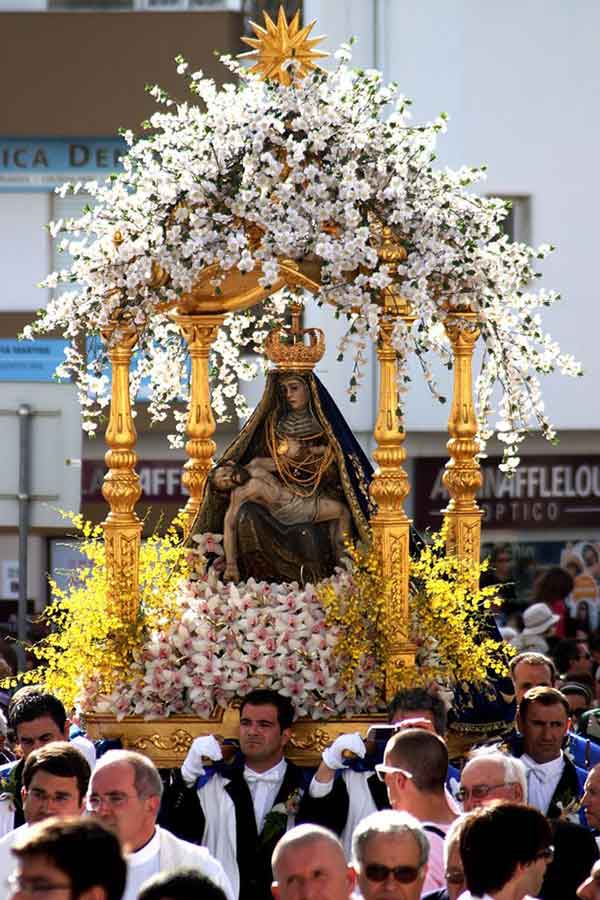
Many other Christian denominations reject or are unfamiliar with these distinctions and tend to use the word “worship” more loosely. When the underlying theology is not understood, Catholic practices such as kneeling before statues, lighting candles or praying the rosary may therefore look to the untrained eye like “idolatry”.
There is also a historical dimension. Some Reformers reacted strongly against what they perceived as excesses or popular distortions of Marian devotion in late medieval Europe. In seeking to purify Christian practice, they removed not only abuses but also much of the devotional culture itself. Over time, this produced a Christian imagination in which Mary became marginal, almost silent, rather than being the scriptural figure who proclaims the Magnificat and is called “blessed among women”.
From a Catholic perspective, this “dismissal” of Mary is not fidelity to Scripture but a narrowing of it. The New Testament itself presents Mary as uniquely graced, obedient in faith, and intimately involved in the mystery of Christ, from the Incarnation to the Cross and Pentecost.
Catholic veneration of Mary does not detract from Christ but actually amplifies him, echoing her own words, in Scripture: “My soul magnifies the Lord” (Luke 1:46).
Answered by Günther Simmermacher
Published in the May 2026 issue of The Southern Cross Magazine

- Sydney Duval: We Call him Friend - October 8, 2026
- St Francis and Mission - October 6, 2026
- St Francis of Assisi: Creation and Brotherhood - September 28, 2026