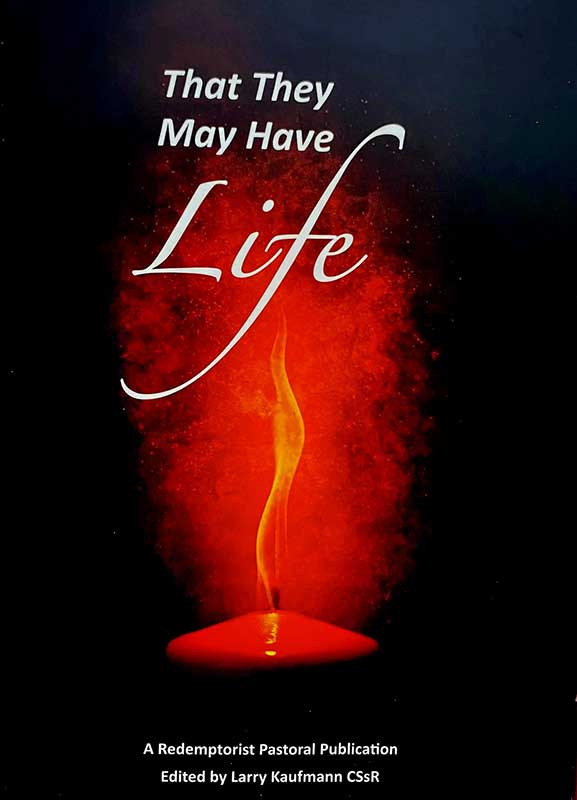
GOING TOWARD YOUR TRUTH, by Robert Boulle. Melrose Books, UK, 2010. 114pp.
Reviewed by Michael Shackleton
Psychotherapy in general is aimed at trying to understand what is troubling an individual who experiences disagreeable feelings. It involves the individual’s interaction with a trained psychologist who seeks to help his client to learn new ways of behaviour.
 Robert Boulle, a practising psychotherapist, takes the line that in treating his clients, he intends to deepen their relationship with God, who is their ultimate happiness. This is the true God, he emphasises, who cannot be known adequately unless we know our true selves within the depths of our being. There can be no real human fulfilment outside of our inborn need to be on good terms with God our Father.

None the less, because of our human condition, we gradually acquire false selves in our relationships with others. We present a kind of mask for the sake of others and for our own sake, in order to conceal our emotions and fears. This condition builds up over time and eventually it interferes with our relationship with God.
As an experienced Christian psychotherapist, the author has studied human behaviour in such situations, and his book offers some guidelines on how to achieve the desired balance in the fulfilling communication be-tween the true God and our true selves.
He knows, as we all do, that human nature finds it hard to keep God and our duty to him in mind at all times. We are led astray by our human weakness and our daily worries and anxieties as we battle to cope with life.
This is our human condition, the result of Original Sin, which St Paul sums up as follows: “I cannot understand my own behaviour. I fail to carry out the things I want to do, and I find myself doing the very things I hate… Instead of doing the good things I want to do, I carry out the sinful things I do not want” (Rom 7:18-19).
Laying particular stress on our emotional life, a life often neglected by moral theologians in the past, Boulle begins the first part of his book by analysing the human condition in which bodily and intellectual growth and maturity are clear enough, but emotional development is not. Repressed emotions and unhealed memories influence our interactions with those around us, particularly in marital relationships.
We are taken on an enlightening journey that provides an insight into our human condition and why each individual tends to behave in a particular manner.
In the second half of the book, Boulle urges us to live with our human condition in a way that is open to divine and human healing. Learning more about our condition and the possible reasons why our emotions and fears can be so dominant, sets us on the path to healing and growth.
The path has twists and turns which will often give us feelings of joy as well as depression. By being open to God and presenting him with our true self, warts and all, and not the false self that we may present to ourselves and others, we can faithfully remain on the journey.
The author’s use of technical terms such as cognitive behaviour, the unconscious and the subconscious does not intrude on his clarity of presentation, and this makes his work readable and spiritually, intellectually and emotionally rewarding.
Really troubled persons whose lives are in turmoil may require the sympathetic help of a spiritual or psychological director. For those less anxious but who want a boost to help them over the hurdles of our human condition, Going Toward Your Truth will be a boon. It could be taken on retreat or on a day of recollection, or even on a picnic.
The author has provided the Christian reader with a new slant on understanding our true and false selves, and how God and his care for us cannot be left out of relationships.
- The Day a Saint Shoved Me - November 11, 2025
- Is the Doxology Part of the Lord’s Prayer? - September 25, 2025
- Can a Christian Doubt Heaven? - June 24, 2025