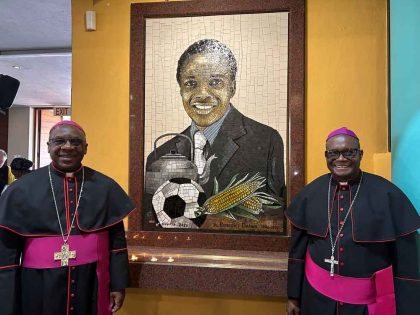
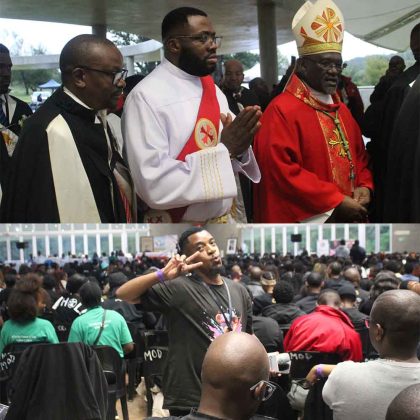
When the Vatican examines the sainthood cause of Benedict Daswa on October 9, many in the South African Church will be praying intently for a favourable judgment. Should the Congregation for Sainthood Causes recommend the cause and send it to Pope Francis for approval, the Holy Father may at some point announce that South Africa’s first beatification may go ahead.

For the Church in South Africa, this naturally would be a source of great joy. The closest the local Church has come to a beatification the final stage before canonisation to the sainthood was when in 1988 Pope John Paul II beatified Bl Joseph Gerard, the French Oblate apostle of Lesotho and the Free State.
That was for the Church in Lesotho; Daswa’s beatification would be for South Africa.
Those who knew the man and those who have worked on his cause have no doubt about Daswa’s personal holiness and fidelity to Catholic doctrine.

The crucial question facing the Vatican congregation is whether Daswa can be considered a martyr, a category that is exempt from the recognised miracle which is usually required before a beatification can be approved.
Martyrdom, according to the Catechism of the Catholic Church, is the supreme witness given to the truth of the faith: it means bearing witness even unto death (2473).
In the words of the late moral theologian Fr Benedict Ashley OP, martyrdom demands that the person died in witness of faith in Christ which is directly expressed in words, or implicitly in acts done or sins refused because of faith and that the victim accepts death voluntarily.
Moreover, the killers of the putative martyr must have acted in odium fidei, or contempt for the faith.
If this definition is applied by the Congregation for Sainthood Causes, then the chances of Benedict Daswa being declared a martyr would seem to give his devotees grounds for hope.
Daswa was killed by a mob in 1990 after refusing to take part in, and financially contribute to, a witchhunt ritual. He had explained his refusal to participate by an unambiguous reference to his faith, pointing out that a witchhunt is contrary to the teachings of the Catholic Church. This notwithstanding, the mob decided that Daswa had to die as he did, for sins refused because of faith.
While he naturally tried to preserve his life by running for safety when set upon by the mob, Daswa’s dying words, God, into your hands receive my spirit, indicate a willingness to die for his faith. Had he renounced his opposition to the witchcraft ritual in a bid to placate his attackers, an important requirement for martyrdom could be excluded. In the event, the defenders of his cause will argue, he chose death voluntarily.
Many South Africans already have a devotion to Benedict Daswa. While some critics charge that Daswa abandoned African cultural traditions for a Western ideology, there are many others who believe that he is a good example of an inculturated African Catholicism, one that values and preserves what is good in African culture and rejects what is incompatible with our faith and Gospel values.
In this way, Benedict Daswa might one day even be held up as a patron of the Church in Africa, as well as a concrete example of servant leadership.
No doubt, the Catholic Church in South Africa, which faces political and social hostility as well as a growing indifference and disengagement within, would be galvanised by the beatification of Benedict Daswa.
Indeed, the joy would radiate across the continent, especially in regions of the Church that are themselves contending with issues of witchcraft.
As a way of animating the Church and providing the potential for evangelisation, a possible beatification would be a matter not only for the diocese of Tzaneen, but for all the Church throughout the Southern African region.
The cost of staging such a beatification, should Pope Francis approve it, therefore would be a concern for the entire local Church.
At the moment, these considerations are for the future. Right now, our task must be to pray for the cause of Benedict Daswa and for those who next month will decide on it.

- The Look of Christ - May 24, 2022
- Putting Down a Sleeping Toddler at Communion? - March 30, 2022
- To See Our Good News - March 23, 2022