Forty years ago, Catholic anti-apartheid activist Brian Bishop died in a traffic collision, alongside fellow activist Molly Blackburn. Here we remember the work and sacrifice of a man of courage.
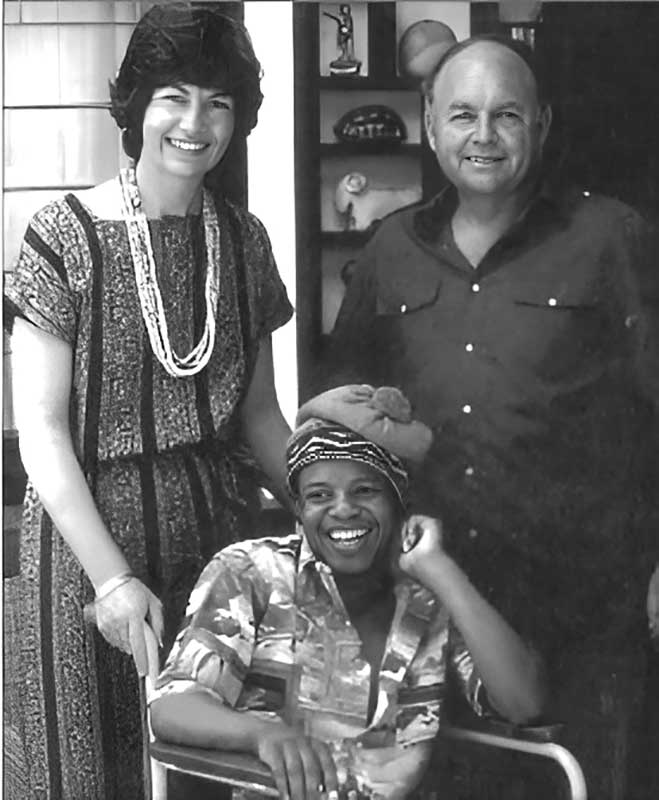
In the early 1960s, a Catholic resident of Sea Point, Cape Town, was surprised by his brother as he spoke with a black man who turned his face away. Brian Bishop, a civil rights activist, told his brother to return later: “I’m just trying to show the gardener what I want done” — in a garden barely the size of a postage stamp. That “gardener” was Nelson Mandela, then on the run from the security forces. Bishop was his close friend.
Brian Bishop died 40 years ago this month in a car accident which also killed fellow anti-apartheid activist Molly Blackburn, and also injured his wife, Di, and Molly’s sister, Judy Chalmers. He was 50; Molly was 55. On December 28, 1985, the four were returning from investigating security force intimidation in Bhongolethu, Oudtshoorn.
Rumours soon spread that the crash had been an assassination. Such speculation, unfounded or not, was fuelled by the death threats the Bishops and Blackburn had received for their activism.

Bishop’s first encounter with racial discrimination was as a boy in Mowbray, where his friends were not allowed in the “whites only” municipal park. Segregation in schools, post offices and on public transport offended his conscience. These childhood friends were later forcibly removed under the Group Areas Act.
In 1961 Bishop co-founded the United Nations Association of Southern Africa to advocate for human rights, but it was banned within a week — like several other ventures which he had initiated, including those offering adult education to black migrant workers.
When the regime announced plans in 1966 to clear District Six, Bishop worked with Fr Basil van Rensburg and others against the forced removals. The regime had aimed to complete the forced removals by 1968. In the end it took 14 years. Later Bishop also fought to protect African workers from forced removals.
For decades, his voice was a staple on the letters pages of Cape Town newspapers, denouncing human rights abuses and unjust laws. He addressed countless public meetings and served on the archdiocesan Justice & Peace Commission.
Full-Time Activism
At 49, he followed Jesus’ call to “go, sell what you have”. He sold his stake in an IT business, retired, and gave his full time to helping victims of apartheid brutality, working with the Black Sash to expose security force abuses, gather statements, attend funerals, and trace the disappeared — among them the Cradock Four, the Pebco Three, and student leader Siphiwo Mtimkulu.
The Bishop family celebrated Christmas Day 1985 together. That day Brian predicted that before the year 2000 South Africa would have a peaceful transition and a black president — and most whites would welcome it.
Later that afternoon, Molly Blackburn called Brian and Di to accompany her to Oudtshoorn to investigate security force intimidation. They then set off for a short break in Port Elizabeth. They never arrived.
His Requiem Mass was celebrated by Archbishop Stephen Naidoo on January 4, 1986, in a packed St Mary’s cathedral, with many dignitaries and activists present. Towards the end, the congregation broke into song: “He’s gone to be a soldier in the army of the Lord, his soul’s marching on”, followed by the banned “Nkosi Sikelel’ iAfrika”. As Brian’s coffin was carried down the cathedral steps, it was met by a banner that read: “Hamba kahle — you gave us hope!”
Published in the December 2025 issue of the Southern Cross Magazine

- Blasphemy Warning Needed - October 10, 2026
- Where Should the Tabernacle be Located? - October 8, 2026
- Over 50 Young People Evangelise on the Streets of Mbombela - October 7, 2026