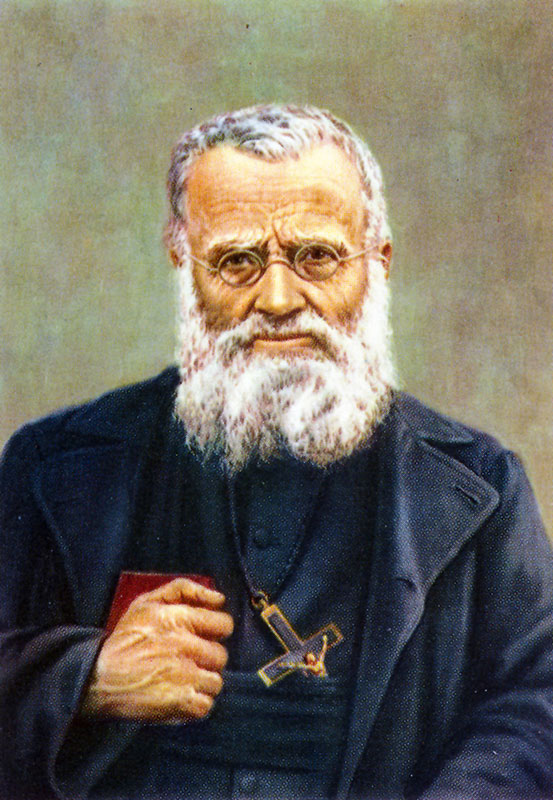
In 1854, a young French missionary arrived in Natal to evangelise the people. Bl Joseph Gérard became the Apostle of Basotho Catholics.
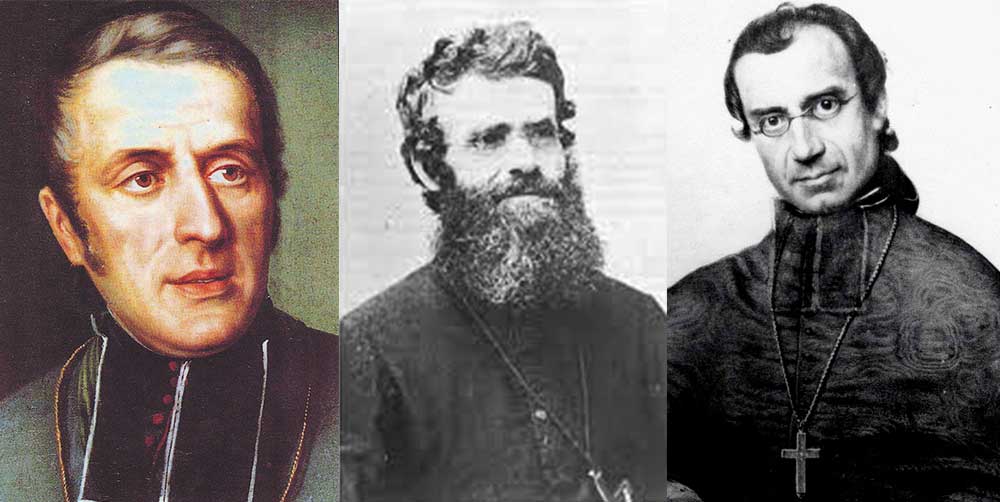
It was April 1853 when Bishop Eugène de Mazenod took aside a 22-year-old deacon who had joined his order, the Oblates of Mary Immaculate, just two years previously. The founder had a mission for the young man: Go to Natal in the south of Africa and evangelise the people there.
Joseph Gérard did as instructed. On May 10, five weeks after he had received his posting from the future saint, the young deacon set off for his mission field, never to see France again.

Born on March 12, 1831, in the village of Bouxières-aux-Chênes, near Nancy in northeastern France, Joseph was the first of the five children of Jean Gérard and Ursule Stofflet. He spent his childhood on the family’s farm and was educated in the village schools.
Joseph inherited his deep faith from his family, and from a young age felt a desire to serve God. That desire deepened when priests of the Oblates of Mary Immaculate passed through Bouxières-aux-Chênes, telling stories of their missionary life in Canada.
At the age of 20 he joined the Oblates. On May 9, 1851, Joseph entered the order’s novitiate in Marseilles. He made his perpetual vows on May 10, 1852 — exactly a year before he boarded the ship to South Africa.
Landing in Port Natal in January 1854, the young deacon and his confreres Fr Justin Barret and Br Pierre Bernard were welcomed by Bishop Jean-François Allard, a fellow Oblate who had arrived as the vicar apostolic of Natal less than two years earlier. On February 9, the bishop ordained Joseph Gérard to the priesthood.
Mission in Zulu kingdom
Durban was a small town at the time, with a population of 1200. Pietermaritzburg, the capital of Natal, had twice as many people. In both towns, the number of Catholics was small. So far Bishop Allard’s attention had been on the pastoral needs of the small white community in Natal, but the Oblate charism was to evangelise, so it was decided to set up a mission in Zululand.
The linguistically gifted Fr Gérard quickly learned to speak isiZulu, and great efforts were made, first at St Michael’s mission and then at the mission Our Lady of the Seven Dolours to win Zulu converts. To Fr Gérard’s great disappointment, all these efforts were in vain, producing not one conversion. Still, he remained unwavering in his hope. He wrote about the experience to Bishop de Mazenod: “Their objections against our holy religion are the same as the European unbelievers utter. Unfortunately they form a compact whole with their chiefs. No one is strong enough to break away and become a Christian.”
Move to Lesotho
In his reply, De Mazenod advised Fr Gérard to move further into the land’s interior. In 1862, that is what Bishop Allard, Fr Gérard and Br Bernard did, while the other Oblate missionaries remained behind to till the still infertile mission fields of Zululand.
They presented themselves to King Moshoeshoe of the Basotho, who welcomed the missionaries and allowed them to found the mission of the Motse-oa-’M’a-Jesu (Mother of Jesus Village), now better known as Roma.
Bishop Allard went back to Natal, and left Fr Gérard in charge. The priest quickly learnt SeSotho, but he faced several problems. The rugged terrain of the mountain kingdom and remote villages made travel difficult, and the harsh climate was difficult to deal with.
Moreover, Basotho people had a reputation for fierce independence and resistance to outside influence. Fr Gérard faced hostility from those who opposed his message of Christianity, including local chiefs and diviners who viewed it as a threat.
Moreover, Fr Gérard was an advocate for the poor and dominated. The message of Christ offered them a measure of liberation from traditions and power structures that were oppressive. No wonder that Fr Gérard’s life was threatened on several occasions.
Despite these threats and challenges, Fr Gérard remained persistent in his mission, relying on his faith, determination, and a deep love for the people he served. Undeterred by the hardships and privations he faced, Fr Gérard travelled from village to village, preaching the Gospel and ministering to the spiritual and material needs of the people. He was especially committed to caring for the ill, the weak and the destitute, for whom specifically he would travel long distances.
Trusting in God’s providence, he was convinced that his work — and that of his fellow missionaries, who came to include the Holy Family Sisters of Bordeaux — would bear fruit in the hearts and lives of the people. Over time, these efforts began to succeed as more and more Basotho embraced Christianity and the message of hope and salvation it offered.
According to the report to the Oblates’ general chapter in 1873, the Basotho vicariate had five missions and some mission stations with eight priests, five Brothers and more than 3000 Catholics.

Emphasis on education
One of Fr Gérard’s most significant contributions to the population was the establishment of schools and orphanages. Recognising the importance of education in uplifting and empowering the community, he worked tirelessly to build schools and provide access to education for Basotho children.
In addition to his work in education, Gerard also focused on healthcare and social welfare. He established mobile clinics and dispensaries to provide medical care to the sick and needy, often travelling long distances to reach remote villages where healthcare was scarce. His compassion and dedication to serving the poor and marginalised earned Fr Gérard the admiration and respect of the people.
Importantly, Fr Gérard and his missionaries integrated into local society, though Fr Gérard sometimes noted areas of injustice and immorality in its structures. Like most missionaries, he tended to view ancient pagan practices too rigorously and through a Western European bias. By and large, he was accepting of traditions that did not diverge from the Church’s teachings, but insisted that their practice should be just.
For example, he defended the custom of mahadi (bride price or lobola), but insisted that young women should not be treated as commodities to be exchanged for cattle. Instead, the young woman should be consulted and be given the freedom to choose her marital partner. In any patriarchal society in the 1800s, that was strong stuff.
To the converted, Fr Gérard’s deep faith was an inspiration, even if his homilies tended to be too long. The people would say that he was “living on prayer”. The priest spent many hours before the tabernacle, and during the long journeys on horseback he carried the Eucharist on his breast for adoration.
Advisor to the King
King Moshoeshoe was also an admirer, and came to rely on Fr Gérard’s advice. He respected the Catholic missionaries for remaining in place during the Free State–Basotho Wars of the 1860s. On August 15, 1865, the king allowed for the Christian authorities to consecrate Lesotho to Mary Immaculate.
In 1875, Fr Gérard established St Monica mission at Leribe in what is now northern Lesotho. From there he and his fellow missionaries could also evangelise and provide pastoral care for Basotho living in the Orange Free State, especially farm workers.
He left the region only once. In 1876, Fr Gérard returned to Natal to publish two books he wrote in SeSotho: a translation of Luke’s Gospel and a short history of the Church.
After 21 years at St Monica’s, he returned to Roma in 1898 where he would remain for the rest of his life. Fr Joseph Gérard died there in the evening of May 29, 1914, after a month-long illness. He was 83, and had spent 60 years in southern Africa.
Today the “Apostle of Lesotho” is remembered as a pioneer of Catholic mission in southern Africa and a tireless advocate for the poor and marginalised.
His sainthood cause was launched in 1955. Pope John Paul II beatified Bl Joseph Gérard in Lesotho on September 15 1988, while on a tour of southern Africa. Bl Gérard’s feast day is on May 29.
Published in the May 2024 issue of The Southern Cross

- Sydney Duval: We Call him Friend - October 8, 2026
- St Francis and Mission - October 6, 2026
- St Francis of Assisi: Creation and Brotherhood - September 28, 2026